
3D Printing & Laptops: HP's Global Manufacturing Scale

HP has announced a series of developments across its additive manufacturing (AM) portfolio, including new material qualifications and industry collaborations with GKN Powder Metallurgy, TECNALIA and Continuum Powders.
This development comes as HP marks a decade in AM. McKinsey says AM is now increasingly used for spare parts, small series production and tooling.
The consulting firm adds in a report that AM offers enormous benefits, including less hard tooling and assembly. It is increasingly used in aerospace, defence, energy and automotive sectors.

HP's additive manufacturing partnerships
As HP enters its second decade in AM, the company announced three industry collaborations for scaling its metal jet ecosystem.
Continuum Powders and INDO-MIM have qualified OptiPowder Ni718 for use on the HP Metal Jet S100, achieving sintered components with over 98% density, consistent hardness and precise carbon control which HP says confirms its readiness for aerospace, defence and energy applications.
Additionally HP AM Solutions, in collaboration with Continuum Powders and TECNALIA, is advancing the development of OptiPowder M247LC, a low-carbon, nickel-based superalloy designed for high-temperature applications where both strength and corrosion resistance are essential.
HP AM is also collaborating with the Additive Manufacturing Team at GKN Powder Metallurgy to expand access to copper applications, enabling production of advanced components for cloud computing, electrification and thermal management.
The advancements were made in an announcement that also included details on a new digital product collaboration with Würth Additive Group and advancements to its wider portfolio.
HP's global manufacturing network
HP works with global partners on materials, manufacturing and assembly of its technology products with its partners including Hon Hai Precision Industry Company, Compal Electronic and TPV Technology.
Its global scope is massive with final assembly, including contract manufacturers, electronic manufacturing service providers and original design manufacturers operating in countries such as China, India, Vietnam, Mexico, Brazil, Japan and Taiwan.
HP's commodity suppliers include Intel, Micron, Microsoft, NVIDIA and Celestica. The company's commodity suppliers operate in various global countries, including China, the US, Vietnam, Malaysia, Japan and the Philippines.
HP's partnership with NVIDIA on RTX Spark
Recently, HP previewied PCs powered by NVIDIA RTX Spark, bringing NVIDIA's full-stack AI platform and suite of RTX technologies to its laptops.
Samuel Chang, Senior Vice President and Division President, Consumer Personal Systems at HP, says: “Developers are moving from experimenting with AI to shipping agentic applications and they need PCs that are as open, fast and flexible as their workflows.
“Our expanded portfolio pairs compact, powerful hardware with pre-configured environments and open-source toolchains to eliminate setup friction and accelerate the path from idea to execution.”
HP's localised manufacturing strategy
HP has argued that local manufacturing in combination with AM presents a global advantage, with the company focusing on supply chain resilience, mitigating political risk and shifting to sustainable and localised production.
In a blog post on HP's website, Alex Moñino, Senior Vice President and General Manager, HP Additive Manufacturing Solutions, wrote: “The old rules of offshoring everything to the lowest-cost regions no longer hold. Labour costs are rising even in lower cost countries. Development cycles are faster, customers want customisation and investors want sustainability.”
Alex argued that localised manufacturing and AM can help build faster, reduce waste and respond to market changes in ways traditional methods can't keep up with.
He continued: “That's why we see 3D printing not as a one-size-fits-all solution, but as a powerful enabler in the right contexts, helping manufacturers unlock agility, accelerate development cycles and respond to change without compromising on design or performance.”
Key leaders at HP
Bruce Broussard is the Interim CEO of HP. He has more than 30 years of leadership experience across public companies, international business management and healthcare.
He has been in the position since Enrique Lores stood down as President and CEO of HP in February of 2026 to take over as CEO of PayPal.
Karen Parkhill is Executive Vice President and CFO of HP. As CFO, she serves as a strategic advisor to the business and is responsible for leading all aspects of HP’s financial operations.
Carol Surface is the Chief People Officer at HP where she leads the global talent, culture and human resources strategy, which includes workforce and organisational effectiveness, talent acquisition, people and leadership development, employee experience and HR operations.
Company portals

Executives
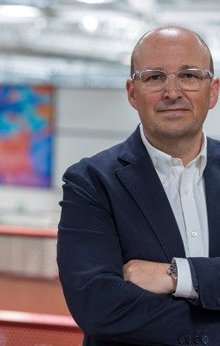
Alex Monino
SVP & GM at Additive Manufacturing Solutions HP

Bruce Broussard
Interim CEO

Samuel Chang
Division President of Consumer PC and Solutions