ABB: Methods to Decarbonise Steel & Chemicals Sector
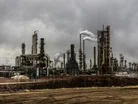
Heavy industry is responsible for roughly 29% of global greenhouse gas emissions.
The European Commission’s Clean Industrial Deal aims to enhance both competitiveness and decarbonisation across the region, though achieving this will be a major challenge.
Many promising decarbonisation technologies remain commercially unfeasible.
A whitepaper by ABB and Fraunhofer IPA explores practical steps these manufacturing industries can take now to reduce emissions.
“Industrial decarbonisation is not just an environmental necessity—it’s a strategic business opportunity," says Chris Poynter, President of ABB Motion’s System Drives division.
"The ABB and Fraunhofer IPA report highlights solutions available today, as well as technology developments that are key to accelerate the energy transition.
"With initiatives like the EU Clean Industrial Deal and the Decarbonization Investment Bank, industries have a unique opportunity to innovate, cut costs and lead in sustainable growth.
"By adopting electrification, energy-efficient motors and drives and new technologies, they can reduce emissions while increasing their competitiveness.”
Iron & steel production
Iron and steel are essential to decarbonisation, forming the backbone of clean energy infrastructure.
These vital materials are key to building turbine towers, pipelines, new vehicles and construction projects as industries move away from fossil fuels.
Together, iron and steel contribute 5% of global greenhouse gas emissions, with 81% of the energy consumed in the sector powering fired heaters such as blast furnaces.
ABB’s whitepaper highlights electric arc furnaces as a potential route to reducing emissions.
These furnaces primarily melt scrap steel to produce new materials, lowering coke demand and cutting emissions linked to its production.
Direct reduction techniques, including hydrogen-based methods, allow iron to be processed at lower temperatures, offering a cleaner alternative.
Dr. Markus Kröll, Head of Business Division Circular Economy and Carbon-Neutral Production at Fraunhofer IPA, says: “Our analysis identifies the highest emitting processes within each industrial sector and then pinpoints technologies that can mitigate them.
“It focuses particularly on key solutions: the electrification of processes, heat, carbon capture and hydrogen.
“There is no silver bullet for decarbonisation, but there are readily available solutions. This report should make it easier for business leaders to determine the best path forward.”
Cement Production
Most cement-related emissions result from limestone calcination during clinker production, where CO₂ is released as a natural by-product of the chemical process.
The whitepaper from ABB suggests that one way to cut emissions is by lowering the proportion of clinker in cement and incorporating materials like gypsum, volcanic ash and industrial by-products.
Although alternative clinkers with lower CO₂ emissions are available, existing options currently provide only modest reductions.

New alternatives have the potential to deliver substantial CO₂ reductions, such as cements derived from calcium silicate carbonation, which can absorb and store CO₂.
As there is no commercially viable way to decarbonise clinker production, carbon capture, utilisation and storage (CCUS) technologies could present a promising solution.
Chemical Manufacturing
The chemical industry depends on fossil fuels for both raw materials and energy.
Direct emissions, which come from chemical reactions and fuel combustion, make up 42% of the industry's total greenhouse gas emissions.
Emissions linked to electricity use contribute around 35% of the sector’s CO₂ output, with 79% of these stemming from processes that rely on electric drivetrains.
Enhancing the efficiency of these systems could contribute to lowering emissions.
For instance, IE5 motors achieve energy losses up to 40% lower than comparable induction motors.
Integrating variable-speed drives can cut power consumption by as much as 25% in contrast to fixed-speed alternatives.
Explore the latest edition of Manufacturing Digital and be part of the conversation at our global conference series, Manufacturing LIVE.
Sign up to our weekly newsletter here.
Discover all our upcoming events and secure your tickets today.
Manufacturing Digital is a BizClik brand.