BASF & ExxonMobil: How is Hydrogen Made for Clean Power?
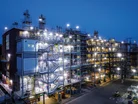
BASF and ExxonMobil have partnered to advance low emission hydrogen for industrial use.
The chemical giant and the energy giant have signed a joint development agreement to co-develop methane pyrolysis technology.
The companies will construct and operate a demonstration plant capable of producing up to 2,000 tons of low-emission hydrogen and 6,000 tons of solid carbon product annually.

What is methane pyrolysis technology?
Methane pyrolysis uses electricity to convert natural gas or other gases, like bio-methane, into hydrogen and solid carbon.
While it does use fossil fuels in the form of natural gas, it does not generate process-related CO₂ emissions. It is a form of methane emission abatement, decomposing methane into hydrogen and solid carbon instead of burning it. It leverages existing natural gas infrastructure.
Hydrogen is an energy carrier and an essential in the chemical industry.
Solid carbon has applications across multiple industries including steel and aluminium manufacturing, construction and advanced carbon products like battery materials.
Unlike traditional methods for hydrogen production, such as steam-methane reforming, it requires approximately five times less electrical energy than electrolysis and does not require the use of water.
BASF and ExxonMobil's partnership
The demonstration facility, located at ExxonMobil’s Baytown Complex in Texas, aims to move the technology towards commercial readiness and validate the technology for scale.
Mike Zamora, President of ExxonMobil Technology and Engineering Company, says: “This collaboration combines technological innovations and industrial expertise of ExxonMobil and BASF to accelerate the development of low-emission hydrogen.
“Methane pyrolysis holds real potential, especially in regions where traditional carbon capture and storage solutions are less viable. ExxonMobil brings decades of deep technical knowledge in methane pyrolysis and a shared commitment to innovation.”
Eventually, the Texas site aims to be the world’s largest of its kind facility, capable of producing up to a billion cubic feet daily of low-carbon hydrogen, which is virtually carbon-free with approximately 98% of carbon dioxide removed and more than a million tons of low-carbon ammonia per year.
In 2025, the Abu Dhabi National Oil Company acquired a 35% equity stake in ExxonMobil's Baytown project that aims to produce low-carbon hydrogen.
Manufacturing leaders won’t want to miss Sustainability LIVE: The US Summit, taking place at Navy Pier, Chicago, on April 21–22.
Co-located with Procurement & Supply Chain LIVE, the event unites senior decision-makers at a time when supply chains, sustainability and business performance are more interdependent than ever.
Secure your place now for The US Summit – group booking discounts available.
Methane emission abatement technology
BASF and Siemens Energy have previously partnered to build a 54 MW water electrolyser, one of the first large-scale implementations of green hydrogen technology in chemical manufacturing.
Analysis from McKinsey suggests that methane emission abatement could offer some of the lowest-effort, highest-impact greenhouse gas mitigation available anywhere.
McKinsey’s analysis suggests the upstream sector has the potential to halve its greenhouse gas footprint through approaches that are cost neutral or even financially beneficial.
Dr. Stephan Kothrade, Member of the Board of Executive Directors and Chief Technology Officer at BASF, says: “This novel methane pyrolysis technology generates competitive low-emission hydrogen and has a high potential for further reduction of the carbon footprint of our product portfolio. In line with our new Winning Ways Strategy, it will contribute to our ambition to be the preferred chemical company to enable our customers’ green transformation.
“We have been working on this technology for more than a decade and developed a superior reactor concept that we successfully validated at our test plant in Ludwigshafen. By combining BASF’s process innovation with ExxonMobil’s scale-up expertise we are bringing this cost-efficient low-emission hydrogen solution closer to economically viable industrial deployment.”
Company portals
Executives
Michael Zamora
President, ExxonMobil Technology and Engineering Company
Stephan Kothrade
Member of the Board of Executive Directors