Broadcom, Anthropic & Google: Developing Custom AI Chips
Broadcom has announced a deal to develop and supply future versions of Google's AI chips.
The company also announced an expansion of its partnership with Anthropic which, beginning in 2027, will access through Broadcom approximately 3.5 gigawatts of AI compute.
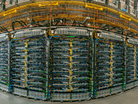
Broadcom will supply Tensor Processing Units (TPUs) which are specialised semiconductors needed for advanced machine learning workloads and neural networks.

Deals with Google and Anthropic
Announced through a securities filing, Broadcom entered into a long term agreement to develop and supply custom TPUs, as well as a supply assurance agreement to supply networking and other components to be used in Google's next-generation AI racks through to 2031.
Separately, Broadcom, Google and Anthropic expanded their current collaboration under which Anthropic, beginning in 2027, will access through Broadcom approximately 3.5 gigawatts of TPU-based AI compute capacity.
Krishna Rao, CFO of Anthropic, says: “This groundbreaking partnership with Google and Broadcom is a continuation of our disciplined approach to scaling infrastructure: we are building the capacity necessary to serve the exponential growth we have seen in our customer base while also enabling Claude to define the frontier of AI development.
“We are making our most significant commitment to date to keep pace with our unprecedented growth.”
Broadcom has seen its revenue grow from AI semiconductors. Announcing fourth quarter results, Hock Tan, President and CEO of Broadcom said: “In Q4, record revenue of US$18.0bn grew 28% year-over-year, driven primarily by AI semiconductor revenue increasing 74% year-over-year.
"We see the momentum continuing in Q1 and expect AI semiconductor revenue to double year-over-year to US$8.2bn, driven by custom AI accelerators and Ethernet AI switches.
"We forecast Q1'26 total revenue of US$19.1bn and adjusted EBITDA of 67%."
According to CNBC, Hock told analysts that his company's AI chip revenue will be well above US$100bn in 2027.
What is a TPU and why are they needed for AI?
TPUs power Google's Gemini and all of Google's AI powered applications like Search, Photos and Maps - which serve more than a billion users. They are highly specialised semiconductors used in Google's AI technology, known as application specific integrated circuits.
They are used in a variety of things such as agents, code generation, media content generation, synthetic speech, vision services, recommendation engines and personalisation models. The primary task for TPUs is matrix processing, which is a combination of multiply and accumulate operations.
Antropic's Claude is running on a range of AI hardware including AWS Trainium, NVIDIA GPUs and Google TPUs.
The recent partnership expands earlier work between Anthropic and Google Cloud, which in 2025 expanded its use of Google's TPUs. That 2025 expansion, worth tens of billions of dollars, is estimated to bring over a gigawatt of capacity online in 2026.
Anthropic revealed its run-rate revenue has now surpassed US$30bn, up from roughly US$9bn at the end of 2025. Anthropic also said the deal represents an expansion of its commitment to invest US$50bn in US computing infrastructure.
Semiconductor manufacturing in the US
McKinsey estimates that from 2021 to 2024 semiconductor and electronics companies invested an estimated $450bn in US manufacturing of semiconductors. McKinsey also estimates that the semiconductor industry was valued in the range of US$630bn to US$680bn in 2024 and is expected to reach US$1tn to US$1.1tn by 2030
In an analysis of semiconductor supply chains in the US, McKinsey found that there is not enough domestic supply to meet that level of demand.
Hundreds of different chemicals are needed to manufacture semiconductors in fabs. These range from specialty gases such as tungsten hexafluoride, solutions such as ammonium hydroxide and metallic compounds such as aluminium oxide. McKinsey argues that for these chemicals, supply gaps could be serious by 2030.
Company portals




Executives
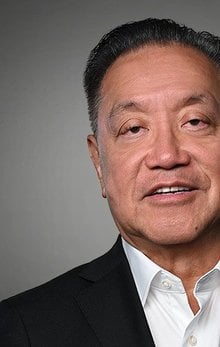
Hock Tan
President and Chief Executive Officer
Krishna Rao
Chief Financial Officer