How Carlsberg Group & Alfa Laval Scale Craft Beer Production
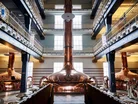
With over 300 years of combined experience in innovation, Carlsberg Group and Alfa Laval have a long history of expertise.
The two companies have collaborated to expand craft beer production at Carlsberg’s Fredericia facility in Denmark, ensuring quality and sustainability remain uncompromised.
"It is challenging to handle several new products in a plant that is made for large-volume production of mostly pilsner," says Anders Kokholm, Brewmaster at Carlsberg in Fredericia.
“We are now making a number of craft beers in small batches and rapid changeover is key. And of course, we can’t allow even a hint of flavour to cross over from one beer to another.”
Alfa Laval’s solutions haven’t just addressed these problems – they have also resulted in energy, water and chemicals savings at the facility.
Carlsberg Group’s sustainability approach
By 2030, Carlsberg Group plans to eliminate carbon emissions from its breweries and achieve net zero across its entire value chain by 2040.
In collaboration with agricultural cooperative DLG and Viking Malt, the company is brewing beer exclusively from regeneratively grown barley.
"Around 24% of Carlsberg's Danish CO₂e emissions come from agriculture, which supplies the raw materials for our various products," says Peter Haahr Nielsen, CEO of Carlsberg Denmark.
"We, therefore, see great potential in converting to regenerative agriculture to reduce our CO₂e emissions and to contribute positively to biodiversity."
It has also started to reuse carbonic acid from its brewing process in Falkenburg, Sweden.
“Thinking circularly and making use of residual products is natural for us. By recycling, processing and purifying the carbon dioxide from the fermentation, we create new carbonic acid for our drinks," says Mikhail Zaripov, Utilities Manager at Carlsberg Sweden.
“This means that we save on our resources and the environment, while also reducing the purchase of carbon dioxide in the future.”
How Alfa Laval and Carlsberg collaborate
Before beer is ready to serve, yeast residues and hop solids must be removed from the liquid.
Rather than relying on gravity to slowly separate these materials, a centrifuge speeds up the process significantly.

However, these centrifuges can consume significant amounts of energy and affect the downstream filtration process.
“We quickly saw significant reductions in our power consumption with the new Alfa Laval separators," Anders explains.
“At our flow rates, separation now consumes roughly half the energy it used to.
“Another sustainability advantage of a high-efficiency separator is its effect on the filter lines. Less clean beer would lead to more frequent cleaning and higher consumption of energy, water and chemicals.
“If we can prolong the lifetime of our membrane filters by 25% and reduce maintenance, there are significant cost savings for us and it is also a huge sustainability improvement.”
Explore the latest edition of Manufacturing Digital and be part of the conversation at our global conference series, Manufacturing LIVE.
Sign up to our weekly newsletter here.
Discover all our upcoming events and secure your tickets today.
Manufacturing Digital is a BizClik brand.