
What Manufacturers Must Know About EU's CBAM
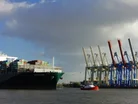
The World Trade Organisation (WTO) reports that international trade accounts for approximately 20-30% of global carbon emissions.
In 2015 alone, the WTO estimated that around eight billion tonnes of CO₂ were released as a result of manufacturing and transporting traded goods — equating to a quarter of worldwide emissions that year.
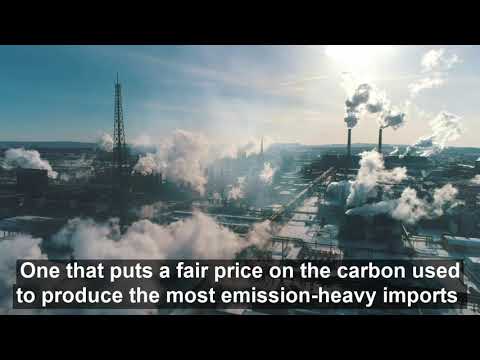
To address this impact, the European Union has introduced the Carbon Border Adjustment Mechanism (CBAM), requiring EU companies to report and compensate for the emissions linked to the products they import.
Introducing the EU’s CBAM
The CBAM forms part of the EU’s strategy to cut greenhouse gas emissions by 55% by 2030 from imported goods.
This measure places a carbon price on emissions-intensive products brought in from outside the EU, calculated quarterly based on their carbon footprint.
From 2026, a carbon levy will take effect, requiring EU businesses to buy 'CBAM certificates' to account for the emissions linked to their imports.
Additionally, the Council plans to introduce a minimum threshold, exempting consignments valued under €150 (US$155) from CBAM requirements.
“The agreement in the Council on the Carbon Border Adjustment Mechanism is a victory for European climate policy," says Bruno Le Maire, French Minister for Economic Affairs, Finance and Recovery.
"It will give us a tool to speed up the decarbonisation of our industry, while protecting it from companies from countries with less ambitious climate goals.
“It will also incentivise other countries to become more sustainable and emit less. Finally, this mechanism responds to our European ambitious strategy that is to accelerate Europe’s energy independence.”
Imports of steel, iron and aluminium are among the first materials to fall under the EU’s CBAM.
These metals have been prioritised because they are essential to the EU’s industries and energy transition — in 2023, the EU imported 37 million tonnes of steel from 137 countries.
Exporters may experience ripple effects, as shipments of iron, steel and aluminium risk becoming more costly than EU-manufactured alternatives.
A decline in competitiveness could reduce demand, sales, revenue and employment, particularly in emerging economies where iron, steel and aluminium production tends to have a higher carbon footprint than in the EU.
Which nations will face the biggest impact from CBAM?
Beyond export volume figures, certain countries are more dependent than others on shipping these metals to the EU. Notably:
South Africa
Around 10% of South Africa’s exports to the EU will be affected by CBAM, equating to approximately 0.8% of the nation’s GDP.
The iron, steel and aluminium industries face significant exposure to CBAM, with 16% of South Africa’s iron and steel exports and around 25% of its aluminium exports at risk.
The country’s dependence on coal-fired power results in a far higher carbon footprint for these metals — 0.91kg CO₂e/$ for iron and steel and 0.32kg CO₂e/$ for aluminium — compared to the EU’s much lower levels of 0.16kg CO₂e/$ and 0.07kg CO₂e/$, respectively, as well as other metal-exporting nations.
Mozambique
Nearly 97% of Mozambique’s aluminium exports are sent to the EU, making the sector particularly exposed. With a carbon intensity of 0.68kg CO₂e/$ — almost ten times the EU average of 0.07kg CO₂e/$ its exports are likely to face higher costs under CBAM.
Brazil
As one of the world’s largest iron ore producers, Brazil exported iron and steel worth US$30.6bn in 2023. Around 12% of these exports go to the EU, with a carbon emissions intensity of 0.37kg CO₂e/$ making Brazil more exposed to CBAM than other Latin American nations.
Venezuela
In 2023, Venezuela shipped €82m (US$83.8m) worth of iron and steel to the EU, representing roughly half of its total exports in this category. With a carbon intensity of 0.49kg CO₂e/$, Venezuelan exports face considerable CBAM-related risks.
India
India’s iron and steel sector is heavily reliant on coal, leading to a carbon intensity of 2kg CO₂e/$, one of the highest globally and significantly above the EU’s 0.16kg CO₂e/$. As a result, Indian exports to the EU will become substantially more expensive under CBAM.
With 23% of India’s iron and steel exports destined for the EU, the country faces significant exposure to the bloc’s carbon levy.
How Can Exporters Benefit from CBAM?
While CBAM presents challenges, exporters of iron, steel and aluminium can also unlock new opportunities.
The mechanism is paving the way for the world’s first marketplace for low-carbon, more sustainable metals.
To turn CBAM into a driver of growth and sustainable economic progress, several key strategies should be considered.
Exporters should assess and disclose the carbon footprint of their iron, steel and aluminium products to EU buyers.
Beyond fulfilling customer expectations for carbon transparency and strengthening business relationships, this approach will also help identify areas where emissions can be reduced — ensuring long-term competitiveness in an evolving market.
Developing clear strategies to cut emissions can open doors to sustainable finance, enabling investment in low-carbon solutions such as renewable energy and alternative production methods to lower both emissions and energy consumption.
For exporters, reducing Scope 1 and 2 emissions should be a priority, alongside tackling the more complex challenges within the supply chain — such as the carbon impact of mining and processing metals.
Decarbonising iron, steel and aluminium is a formidable challenge that extends beyond the capabilities of any single company.
CBAM marks a shift towards a more sustainable global trade system, encouraging exporters to shrink their carbon footprints and embrace cleaner production methods.
By investing in greener technologies, enhancing carbon transparency and strengthening collaboration across supply chains, businesses can transform CBAM from a regulatory hurdle into a driver of long-term resilience and growth.
As carbon pricing mechanisms continue to expand globally, proactive adaptation will be crucial in ensuring a fair and sustainable transition for all.
Explore the latest edition of Manufacturing Digital and be part of the conversation at our global conference series, Manufacturing LIVE.
Sign up to our weekly newsletter here.
Discover all our upcoming events and secure your tickets today.
Manufacturing Digital is a BizClik brand.