Is Elon Musk Taking Spacecraft Manufacturer SpaceX Public?
Elon Musk's potential decision to take SpaceX public through an IPO could signal a significant shift for the aerospace manufacturer, which has remained privately held since its founding in 2002.
For two decades, Musk maintained a consistent stance against public listing, arguing that stock market pressures would conflict with the company's long-term manufacturing and exploration objectives.
However, on 24 March 2025, The Information reported that position may be changing, with implications that extend beyond aerospace into semiconductor manufacturing and advanced production technologies.
IPO timeline and market positioning
According to The Information on 24 March 2025, SpaceX could file its IPO prospectus with US regulators within weeks, citing a person with direct knowledge of the plans.
The company's valuation of approximately US$1.75tn prompted immediate market reaction, with shares in some space manufacturing companies rising by as much as 10% in US trade.
Morgan Stanley, Goldman Sachs, JPMorgan Chase and Bank of America have been positioned as potential underwriters for the process.
The potential public offering marks a departure from Elon's previous statements.
In a 2018 memo to employees, he characterises the stock market's short-term focus as counter-productive to SpaceX's manufacturing mission.
He argues that quarterly profit expectations would undermine the capital-intensive development required for Mars colonisation technology.
That stance appeared to soften in December 2025 when space journalist Eric Berger outlined the substantial capital requirements for the company's mission.
Elon responded on X, saying: "As usual, Eric is accurate".
Manufacturing capabilities drive valuation
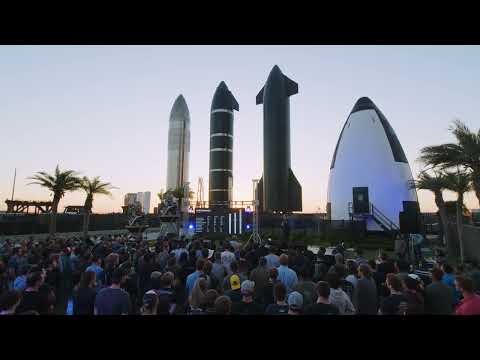
SpaceX's manufacturing infrastructure has evolved considerably since Elon invested US$100m of his own capital to establish the company in March 2002.
The initial vision centred on developing rocket technology capable of transporting payloads to Mars, beginning with the Mars Oasis project concept for a robotic greenhouse.
The company has since established itself as a major aerospace manufacturer, securing billions of dollars in contracts from the US government and private sector clients.
Its production facilities manufacture launch vehicles, spacecraft and satellite systems.
The company's operations as of March 2025 now extend beyond traditional aerospace manufacturing.
SpaceX owns xAI, which controls social media platform X and the AI chatbot Grok, creating a technology ecosystem that could support future manufacturing applications.
Market response indicates broader sector implications for the potential IPO.
On 25 March 2025, Rocket Lab climbed 11.4%, while Intuitive Machines and Sidus Space saw intraday increases of 19.7% and 24.9% respectively.
These movements suggest investors view the development as validation of space manufacturing as a viable commercial sector rather than a niche market.
Semiconductor manufacturing expansion
Parallel to the IPO reports, Elon announced plans for Terafab, a semiconductor manufacturing venture designed to produce chips for Tesla, xAI and SpaceX.
Two advanced fabrication facilities in Austin, Texas would manufacture components ranging from humanoid robot controllers to space-hardened satellite chips.
The semiconductor market was valued at US$775bn in 2024, with McKinsey projecting growth to US$1.8tn by 2030.
However, Elon suggests global production capacity cannot meet his companies' internal requirements.
"This announcement is about solving the key missing ingredient," he says.
"To give you a sense of what we are talking about, the current output of AI compute is roughly twenty gigawatts per year. This chart explains why we need to build the Terafab because all of the rest of the output from earth is about 2% of what we need."

The Austin facilities could represent a simplified approach to semiconductor manufacturing, potentially offering insights for other manufacturers seeking to secure supply chains.
For manufacturing executives, the developments around SpaceX and Terafab could indicate shifting dynamics in capital allocation and supply chain strategy.
The potential IPO suggests even companies with ambitious long-term manufacturing objectives may need to access public markets to fund capital-intensive operations.
Meanwhile, the semiconductor venture highlights how manufacturers across sectors are responding to supply constraints by developing in-house production capabilities rather than relying solely on external suppliers.