
Europcar Report Raises Questions about Future of EV Adoption
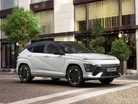
Electric vehicles (EVs), along with a shift to low-carbon energy, hold the potential to drastically reduce emissions worldwide.
They could play a key role in helping the UK achieve its target of cutting greenhouse gas emissions by at least 81% from 1990 levels by 2030.
However, Europcar’s 2025 sustainability report suggests that EV adoption may fall short of expectations.
While demand for Battery Electric Vehicles (BEVs) and Plug-in Hybrid Electric Vehicles (PHEVs) continues to rise, several challenges remain.
“The government’s announcement on 6th April 2025 to relax ZEV mandate requirements as well as allow the continued sale of new hybrid and plug-in hybrids until 2035, plus some categories of petrol and diesel vans, will do nothing to improve that picture,” says Tom Middleditch, Head of Electric Mobility at Europcar Mobility Group UK.
“Added to which, confidence is still lacking in switching to electric.
“Helping make the change from ICE to electric, through a mind-shift in terms of ownership and driving behaviour, is our central focus.”
Consumer attitudes to EVs
The biggest barrier preventing consumers from switching to an EV is cost, according to the report.
This includes costs related to purchasing, maintenance and finance options.
Just under half of consumers surveyed identified a lack of charging infrastructure as a barrier to adoption, while around 20% reported a lack of understanding about ownership.

For those driving for work, the barriers were similar, but with around 14% citing resistance from employers or employees.
This increased from around 12% to 15% across 2024.
A lack of clear EV charging signage
A lack of clear signage indicating suitable charging locations may be part of the issue, Europcar says.
More than 90% of EV drivers and 80% of non-EV drivers agree there should be a universal symbol to indicate EV charging facilities.
A quarter of EV drivers and 15% of non-EV drivers would rely on spotting signs for EV chargers on a journey, with 89% of EV drivers believing there should be more charging signage on A roads and motorways.
More than half of those who would consider an EV as their next car want charging stations to have clear pricing signs, similar to petrol stations.
Hurdles with commercial vehicles
In addition to the barriers faced by car drivers, those driving vans for work encounter further challenges, the report says.
More than half of van drivers plan to switch to electric, and 38% said lower purchase costs would encourage them to make the switch.
Improved battery range to accommodate vehicle payloads would benefit 31% of van drivers surveyed.
The main barriers identified were the availability of charging points, high purchase costs, expensive insurance and reduced productivity due to charging stops.
How Europcar is encouraging EV adoption
Currently, 14% of Europcar’s fleet consists of BEVs or PHEVs, with 93% of its B2B customers having access to EV rates.
From January to December 2024, BEV usage more than doubled as the company focused its efforts on encouraging customers to opt for EVs.
Europcar has a network of Certified Electric Vehicle Ambassadors to support customers at vehicle handover and has partnered with Zapmap to provide easy access to EV charging information.
The company has also exceeded the national average for onsite EV charging facilities at rental branches, reaching an impressive 65%.
To further educate and inform consumers, Europcar launched a unique digital EV guide and Knowledge Hub in 2024.
The most popular models on its EV Showroom Page were:
Tesla Model 3 with 37.8%
Mercedes EQA with 22%
Mercedes EQE with 13.4%
Jeep Avenger with 8.1%
Explore the latest edition of Manufacturing Digital and be part of the conversation at our global conference series, Manufacturing LIVE.
Sign up to our weekly newsletter here.
Discover all our upcoming events and secure your tickets today.
Manufacturing Digital is a BizClik brand.