
Eye Tracking: A Smarter Approach to Workforce Optimisation
As manufacturing digitally transforms, increasing automation, complexity and risk, training and assessment methods must evolve to keep pace.
Manufacturing comes with myriad risks, from workers interacting with heavy machinery, hazardous chemicals and forklifts to its well known cybersecurity vulnerabilities.
At the core of these risks is human behaviour, meaning investments in training and assessment are also investments in a safer workplace.
For example the Wall Street Journal reported in 2024 that violations of lockout procedures in factories - designed to ensure machinery is powered down during maintenance - contributed to an average of 85 deaths and 364 amputations annually.

They also found that forklifts were responsible for approximately 7,500 injuries and nearly 100 deaths each year, numbers largely linked to lax approaches to safe driving on the factory floor.
The reality is that workers under pressure to remain productive, frequently bypass official training and safety measures in order to perform to peak efficiency.
Traditional approaches to safety, training and assessment which rely on observation and self-reporting do not account for this.
They also overlook other critical aspects of workforce performance and process efficiency.
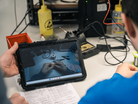
Eye tracking technology offers a revolutionary alternative, providing a first-person perspective on how workers interact with tools, machines and factory environments.
It makes previously unrecorded skills visible, measurable and transferable, enabling organisations to enhance training and assessment with unprecedented accuracy.
For the past 20 years, Tobii has been the global leader in eye-tracking technology, helping top companies leverage it to improve training, safety and human performance assessment.
Introducing Tobii
Tobii is a Swedish pioneer in attention computing, spearheading the use of machine learning, AI, eye tracking and advanced signal processing to gain critical insights into human behaviour, unlocking hidden skills and opportunities.
With a global presence spanning 13 countries and more than 1,000 patents and applications, Tobii helps ensure successful and optimised human-machine collaboration across transforming industries like manufacturing.

The company's extensive eye-tracking solutions – which include smart glasses, screen-based eye trackers and webcam and display integrations – provide guidance on how to improve user interfaces, reduce cognitive load and streamline processes.
By embracing eye tracking as part of their training and assessment strategy, manufacturers across a diversity of verticals, especially high-risk verticals like heavy machinery, aviation and automotive, can reach new heights of workforce optimisation.
Benefits across manufacturing
- Accurately measure and enhance performance
Traditional assessment methods often fail to capture the subtle differences in how tasks are performed, leading to inconsistencies in training and operational procedures.
By using Tobii's eye-tracking solutions, companies can compare the performance of different workers and pinpoint areas for improvement with unmatched precision.
- Capture and transfer expertise
One of the most significant advantages of eye tracking in manufacturing is its ability to capture and preserve the expertise of top performers.
By recording eye movements and visual attention patterns, organisations can document how experienced workers complete tasks efficiently and accurately.
This data can then be used to create standardised, high-quality training programs that accelerate learning for new and old employees.
- Reduce the learning curve
These models can reduce the learning curve for new employees, something which will be critical as manufacturers seek to address the hiring gap and face pressure to fill new roles created by technologies like AI and automation with digitally skilled professionals.
This will not only benefit new employees, but longstanding members of staff who are being upskilled in new processes and technologies.
Over-40s who grew up in more traditional, legacy production environments make up a majority of employees in the global sector.
By making expert knowledge transferable, manufacturers can safeguard valuable skills against workforce turnover and maintain high levels of operational competence with both established and new staff.
- Make insights practical & accessible
Integrating new technology into existing training programs is often a challenging and lengthy process.
Manufacturers, conscious of the costs of downtime and disruption, often avoid technological integration for this reason despite its significant benefits.
This is why today the sector still faces critical challenges concerning legacy systems and siloed operational data.
Tobii's eye tracking solutions are designed to bypass this, being simple and practical to implement.
With minimal setup requirements, companies can incorporate eye tracking into their training and assessment processes without causing major disruptions.
- Access instant & personalised feedback
Eye tracking data can be seamlessly integrated into digital training programs, providing trainees with instant feedback and visual guidance on how to improve their performance.
Additionally, supervisors and trainers can use the collected data to customise training sessions based on individual needs, ensuring that workers receive targeted support to develop their skills more effectively.
This level of personalisation leads to faster learning, improved retention and higher overall competence.
The benefits of eye tracking can be felt across manufacturing, but they are especially prominent in several high-risk verticals including automotive, aviation and heavy industry.
Benefits for specific manufacturing sectors
Eye-tracking software plays a crucial role in improving safety across aviation, automotive, heavy machinery, power and industrial equipment management, supporting the unique risks and training needs of each vertical.
- Aviation
In aviation, eye tracking enhances pilot training by monitoring gaze patterns to ensure they are scanning instruments correctly and maintaining situational awareness.
By identifying inefficiencies in visual engagement, training programmes can be refined to improve reaction times and adherence to procedures.
The technology also helps optimise cockpit design by ensuring critical controls and displays are positioned for maximum efficiency.
In terms of safety, eye tracking detects early signs of fatigue or distraction, alerting pilots before performance is compromised.
- Automotive
In the automotive sector, eye tracking improves driver training by assessing attention distribution and reaction times.
This is particularly useful in autonomous and semi-autonomous vehicle development, where human interaction with AI systems must be optimised for safety.
The technology helps refine dashboard and control layouts by analysing where drivers naturally focus, ensuring essential information is easy to access. Safety is enhanced by detecting drowsiness and distraction, triggering alerts to re-engage the driver and reduce accident risks.
- Heavy Industry
Heavy machinery operation demands precision and full concentration.
Eye tracking supports training by identifying how operators visually engage with controls and surroundings, allowing for targeted coaching on best practices.
It also contributes to process optimisation by highlighting inefficiencies in equipment operation and control placement.
Safety is improved by detecting signs of inattention or cognitive overload, helping to prevent accidents in high-risk environments where errors can have severe consequences.
- Power sector
In the power sector, where technicians handle high-voltage equipment and complex monitoring systems, eye tracking ensures they remain focused on critical tasks.
Training programmes benefit from insights into visual scanning patterns, ensuring workers develop strong observational skills necessary for system monitoring and fault detection.
Process optimisation is achieved by refining workflow designs based on natural visual behaviour, reducing unnecessary movements and improving efficiency.
By detecting fatigue and distraction, the technology further enhances safety, minimising the risk of errors that could lead to equipment failure or injury.
- Industrial equipment
Industrial equipment manufacturing involves intricate assembly processes that require precision and consistency.
Eye tracking improves worker training by identifying where attention lapses occur, allowing for more effective instruction and skill development.
It optimises production line efficiency by analysing gaze patterns to refine workstation layouts, reduce unnecessary motion and improve ergonomics.
Safety is reinforced by monitoring workers for signs of inattention or strain, ensuring they remain engaged and alert during critical tasks.
Eye tracking: A feature of the factory of the future
Leveraging digital insights to enhance workforce development is becoming increasingly paramount.
Eye-tracking technology provides actionable data that improves operational consistency and workforce efficiency.
When combined with artificial intelligence, IoT and smart factory systems, eye tracking enables organisations to make data-driven decisions that enhance safety, efficiency and compliance.
Eye tracking is more than just an innovative tool; it's a key enabler of smarter, faster and more effective workforce development.
As industries continue to evolve, adopting cutting-edge solutions like those provided by Tobii will be essential for staying competitive, ensuring operational success and preparing workers for the challenges of tomorrow.
Explore the latest edition of Manufacturing Digital and be part of the conversation at our global conference series, Manufacturing LIVE.
Sign up to our weekly newsletter here.
Discover all our upcoming events and secure your tickets today.
Manufacturing Digital is a BizClik brand.