GM: Making Virtual Reality the Pre-Production Standard
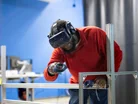
Virtual reality continues to be a transformative tool in modern manufacturing, having an especially prominent impact on the automotive sector.
Global Industry leaders like Volvo, Rolls-Royce and General Motors (GM) have embraced VR to enhance vehicle design and production, improving efficiency, accuracy and worker safety.
By integrating VR into its pre-production processes, GM is setting a new standard in the automotive industry for innovation and digital transformation.
Integrating VR into vehicle design
At GM’s global technical centre in Warren, Michigan, the Virtual Reality Assembly Center (VRAC) serves as the hub of the company’s VR initiatives.
A recent GM Blog from its 'On the Job' series highlighted these initiatives, focusing on Max Sikorski, a VR specialist who joined GM in 2021 after working at Volvo Trucks, where he developed augmented and virtual reality solutions.
Since his arrival, the VRAC has expanded significantly, evolving from a single VR station to a sophisticated system used across all new GM vehicle launches.
Traditionally, automotive manufacturers relied heavily on physical prototypes to refine vehicle design.
Before the widespread adoption of computer-aided design (CAD) and VR, engineers would manually build hundreds of prototype vehicles to identify design flaws and manufacturing challenges. This process was time-consuming, costly and limited the number of iterations that could be completed within a given development cycle.

With VR, GM has significantly reduced its dependency on physical prototypes, allowing engineers to conduct virtual reviews much earlier in the design process.
The shift has led to greater precision, faster development times and substantial cost savings.
In practice, the VRAC team, which consists of engineers, manufacturing operators and research specialists, uses VR technology to immerse themselves in a vehicle’s design before a single physical model is built.
By putting on VR headsets, team members can explore and manipulate virtual vehicle components, assessing fit, functionality and potential design flaws in real time.
This proactive approach allows GM to identify and address potential production challenges long before manufacturing begins, preventing costly modifications further down the line.
Enhancing ergonomics and safety through VR
Beyond optimising design and production processes, GM is leveraging VR to improve ergonomics and workplace safety for assembly line workers.
Traditional manufacturing simulations may confirm that a task is technically possible, but VR allows GM to assess whether it is also practical and comfortable for workers.
By simulating real-world assembly scenarios in a virtual environment, GM can identify ergonomic issues that might not be apparent in digital simulations alone.
For example, VR enables engineers to evaluate how easily an operator can reach certain components, whether there are visibility constraints and how much physical strain is required to complete a task.
The approach ensures that workstations are designed with human comfort and safety in mind, reducing the risk of repetitive strain injuries and other environmental hazards.
One of the key benefits of GM’s VR system is its ability to incorporate real-life expertise.
Manufacturing operators who have first hand experience on the assembly line are placed in the VR environment to test and validate vehicle designs.
Their insights are invaluable in catching potential assembly issues early in the process, enabling GM to refine workflows before production begins.
This method not only improves worker safety but also enhances efficiency by reducing the likelihood of last-minute design changes.
Wider industry impact
GM’s investment in VR represents a broader shift within the automotive industry towards digital transformation and automation.
As vehicle designs become increasingly complex, the ability to conduct detailed virtual simulations will only grow in importance.
GM is already expanding its use of VR beyond pre-production and assembly line planning, exploring applications such as training programmes for technicians and refining service instructions for dealerships.
Looking ahead, the possibilities for VR in automotive manufacturing are vast.
GM’s VRAC team continues to push the boundaries of what is possible, investigating new ways to enhance collaboration between designers, engineers and production teams.
As VR technology advances, the company aims to further integrate artificial intelligence and machine learning into its virtual simulations, enabling even more precise modelling and predictive analytics.
Max Sikorski, whose work has been recognised in Forbes’ 30 Under 30, believes that the evolution of VR in manufacturing is only just beginning.
With rapid technological advancements on the horizon, GM’s approach to integrating VR could soon reach levels of realism and interactivity reminiscent of science fiction.
Ultimately, GM’s strategic use of virtual reality is not just about improving efficiency—it is about redefining how vehicles are designed, built and experienced.
By embracing cutting-edge technology, GM is reinforcing its position as an industry leader, paving the way for a future where virtual and physical realities seamlessly converge in automotive production.
Explore the latest edition of Manufacturing Digital and be part of the conversation at our global conference series, Manufacturing LIVE.
Sign up to our weekly newsletter here.
Discover all our upcoming events and secure your tickets today.
Manufacturing Digital is a BizClik brand.