
GM to Manufacture Sodium-Ion Batteries in Michigan Plant
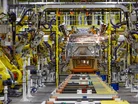
Automotive corporation General Motors (GM) plans to create sodium-ion batteries at the company’s Wallace Battery Cell Innovation Center in Warren, Michigan.
The sodium-ion batteries will be built in partnership with Peak Energy, an energy storage company, and through an investment from GM Ventures.
Kurt Kelty, VP of Battery and Sustainability at General Motors, says: “At GM, we know that the application should determine the battery and for grid-scale stationary storage, sodium-ion is the right solution.
“Peak is already demonstrating the value of sodium-ion through their innovative energy storage platform, and together we're working to push those benefits even further with our next-generation cell — helping deliver more reliable, lower-cost energy storage at scale for the US grid.”
Matching Peak’s cooled storage technology with GM's battery cell development will allow the batteries to be stored at a maximum rate.

Landon Mossburg, CEO and Co-Founder of Peak Energy adds: "Lowering the cost of energy is one of the most important issues facing America today.
“We are proud to develop an energy storage system that is safer, cheaper and faster to deploy that any other technology on the market, enabling the US to meet rapidly growing energy demand without saddling consumers with higher prices.
"The future of grid storage will be defined by affordability, reliability and American innovation. We're thrilled to partner with GM to bring a better solution to the American energy economy.”
What is a sodium-ion battery?
Sodium-ion batteries operate much like lithium-ion batteries due to their similar architectural makeup. They store and release energy through ions during charging and discharging.
Both sodium and lithium are seated in the same column of the periodic table which also points to their parallel nature. Their differences allow them to be designed with a particular profile toward various classes of applications. Additionally, sodium remains as one of the most plentiful resources in the world which is why GM is utilising the mineral to create the batteries.
Much of current energy storage technology is built around lithium-iron phosphate (LFP) chemistry and requires active cooling to operate at safe temperatures. Peak Energy's cooled storage system has eliminated the need for energy-intensive cooling systems and reduced costs through its sodium-ion system by 20% compared to conventional systems.
GM is currently overseeing deployment of 10,000 batteries into energy infrastructure. It also plans to deploy second-life batteries at another Michigan plant where nearly 100 packs are expected to provide 7.2MWh of transmittable energy and more than US$3m in local electricity.
In 2026 GM has focused on additional endeavours, including the production of electric vehicles amid ongoing tariff issues and logistical changes.
Company portals

Executives

Kurt Kelty
Vice President, Battery, Propulsion, and Sustainability, General Motors

Landon Mossburg
CEO and Co-Founder of Peak Energy

Mary Barra
CEO