Honeywell, Helium and the Future of High-tech Manufacturing
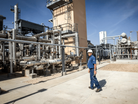
In 2024, the US Government sold its helium stockpile, stored at the Federal Helium Reserve in Amarillo, Texas.
This reserve supplies up to 30% of the nation's helium, with the sale causing panic within America's medical, aerospace and burgeoning semiconductor sectors.
Workers in these industries have been expressing concerns over how operations will function in the face of disruptions to the helium supply chain.
But why is helium such a vital and irreplaceable manufacturing material within these industries in the first place?
Why is Helium vital to high-tech manufacturing?
Helium is vital to high-tech manufacturing due to its specific and unique physical properties.
The element boasts high thermal conductivity, a low boiling point and chemical inertness, leading to its extensive use in cooling systems including within cryogenics.
Helium is vital to the operation of advanced diagnostic equipment like MRI machines and particle accelerators in the healthcare sector.
When producing the superconducting magnets used in these machines helium - and only helium - is capable of cooling the magnets to the extremely low temperatures needed to combat superconductivity.
Without helium, the cost and complexity of cooling these systems would increase dramatically, making them financially unviable within the healthcare industry.
Meanwhile in the semiconductor industry, helium is essential to the process of deep ultraviolet (DUV) lithography, a technique crucial for producing tiny microchips.
The element is also employed in leak detection systems to ensure the integrity of vacuum chambers and equipment used in the manufacturing of components for advanced electronics, like sensors, transistors and lasers.
In aerospace and defence, helium is needed to cool propulsion systems and test materials in gas chromatography.
In an industry defined by delicate processes and sensitive, hazardous materials, helium's inertness is critical to ensuring a lack of cross contamination.
Therefore, having stable access to helium is not only vital for the advancement of high-tech manufacturing - but also to the maintenance of the US electronics industry and critical healthcare and defence infrastructure.
For all these reasons striving to create domestic helium supply will be a critical step in enhancing the US's manufacturing base, especially under the Trump Administration's protectionist policies of tariffs and alienation of key trading partners like Canada and Mexico.
A manufacturer striving to make this a reality is Honeywell with the Dry Piney Project that aims to stabilise helium availability and costs, while supporting the growth of innovation.
Inside the Dry Piney project
Honeywell has announced that Blue Spruce Operating will implement its carbon capture and sequestration technology to enhance helium production at the Dry Piney Helium & Carbon Sequestration Project in Sublette County, Wyoming.
This initiative aims to increase domestic helium output for high-tech manufacturing and semiconductor applications while incorporating sustainable practices.
By adopting Honeywell’s carbon capture technology, including UOP’s CO2 fractionation system, Blue Spruce will reduce production costs and improve efficiency.
The technology will capture and liquefy CO2 emissions generated during helium and methane extraction, improving sustainability and profitability.
Expected to begin operations in the second half of 2028, the Dry Piney Project is poised to produce over 800 million cubic feet of bulk liquid helium annually.

The facility will feature two CO2 processing units designed to capture, transport and permanently store up to 4.5 million metric tonnes of CO2 each year.
This large-scale sequestration effort highlights the commitment to reducing industrial emissions while meeting rising helium demand.
Currently, 15 million tonnes of CO2 are captured annually through Honeywell’s CO2 Solutions process.
The integration of these technologies at the Dry Piney Project demonstrates a continued effort to combine industrial efficiency with environmental responsibility.
By capturing and storing carbon emissions, the initiative will ensure helium supply security and drive broader sustainability goals.
"The Blue Spruce Dry Piney Project is expected to provide more than 10% of the global supply of helium, making it the second largest helium source in North America and offsetting declining production from other sources including the Cliffside U.S. strategic reserve," says Scott Gutberlet, Co-Founder and Partner of Blue Spruce.
"Honeywell’s carbon capture technology will play a key role in boosting reliable and long-term U.S. helium production, therefore decreasing our need for foreign sources."
“As the world seeks more energy options, carbon capture provides a pathway for nations to maintain energy independence while reducing their carbon footprints,” says Barry Glickman, vice president and general manager of Honeywell Sustainable Technology Solutions.
“Honeywell’s carbon capture technology will help Blue Spruce increase U.S. helium production to address the needs of domestic high-tech manufacturing and semiconductor applications.”
Explore the latest edition of Manufacturing Digital and be part of the conversation at our global conference series, Manufacturing LIVE.
Sign up to our weekly newsletter here.
Discover all our upcoming events and secure your tickets today.
Manufacturing Digital is a BizClik brand.