How Unilever is Building More Than 40 New Digital Twins
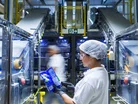
Unilever is partnering with Accenture to scale the use of AI-enabled digital twins across its global manufacturing network.
Digital twins are virtual models of factory equipment and production lines. They use live data from physical systems on the shop floor to monitor and predict how machines and processes perform.
Unilever has already deployed digital twins across its manufacturing network spanning the US, Europe and India and has cited positive results and tangible impacts.

Digital twins across Unilever's manufacturing
Building on its digital twins already in use, Unilever plans to expand adoption over the next 18 months by building more than 40 new digital twins, creating a scalable blueprint for global rollout.
It says that its multi-year program with Accenture is a further step in Unilever’s journey to apply new technology across its value chain.
By integrating digital twins with AI-enabled insights and agentic capabilities, Unilever is equipping manufacturing teams with advanced tools to identify issues sooner and simulate scenarios faster.
Adam Raeburn-James, Global VP for Digital Business Operations at Unilever, says: “Scaling AI across our operations isn’t just a technological shift, it’s a commitment to superior products, sustainability and empowering our teams across our factories.
“Through our partnership with Accenture to accelerate digital twins, we are turning innovation into measurable impact to create desirable brands for our 3.7 billion consumers worldwide.”
Accenture’s industrial AI capabilities
Accenture is supporting Unilever in deploying industrial AI capabilities that use advanced analytics and AI agents. In a joint press release, the companies say these capabilities will predict maintenance needs, improve performance and help teams act faster.
According to the companies, as the system learns and employees gain confidence in its accuracy, it can progressively take on certain adjustments automatically with human oversight.
Nicole van Det, CEO Accenture Netherlands and Nordics and Global Account Lead for Unilever, says: “Unilever has long been recognised for its supply chain excellence and expanding the use of manufacturing digital twins reflects the company’s continued focus on both technology and people.
“Having invested early in AI, the company is setting the standard for pairing advanced tools with smart process design and disciplined execution on the shop floor.
"Together, we’re setting the benchmark for how industrial AI creates long-lasting value in the consumer goods sector.”
Unilever’s use of digital twins
Unilever’s manufacturing footprint spans China, India, the UK, Germany and South America, operating hundreds of factories across a variety of brands including Dove, Domestos and Vaseline.
The company says that digital twins are already delivering tangible impact across its global network.
In North Carolina, US, a digital twin powering the production of brands including Dove, Degree and Axe predicts 95% of process flow restrictions in deodorant stick manufacturing, delivering a 20% reduction in waste and a 10% uplift in capacity.
At a facility in Haldia, India dedicated to powder detergents such as Surf and Sunlight, an energy twin optimises fan speeds, temperature setpoints and moisture controls, helping achieve a reduction in thermal energy consumption.
In Poland, where Unilever produces brands as Knorr and Hellmann’s, a digital twin stabilises viscosity variation in mayonnaise, while reducing minor stoppages by up to 20% and cutting waste by nearly 30%.
Unilever agreed to the sale of its Foods business, including Hellman’s, to US company McCormick earlier this year.


Executives
Adam Raeburn-James
VP Digital Business Operations Product Owner
Nicole van Det
Senior Managing Director, Global Account Executive