
Inside ABB’s Innovative Approach to Motor Waste
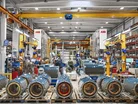
Stefan Floeck, Division President of IEC Low Voltage Motors at ABB Motion, believes the simple-is-best approach to factory waste must end.
Thinking about waste in the context of cutting costs and slashing inefficiencies is not only hampering sustainability, he says, but also the innovation that could drive broader circularity.
One area where this kind of creative thinking is vital is the electric motor business, where waste is a complicated issue.
“Motors are typically built from a mix of metals, plastics, lubricants and chemicals, and when waste management isn’t handled correctly, the result can be incredibly damaging to the environment,” explains Stefan.
“Recycling is therefore a challenge that must be tackled head-on and tolerance for a more relaxed attitude towards it is fading as regulations tighten globally.”
Stefan says that in order to make headway towards a circular economy and sustainable industrial practices, manufacturers cannot treat waste as an inconvenience. It must be seen as an opportunity.
At ABB this perspective is alive and advancing innovation, driven by the company’s goal to send zero waste to landfill globally by 2030. It is especially evident at three of the company’s global sites.
ABB IEC LV Motors site, Bangalore, India
“ABB India’s IEC LV Motors site in Bangalore is a testament to what’s possible when manufacturers push beyond conventional thinking,” says Stefan.
“Like most large manufacturing facilities, this site produces a wide range of waste materials including plastic and polymer, scrap metals, and hazardous chemicals.”
Stefan notes that the primary challenge is not sheer waste volumes but the end result after it leaves the factory. Instead of discarding items to landfill, manufacturers need to transform waste into useful products and materials.
“Take paint sludge, for example — historically, it’s one of the toughest byproducts to manage,” he explains.
“Instead of discarding it, ABB India makes sure that it is diverted to cement plants, where it is repurposed as an alternative fuel.
“What was once nothing more than hazardous waste is now playing a role in energy generation.”
While not all waste can be given a second life, Stefan argues manufacturers can and should implement responsible disposal methods to minimise their impact on the environment.
ABB’s IEC LV Motors site, Shanghai, China
Stefan believes there’s a blind spot in the motor industry when it comes to packaging waste.
“Wooden boxes, used to transport nails, have been the go-to choice, despite posing safety risks and creating challenges for recycling the packaging,” he explains.
These boxes are also difficult to disassemble, resulting in them often becoming damaged and non-reusable – but disposing of them incurs extra costs for manufacturers.
ABB is addressing this problem through innovation at its Shanghai site, where wooden crates have been redesigned to suit customer needs without compromising efficiency.
“Sceptics might argue that upgrades such as this one are more trouble than they’re worth, hurting profitability and making only a marginal environmental impact,” says Stefan.
“But these changes didn’t just improve sustainability, they made operations more cost-effective by boosting efficiency and reducing material losses.”
ABB’s IEC LV Motors site in Vaasa, Finland
The problem of wood waste is prominent in motor manufacturing, which Stefan describes as a “global issue that demands a smarter approach”.
In 2023, ABB’s site in Vaasa, Finland took this approach, overhauling its palletisation process for electric plate rolls, switching from disposable to recyclable pallets.
Beyond pallet materials, the factory also optimised vertical transport and storage for plate rolls, using lighter pallets that improve truck capacity and cut transport costs,” Stefan explains.
“These changes didn’t just reduce waste, they enhanced efficiency across the entire supply chain.”
The site also sends wood waste to Stena Recycling for it to be shredded into wood chips and repurposed as composing materials. The factory has also set up recycling zones for broken pallets, ensuring they are properly repurposed instead of being disposed of.
ABB’s comprehensive waste management initiatives across these three sites demonstrate how critical innovative thinking is to the future of factory sustainability.
“Circularity is not just an ambition but a practical, achievable reality,” says Stefan.
“ The key takeaway for the industry is simple: waste should never be seen as an unavoidable byproduct, but as an asset that can and should be handled with care.”
To read the full article in the magazine, click HERE.
Explore the latest edition of Manufacturing Digital and be part of the conversation at our global conference series, Manufacturing LIVE.
Discover all our upcoming events and secure your tickets today.
Manufacturing Digital is a BizClik brand.