
The Method Shaping Boston Metal's Green Steel Strategy
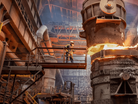
The steel industry forms the backbone of global infrastructure, manufacturing and transport, making it integral to modern, industrial life.
However its production continues to represent a critical challenge for global sustainability.
Steel production is one of the most carbon-intensive industrial processes, contributing a staggering 7% of the world's CO₂ emissions.
To put it in context, this percentage is higher than the emissions created by Russia, the European Union, the global tourism sector and all the passenger cars on Earth.
As steel demand continues to rise, driven by urbanisation, the automotive sector and expanding renewable energy projects addressing these emissions is pivotal.
Governments and industries worldwide are also under rising pressure to meet net-zero targets, making the decarbonisation of steel an urgent priority on multiple fronts.
Central to the challenge is the reliance on coal-powered blast furnaces in traditional steel production, which emit nearly two tonnes of CO₂ for every tonne of steel produced.
Creating viable and scalable alternatives to this method is essential, if we are to curb this industry's emissions whilst meeting critical global steel demand.
Boston Metal's pioneering approach
Boston Metal is at the forefront of the transition to green steel, driving the use of Molten Oxide Electrolysis (MOE) technology.

Molton Oxide Electrolysis was first created in the late 1980s by Dr Donald Sadoway's MIT (Massachusetts Institute of Technology) laboratory. Since then it has been adopted and refined by steel manufacturers, with Boston Metal leading the way towards its large-scale adoption and commercialisation.
Unlike conventional steelmaking, which depends on coal and complex multi-step processes, MOE uses renewable electricity to convert iron ore into high-quality liquid metal. This approach eliminates the need for coke production, iron ore sintering and pelletising, blast furnace reduction and basic oxygen furnace refinement.
Critically the benefits of MOE extend beyond emissions reduction.
The process can handle all grades of iron ore, providing manufacturers with greater flexibility in raw material sourcing and reducing dependence on premium ores, which are subject to market volatility.
In addition, MOE operates as a modular system, allowing steel producers to scale up production by adding more cells rather than investing in entirely new facilities.
How does MOE work?
The MOE process centres on electrolysis.
Electrolysis is a well-established principle in industrial chemistry, but it has never been successfully applied to large-scale steelmaking – until now.
In an MOE cell, an inert anode is submerged in a molten electrolyte containing iron ore and subjected to an electric current.
When heated to approximately 1,600°C, the current breaks the bonds in the iron oxide, producing pure liquid iron and releasing only oxygen as a by product.
This method eliminates the need for fossil fuels and prevents the formation of other harmful emissions, such as sulphur dioxide and nitrogen oxides, common in traditional steelmaking.
Furthermore, MOE does not require process water, hazardous chemicals, or rare metal catalysts, making it an environmentally friendly, resource-efficient and safer alternative method for workers.
MOE vs other green steel methods
MOE is not the only green steel technology that has emerged in the past decade.
A myriad of methods have been pioneered across the sector, each with their own distinctive advantages and challenges:
Hydrogen-based direct reduction (H-DRI)
This method replaces coal with hydrogen to strip oxygen from iron ore, leaving behind metallic iron. The primary advantage of H-DRI is that it emits only water vapour instead of CO₂.
However, large-scale hydrogen production requires significant energy input and, unless the hydrogen is sourced from renewable energy sources like green hydrogen, the overall emissions reduction may be limited.
H-DRI also requires extensive infrastructure investment, with its costs making it non-viable for many steel producers.
-
Electric arc furnaces (EAF) using scrap steel
EAFs are an effective way to reduce emissions by melting and repurposing scrap steel. Since the steel material has already been processed, they consume far less energy than traditional blast furnaces.
However, the global supply of scrap steel is insufficient to meet growing demand, and impurities in scrap can impact the quality of the final product.
Additionally, EAFs still rely on electricity, which must come from renewable sources to ensure a fully-green process.
- Carbon capture and storage (CCS) in traditional blast furnaces
Some steelmakers are exploring CCS to capture CO₂ emissions before they reach the atmosphere.
While this approach can reduce emissions in existing steel plants, it does not eliminate fossil fuel dependence and requires expensive infrastructure.
There's also the fact that CCS is not always 100% effective, with long-term storage solutions for captured CO₂ remain a challenge.
MOE distinguishes itself by offering a direct, one-step solution that produces high-purity molten iron with zero emissions. Unlike H-DRI, it does not require vast quantities of hydrogen and unlike EAFs, it is not limited by scrap steel availability.
MOE also avoids the complexities of CCS by eliminating emissions at the source rather than capturing them post-production. This is what truly distinguishes it as a method – creating a clear path towards commercialisation and the broader green transformation of the steel industry.
The path to commercialisation
Boston Metal has been rapidly advancing its MOE technology towards commercial viability.
In March 2025, the company marked a significant milestone by successfully commissioning its multi-inert anode MOE industrial cell at its Woburn, Massachusetts facility.
This achievement confirms the technology’s scalability and reliability for industrial applications.
The next major step is the deployment of the first MOE demonstration plant in 2026. This facility will serve as a proof of concept for large-scale green steel production, enabling steel manufacturers to see first hand how MOE integrates into industrial operations.
The company plans to license the technology to steelmakers worldwide, enabling them to produce zero-emission steel while maintaining profitability.
“We are the only company with a direct and scalable approach to more efficient and clean steelmaking, and I can now say that tonnage steel is flowing from our multi-inert anode MOE cell,” says Tadeu Carneiro, CEO of Boston Metal.
“With this milestone, we are taking a major step forward in making green steel a reality and we’re doing it right here in the US, demonstrating the critical innovation that can enhance domestic manufacturing.”
Beyond steel production, Boston Metal is leveraging its MOE platform for other metallurgical applications.
In Brazil, the company is using MOE to extract valuable metals from mining waste, turning a former environmental liability into a profitable resource.
Additionally, Boston Metal is preparing to establish a chromium metal facility in the US, securing a domestic supply of this critical material for advanced manufacturing.
The path to full-scale commercialisation involves further scaling MOE technology, optimising production efficiency and ensuring cost competitiveness.
Boston Metals is well positioned to achieve this, playing a critical role in the decarbonisation of the steel industry and the growth of green steel.
MOE: a catalyst for green steel commercialisation?
Our world must transition to a low-carbon economy and the steel industry must undergo fundamental changes to become sustainable.
We know the problem lies in traditional production processes and we know weneed to create viable, green alternatives.
Viability here is critical. These solutions have to be scaled, commercialised and ultimately rolled out across the global steel industry, meaning they need to be cost-effective, adaptable and capable of meeting high global demand.

While hydrogen-based methods, electric arc furnaces and carbon capture solutions are all vital methods that contribute to reducing emissions, Boston Metal’s MOE technology stands out as a truly transformative approach.
By eliminating CO₂ emissions entirely, offering a scalable solution and reducing reliance on high-grade iron ore, MOE represents a crucial step towards a greener, more sustainable steel industry.
With commercialisation on the horizon, the widespread adoption of MOE has the potential to reshape steel production for future generations, helping the world meet climate targets without compromising industrial growth.
Explore the latest edition of Manufacturing Digital and be part of the conversation at our global conference series, Manufacturing LIVE.
Sign up to our weekly newsletter here.
Discover all our upcoming events and secure your tickets today.
Manufacturing Digital is a BizClik brand.