Inside General Motors & Micron’s Memory and Storage Deal
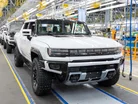
Micron Technology and General Motors announced a strategic customer agreement to secure a long-term supply of memory and storage platforms for GM's vehicle production.
Modern vehicles rely heavily on semiconductors. The average car now carries more than 1,700 chips, according to Moody's.
But they can require many more depending on the vehicle and its technological complexity. The New York Times says that a modern car can easily have more than 3,000 chips.
The automotive industry is facing a semiconductor supply chain challenge, as memory chips, which are critical to modern vehicles, face growing demand in the US for the buildout of AI data centres.

Semiconductor agreement
Through the agreement, GM will secure supply of low-power double data rate, NOR flash memory and universal flash storage semiconductor products.
The chips are likely to be used to support GM's AI-enabled in-cabin experiences and advanced driver assistance (ADAS) autonomy.
Mary Barra, Chair and CEO of General Motors, says: “Delivering next-generation vehicles at scale requires a resilient and closely aligned supply chain.
“Our expanded collaboration with Micron strengthens our access to critical memory technologies while enabling deeper integration across our vehicle platforms, supporting both performance and long-term reliability. This agreement reinforces the supply chain needed to support future vehicle innovation and production.”
Micron and GM also agreed to collaborate on future memory and storage technology requirements for GM's next generation of vehicles.
The companies say this includes deep technology collaboration to align on future product definition, system-level optimisation and the qualification of advanced memory technologies.
Delivering next-generation vehicles at scale requires a resilient and closely aligned supply chain.
Automotive semiconductor supply chain
GM is bolstering its supply of semiconductors, which are largely oversubscribed as a result of growing demand from AI infrastructure, consumer electronics and automotives.
Moody's says that the ADAS market is projected to grow from 359.8 million units in 2025 to 652.5 million units by 2032, growing at an annual compound rate of 8.9%.
It notes that semiconductor networks are global and multi-tiered, so disruption in one area may quickly cascade across production, revenue and delivery timelines.
As vehicles become more semiconductor-intensive, the industry becomes more exposed to the suppliers, geographies and technologies behind them.
Highlighting the issues in the memory supply chain a collection of industry groups wrote to the US Treasury and Commerce Secretary, Howard Lutnick, in June 2026: “Expanding AI data centres consume an enormous share of available memory chip capacity. The result has been an unprecedented surge in the price of memory chips and reduced supply of these chips for manufacturing and consumer-facing industries.”
Groups signing the letter included the Alliance for Automotive Innovation, of which GM is a founding and prominent member.
The groups added in the letter: “These risks to large parts of the US economy are occurring despite major US investments in chip manufacturing intended to precisely avoid this type of supply chain disruption.”

Scaling US memory manufacturing
Micron says its agreement with GM is enabled by its ongoing investments to expand and localise supply for automotive customers, including advanced 1-alpha DRAM manufacturing in Manassas, Virginia, US.
Micron invested US$2bn to modernise its Manassas fab, which began production earlier this year. Micron has called the Virginia fab’s output “the most advanced memory ever produced in the US”.
About half of the cars on the road today in the US have a Micron chip made in Manassas.
Sanjay Mehrotra, Chairman, President and CEO of Micron, says: “We are proud to expand our strategic relationship with GM to deliver both long-term supply assurance and technology innovation critical to the future of the automotive industry.
“As demand for memory and storage continues to grow, we are investing to extend supply availability, expand capacity and align more closely with our customers to improve supply predictability across the automotive ecosystem.
“Our expanding manufacturing efforts in the US are designed to enable GM to deliver both near-term products as well as secure US based supply to support next generation platforms and innovation.”
Company portals


Executives

Mary Barra
CEO
Sanjay Mehrotra
Chairman, President & CEO