
Why has Manufacturing Activity in Asia Slowed?
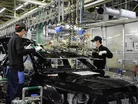
Manufacturing activity across Asia slowed in March 2026 according to PMI (purchasing managers index) data.
Analysts have tied this slowdown to the US and Israel’s war in Iran, which has ramped up cost and pressures on manufacturers across Asia, including in South Korea, Japan and China.
The closure of the Strait of Hormuz, one of the world's largest shipping routes, as well as rising the price of oil, has created supply chain issues in various manufacturing industries, including semiconductors and batteries.
The data
S&P’s Global Japan Manufacturing PMI, a composite single-figure indicator of manufacturing performance in Japan, fell from a 45 month high of 53.0 in February to 51.6 in March 2026.
S&P’s RatingDog China General Manufacturing PMI fell from 52.1 in February to 50.8 in March.
S&P’s Global Taiwan Manufacturing PMI fell from February's 55.2 to 53.3 in March.
An outlier, S&P’s South Korea’s Manufacturing PMI was at 52.6 in March, up from 51.1 in February. South Korean manufacturers have also seen sharp rises in raw materials costs and high oil prices linked to the conflict.
Usamah Bhatti, Economist at S&P Global Market Intelligence commented on South Korean manufacturing firms: “Firms looked to protect against higher costs by raising prices charged at the steepest rate since July 2022, while also attempting to build safety stocks to guard against future price and supply issues."
Semiconductors and batteries
In addition to oil, the Strait of Hormuz ships vast quantities of resources needed for manufacturing, such as helium. Helium is a by-product of natural gas processing, used in multiple stages of semiconductor manufacturing.
Prices of helium have risen dramatically since the start of the war, having roughly doubled.
Samsung Electronics and SK Hynix, two leading South Korean chipmakers, which supply roughly two-thirds of the world's memory chips, have four to six months worth of helium inventory, a source told Reuters.
Sulphur is produced in large quantities in the Middle East for use in rare metals processing, on metals such as nickel, lithium and cobalt. These metals are key to the manufacturing of batteries, including EV batteries.

How it impacts the automotive industry
The Asian automotive industry will not just be affected by battery component shortages. The Japan Times estimates that 70% of Japanese carmakers' supply of aluminium comes from the Middle East.
In quotes issued on the Japan Automobile Manufacturers Association’s website, originally in Japanese, Koji Sato, who is both Chairman of the Japan Automobile Manufacturers Association and President and CEO of Toyota Motor Corporation, said: “Companies are simultaneously facing a multitude of challenges that cannot be solved by individual companies alone, such as decarbonisation, rising geopolitical risks, resource and energy constraints, and changes in the human resource structure.
“The rising geopolitical risks, including the situation in the Middle East, make strengthening resilience against uncertainties in energy and supply chains a major theme.
"Another point that has been emphasized through the negotiations this spring is the competitiveness of the industry.”
Manufacturing leaders won’t want to miss Sustainability LIVE: The US Summit, taking place at Navy Pier, Chicago, on April 21–22.
Co-located with Procurement & Supply Chain LIVE, the event unites senior decision-makers at a time when supply chains, sustainability and business performance are more interdependent than ever.
Secure your place now for The US Summit – group booking discounts available.
A dampening of business confidence
The conflict in the middle east has sent oil prices above US$100 per barrel, disrupting industries worldwide, but its impact on manufacturing in Asia has been unique and multifaceted.
Prior to this shock, S&P’s China Manufacturing PMI was at a peak of 52.1 in February while S&P’s Japan's Manufacturing PMI was riding a 45 month high of 53.0.
Annabel Fiddes, Economics Associate Director at S&P, said: “The slowdown coincides with the outbreak of war in the Middle East, which according to survey respondents directly contributed to stronger cost pressures at the end of the first quarter.
“The war has also fuelled greater uncertainty about the global economic outlook, dampening business confidence and resulting in more cautious hiring and purchasing activity.”
Company portals



Executives
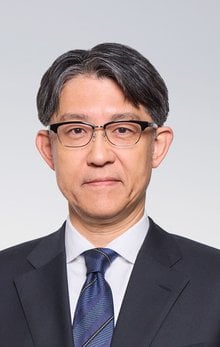
Koji Sato
CEO