What can we Learn from PepsiCo's use of Automation?
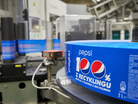
PepsiCo, one of the world's largest food and beverage manufacturers, has been at the forefront of automation and AI adoption.
Taking a holistic approach to adoption, PepsiCo has used automation and AI to streamline operations, improve efficiency and reduce its environmental impact.
Through the implementation of smart factories and AI-driven logistics, the manufacturer has also increased production speed and superior waste management, resulting in significant cost savings.

Transforming manufacturing with smart factories
PepsiCo has invested heavily in smart factories equipped with automation and AI to modernise its production processes.
One notable example is its factory in Leicester, UK, which is one of the largest crisp manufacturing facilities in the world.
Here, AI-powered sensors and machine learning algorithms monitor production lines, ensuring optimal efficiency and reducing waste.
Another important example is the manufacturers Frito-Lay plant in Casa Grande, Arizona, which operates as a near-net-zero factory.
This plant uses automation to control energy consumption, water recycling and emissions.
Robotic systems handle product sorting and packaging, significantly reducing manual labour and enhancing workplace safety.
By leveraging automation, the facility has cut energy consumption by 20% and reduced water usage by 30%.
Enhancing logistics with AI-driven supply chains
PepsiCo has integrated AI and automation into its supply chain to optimise logistics and distribution.
At its manufacturing plants, automated guided vehicles (AGVs) transport materials, reducing the need for manual handling and improving efficiency.
The company's use of AI-powered predictive analytics has also enhanced inventory management, minimising waste and ensuring a steady supply of products to retailers.
In the UK, PepsiCo has implemented AI-driven route optimisation for its delivery fleet, reducing fuel consumption and improving delivery times.
By analysing traffic patterns and weather conditions, the system selects the most efficient routes, cutting carbon emissions by 15% and lowering operational costs.
Improving sustainability through automation
PepsiCo's automation initiatives align with its sustainability goals, particularly in reducing energy consumption and waste.
At its Pulaski, Tennessee plant, AI-controlled water filtration systems have improved water efficiency by 25%. Additionally, robotic arms used in production lines have helped decrease material waste by precisely measuring ingredients and reducing overproduction.
The company's commitment to automation also extends to packaging innovation.
In Mexico, PepsiCo introduced an AI-driven packaging system that reduces plastic use by optimising bottle design. This has led to a 35% decrease in plastic consumption across its beverage portfolio.
Future plans for AI and automation
PepsiCo continues to expand its use of automation and AI to enhance productivity and sustainability.
The company plans to introduce more AI-driven predictive maintenance systems to prevent equipment failures, reducing downtime and maintenance costs.
Additionally, it is exploring the use of robotics in warehousing and distribution to further streamline operations.
With its ongoing investments in smart factories, AI-driven logistics and sustainable automation solutions, PepsiCo is setting a benchmark for the future of manufacturing and supply chain management.
As the company continues to innovate, its use of automation will play a crucial role in meeting growing consumer demand while reducing its environmental footprint.
What manufacturers can learn
PepsiCo's success with AI and automation is a valuable lesson for manufacturers across industries.
Though the manufacturer is a food & beverage leader, its application of these technologies is replicable across factory environments.
By embracing automation, we know that companies can significantly enhance efficiency, reduce operational costs and improve sustainability.
We can also see how the use of AI-driven predictive maintenance helps prevent equipment failures and minimises downtime.
PepsiCo is a key example of how tools like AI and automation can make manufacturers more sustainable and cost-effective whilst future-proofing operations against workforce and broader geopolitical changes.
Explore the latest edition of Manufacturing Digital and be part of the conversation at our global conference series, Manufacturing LIVE.
Sign up to our weekly newsletter here.
Discover all our upcoming events and secure your tickets today.
Manufacturing Digital is a BizClik brand.