PepsiCo’s Manufacturing Footprint: Farms, Factories & People
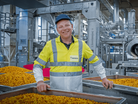
PepsiCo generated nearly US$94bn in net revenue in 2025, driven by its beverage and foods portfolio that includes Lay's, Cheetos, Gatorade, Pepsi-Cola, Mountain Dew, Quaker Oats and SodaStream.
Its global manufacturing footprint spans China to Columbia and from the US to Europe. PepsiCo says that its products are enjoyed by consumers more than one billion times a day in more than 200 countries and territories around the world.
As we head into the Summer of 2026, PepsiCo has big plans. Ramon Laguarta, PepsiCo’s CEO said in PepsiCo’s Q1 Earnings Call: “We're executing our very strong commercial programs for the summer.
“The World Cup is a big driver of execution and innovation during the summer, and the teams are full speed executing that, along with some other transformation of the portfolio.”

PepsiCo’s factories
With sites spanning the Americas, China and Europe, PepsiCo’s global manufacturing footprint is massive.
The food and drink giant operates four production sites and four headquarters locations in Northern Europe alone. In the area the company employs more than 2,000 people across eleven countries.
In South Africa, PepsiCo has more than 40 production facilities as well as approximately 70 distribution and warehouse facilities.
In India, the company has more than 58 factories where it supports upwards of 118,000 jobs in agriculture, manufacturing and retail.
The company has two production plants in and seven distribution centers in Columbia.
It has operated in China for 45 years and it supports employment of more than 170,000 people in the region. In the country PepsiCo operates over 70 farms, more than 60 bottling plants as well as 10 food factories.
The company also operates in a variety of other locations across Africa, the Middle East, Asia Pacific, Europe, Latin America and North America.
PepsiCo’s manufacturing strategy
Unlike its bigger rival Coca-Cola, which is undergoing refranchising, PepsiCo’s manufacturing and bottling operations remain, to a large extent, within the scope of the company itself.
On its website, PepsiCo says that it has continued investments in advanced technology and AI, modernised manufacturing and enhanced its warehouse and distribution capabilities in line with its 2030 growth strategy.
As part of the company's technology investments, PepsiCo has partnered with NVIDIA and Siemens to transform plant and supply chain operations. The company is applying advanced digital twin technology and AI to meet consumer demand and operate strategically during ongoing market turbulence.
Ramon says: "The scale and complexity of PepsiCo's business, from farm to shelf, is massive and we are embedding AI throughout our operations to better meet the increasing demands of our consumers and customers.”
PepsiCo is also working with Google Cloud to transform its existing IT technology ecosystem and advance the company’s multi-cloud strategy.
PepsiCo’s brands
PepsiCo’s brands are not limited to its widely known and flagship soft drink Pepsi-Cola.
The company’s brands include crisps like Fritos, Doritos and Tostitos, as well as other food products such as Pasta-roni, Quaker Oats and Pearl Milling Company pancakes.
The company also produces non-carbonated beverages like Starbucks Ready to Drink Coffee, Ocean Spray Juices and Muscle Milk.
The company also manufactures a variety of teas, like Lipton and Pure Leaf, as well as the energy drink brand Rockstar.
Key leaders at PepsiCo
Ramon Laguarta is CEO of PepsiCo. Ramon has focused PepsiCo’s growth strategy on three pillars: portfolio transformation, international expansion and capturing new consumption occasions and being available everywhere.
Becky Schmitt is PepsiCo’s Chief People Officer. Since joining the company in 2023, Becky has spearheaded numerous initiatives that underscore her commitment to people management excellence.
Anne Tse is the Chief Executive Officer of PepsiCo Asia Pacific Foods, leading one of PepsiCo’s fastest-growing businesses across Asia Pacific, Australia, New Zealand and Greater China.
Jim Andrew is Chief Sustainability Officer for PepsiCo where he leads pep+, PepsiCo’s holistic transformation agenda with sustainability at the centre, including the strategic framework, governance and integrated plans and goals for all of PepsiCo.
Company portals

Executives
Jim Andrew
Chief Sustainability Officer, EVP and Executive Committee member
Ramon Laguarta
Chairman of the Board of Directors