Comparing Presidents Trump and Nixon's Approach to Tariffs
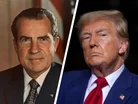
Using tariffs as an economic and geopolitical tool is a recurring theme in US history.
While President Donald Trump’s recent "Liberation Day" tariffs have sparked global controversy, they follow a historical pattern.
More than 50 years ago, President Richard Nixon used a similar approach, imposing a 10% surcharge on all imports in 1971. Although their political styles and the contexts were different, Trump and Nixon’s tariff policies share key similarities and important distinctions.
The strategy behind Nixon's 1971 import surcharge
In August 1971, President Nixon introduced a 10% import surcharge as part of his "Nixon Shock" economic package, driven by concerns over trade deficits and economic stagnation.

Nixon’s primary aim was not to shield US industries but to pressure major trading partners, like Japan and West Germany, into revaluing their currencies against the US dollar. At the time, America's trade balance had shifted from surplus to deficit, raising concerns about its global competitiveness.
Nixon's tariffs, though temporary, had a lasting effect. They forced major economies to abandon the fixed exchange rates of the Bretton Woods system, resulting in the Smithsonian Agreement in December 1971. This allowed key currencies to appreciate against the dollar, enhancing the competitiveness of US exports.
Economist Douglas Irwin reflects on Nixon's strategy, saying: "Nixon's demand for currency revaluation was specific, actionable and transparent. Once achieved, the surcharge was lifted."
The Nixon approach contrasts sharply with Trump's broader, more open-ended tariff objectives.
Trump's 2025 reciprocal tariffs: A bold new strategy
Five decades later, President Donald Trump has adopted a more aggressive approach to trade, unveiling sweeping reciprocal tariffs on imports from more than 180 countries. These tariffs range from a base of 10% to as high as 54% for countries like China.
Unlike Nixon’s more targeted strategy, Trump’s tariffs are presented as a defence against what he calls decades of “economic looting” by foreign nations.
In his announcement, Trump declared: "For decades, our country has been looted, pillaged, raped and plundered by nations near and far... this is our declaration of economic independence."
While Nixon's tariffs had a clear economic goal—forcing currency adjustments—Trump's trade measures reflect a broader nationalist agenda, aimed at reshoring American manufacturing and cutting trade deficits.
However, critics argue that Trump's tariffs lack strategic focus.
Mark Zandi, Chief Economist at Moody's Analytics, warns: "Trump appears to lack a fundamental understanding of international economics... Many of his arguments were refuted centuries ago by Adam Smith."
Key similarities between Nixon's and Trump's tariff policies
Both Nixon and Trump have utilised tariffs to tackle trade imbalances, though their approaches share several key similarities:
- Addressing trade deficits: Nixon sought to correct trade imbalances through currency adjustments, while Trump aimed to counter what he saw as unfair trade practices.
- Economic nationalism: Both presidents positioned their policies as efforts to protect American workers from foreign exploitation.
- Global disruption: Nixon’s tariffs played a role in the collapse of the Bretton Woods system, while Trump’s measures have sparked fears of a global trade war.
- Political motivations: Nixon confronted economic stagnation, while Trump’s tariffs were in line with his 'America First' agenda, which came amid criticism of his economic policies.
Douglas emphasises a key distinction: "Nixon's demand for floating exchange rates was achievable and irreversible once implemented. In contrast, Trump's demands are vague and long term."
Economic and diplomatic consequences
Although Nixon's tariffs were brief and largely successful in meeting their objectives, experts caution that Trump’s approach could have far-reaching effects:
- Global trade disruption: Analysts anticipate major supply chain disruptions as businesses adapt to higher costs.
- Consumer impact: Increased import prices could drive inflation, reducing American consumers’ purchasing power.
- Retaliation risks: Trading partners may introduce counter-tariffs, escalating economic tensions.
David Rosenberg, of Rosenberg Research, notes: "In a global trade conflict, there are no victors... Much of this cost will eventually be passed on to consumers."

What history teaches us
Although separated by decades, Nixon and Trump’s tariff strategies reflect a recurring theme in US economic policy: using protectionist measures to address trade imbalances.
However, while Nixon aimed for clear, short-term goals, Trump’s approach is broader, more confrontational and open-ended.
History shows that protectionist policies often give way to freer trade due to their economic costs. Nixon eventually shifted towards liberalisation after his 1971 measures, recognising the need for global economic cooperation.
Whether Trump will follow a similar path remains uncertain, but the consequences of his trade war could have a lasting effect on the global economy.
Explore the latest edition of Manufacturing Digital and be part of the conversation at our global conference series, Manufacturing LIVE.
Sign up to our weekly newsletter here.
Discover all our upcoming events and secure your tickets today.
Manufacturing Digital is a BizClik brand.