
Redwood Materials: Rivian's Battery-Powered Illinois Factory
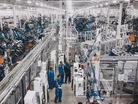
Rivian and Redwood Materials have partnered to deploy a battery energy storage system at Rivian's manufacturing plant in Illinois, US.
Using more than 100 second-life Rivian battery packs, the solution will initially provide 10 megawatt-hours (MWh) of dispatchable energy.
The system is set to be the largest repurposed battery energy storage system in use at a US automotive manufacturer.
This comes as some EV battery manufacturers in the US have pivoted towards storage, driven by demand from new technology like AI.

EV batteries as an energy source
Rivian, which manufactures electric vehicles (EVs), is set to supply EV batteries to a Redwood Energy System, supported by the company’s Redwood Pack Manager technology, allowing its stored energy to be used on-site by the plant in Normal.
The solution aims to reduce costs and grid load during peak energy demand periods.
The approach enables fast, flexible deployment of energy capacity directly at high-demand sites like Rivian’s EV manufacturing facility.
Rivian Founder and CEO RJ Scaringe, says: “EVs represent a massive, distributed and highly competitive energy resource.
“As energy needs grow, our grid needs to be flexible, secure and affordable. Our partnership with Redwood enables us to utilise our vehicle’s batteries beyond the life of a vehicle and contribute to grid health and American competitiveness."
Meeting demand for energy storage
By 2030, The International Energy Agency estimates that 1,500 GW of energy storage is needed around the world.
JB Straubel, Redwood Materials Founder and CEO, says: "Electricity demand is accelerating faster than the grid can expand, posing a constraint on industrial growth. At the same time, the massive amount of domestic battery assets already in the US market represents a strategic energy resource.
“Our partnership with Rivian shows how EV battery packs can be turned into dispatchable energy resources, bringing new capacity online quickly, supporting critical manufacturing and reducing strain on the grid without waiting years for new infrastructure. This is a scalable model for how we add meaningful energy capacity in the near term."
During periods of peak demand, like heat waves, Rivian will be able to deploy energy stored in its second-life batteries to offset increased strain on the grid, avoiding purchasing more electricity while also avoiding additional load on the power system.
Transitioning these packs into stationary assets before recycling them extends their useful life and decreases reliance on imported energy storage.
Outlook on battery storage
According to the Solar Energy Industries Association (SEIA), as of 2025, lithium-ion battery cell manufacturing for stationary electricity storage applications has risen to over 21 GWh, which is enough to power the city of Houston from sunset to sunrise.
The SEIA adds that American manufacturing facilities now have the capacity to manufacture 69.4 GWh of battery energy storage systems.
Some EV battery manufacturers pivoted towards dedicated energy storage production in 2025 as demand grew from new technology like AI.
The Financial Times reported that cell makers have cancelled enough capacity to produce two million EVs, with 10 US plants retooled for energy storage batteries.
Alongside its partnership with Rivian, Redwood also has an agreement with General Motors (GM) for EV battery storage systems. In 2025, Redwood signed a memorandum of understanding with GM to accelerate deployment of energy storage systems using both new US manufactured batteries from GM and second-life battery packs from GM electric vehicles.