
Rolls-Royce and Equilibrion: Nuclear‑Derived Aviation Fuel

Rolls-Royce SMR and Equilibrion have formed a partnership to investigate the potential of nuclear-powered sustainable aviation fuel production, with ambitions to expand low-carbon SAF capabilities for both UK and international aviation markets.
The US Department of Energy defines sustainable aviation fuel (SAF) as an alternative fuel derived from non-petroleum feedstocks that could reduce air pollution from air transportation. The nuclear consultancy Equilibrion and Rolls-Royce SMR have entered into a Memorandum of Understanding to undertake a joint technical and economic assessment utilising small modular reactors (SMRs).
Nuclear-powered fuel production
The Rolls-Royce SMR has been designed to deliver clean, reliable and cost-competitive energy through its factory-built SMR technology. A Rolls-Royce SMR power station generates heat and electricity that could be well matched to industrial applications, including hydrogen production and synthetic fuel synthesis.
Dr Dave Smith, formerly Director of Central Technology at Rolls-Royce and now National Technology Advisor for the UK Government, explains: "We expect to see a lot of innovation and energy directed at creating sustainable fuel between 2025 and 2045 and we are here to support this growth in any way we can.
"Despite the challenges of affordability and scalability, we believe that sustainable aviation fuels are the only solution to decarbonise long-haul aviation."
Several Rolls-Royce aircraft engines, including the Trent XWB and Trent 7000, can already operate using blended SAF. The company anticipates that newer engines could potentially run on 100% SAF and is conducting testing to verify this capability. Successful verification could help lift the current regulatory limit of a 50% fuel blend.
Equilibrion's modular system approach
Equilibrion is a UK-based project development and technology company concentrated on establishing new commercial opportunities for nuclear energy in sectors that are difficult to decarbonise.
The company's proprietary modular system, Eq.flight, has been designed to produce SAF at commercial scale whilst delivering lower lifecycle emissions than numerous alternative technologies.
Eq.flight manufactures e-SAF using electricity and heat through a power-to-liquids (PtL) process. Through enhanced overall system efficiency, Eq.flight can generate greater volumes of SAF with reduced energy input, potentially enabling domestic e-SAF production alongside job creation and economic development.
Caroline Longman, Director at Equilibrion, says: "Aviation will only meet its climate commitments if SAF becomes available in large, dependable volumes.
"Nuclear‑derived fuel production offers the reliability, scalability and low carbon intensity needed to deliver that future. Delivering nuclear‑enabled SAF also creates long‑term, high‑quality employment, each Eq.flight facility has the potential to generate around 10,000 skilled local jobs over its lifetime."
With support from a Department for Transport grant through the Advanced Fuels Fund, Equilibrion and its partners are working towards delivering a UK-based demonstration of the Eq.flight system by 2030.
Meeting UK aviation targets
The collaboration examines how the Eq.flight SAF production system could be powered by clean and reliable electricity generated by a Rolls‑Royce SMR power plant.
Combined, these technologies could potentially produce more than 160 million litres of SAF annually per SMR, which could satisfy approximately one-third of the UK's 2040 power-to-liquids SAF target.
Aviation is considered one of the fastest growing sources of global greenhouse gas emissions, yet SAF supply currently meets less than 1% of global demand. The UK has established targets requiring at least 22% of aviation fuel to be SAF by 2040.
The partnership between Rolls-Royce SMR and Equilibrion is a step toward addressing the aviation industry's decarbonisation challenge. By combining nuclear energy technology with advanced SAF production systems, the collaboration aims to demonstrate a viable pathway for scaling up sustainable fuel production whilst maintaining energy security and creating economic opportunities across the UK.
Alan Woods, Director of Strategy and Business Development for Rolls-Royce SMR, says: "Our SMR technology is designed to provide clean, affordable and dependable low‑carbon energy, exactly the qualities required to unlock large‑scale Sustainable Aviation Fuel production.
"The technical and economic assessment completed with Equilibrion will enable them to demonstrate how nuclear can power one of the most ambitious decarbonisation challenges in aviation."
To achieve these objectives, substantial volumes of low-carbon energy are required, a demand that nuclear energy technology could help address. The partners plan to develop a deeper understanding of the technical and economic case for global SAF production that can be optimised through nuclear energy incorporation, supporting national and international net zero goals whilst strengthening energy security through domestic fuel production.
Company portals


Executives
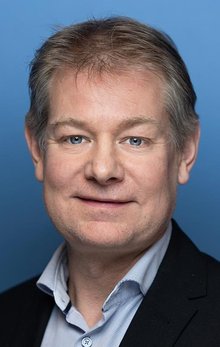
Alan Woods
Director of Strategy and Business Development

Caroline Longman
Director
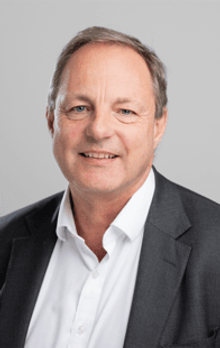
Dave Smith
National Technology Advisor