
Inside Tesla & NatPower’s Landmark Energy Storage Deal
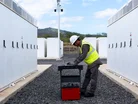
Tesla has entered into a multi-year supply agreement with NatPower, an independent energy infrastructure platform.
The agreement covers more than 25 GWh of battery energy storage systems (BESS) across European markets, with projects to be sited in Italy and the UK, according to a joint announcement from both companies.
It represents what industry observers describe as the first time battery energy storage has been procured, financed and executed across multiple jurisdictions under a single integrated framework.
Mike Snyder, Vice President of Energy and Charging at Tesla, says: "Tesla is excited to partner with NatPower on this long-term agreement. They have a strong vision for scaling battery deployments quickly and efficiently across Europe.
"Our team of experts are helping accelerate these deployments through our vertically integrated offering. We provide hardware, software, construction, trading optimisation and service to bring projects online faster and ensure they operate smoothly throughout the lifetime of the product."
Manufacturing capacity meets delivery requirements
The agreement establishes what could be described as an integrated structure combining manufacturing capacity reservation, industrial execution and supply chain coordination.
Rather than treating component supply as a separate function from project delivery, the framework links production allocation directly to deployment schedules from the outset.
According to the terms, NatPower's projects will benefit from reserved manufacturing slots for Tesla's Megapack battery energy storage system.
The deal also includes engineering, procurement and construction (EPC) services. This approach could address one of the sector's most persistent bottlenecks: the misalignment between when manufacturing capacity becomes available and when projects are ready to receive equipment.
The agreement covers five initial projects in Italy and the UK, with a total capacity target of more than 100 GWh. Production scheduling, supply chain logistics and execution timelines have been coordinated under the framework.

“Tesla is excited to partner with NatPower on this long-term agreement. They have a strong vision for scaling battery deployments quickly and efficiently across Europe. ”
Addressing industrial execution bottlenecks
Procurement in energy storage has historically stalled not due to lack of technology or capital.
Manufacturing slots, grid connections, permitting timelines and financing close at different speeds and in isolation from one another.
This agreement addresses five operational requirements simultaneously: manufacturing capacity reservation, grid access and connection, permitting and regulatory compliance, financial structure, and execution scheduling and timeline management.
Rather than responding to individual project orders as they materialise, production facilities can allocate capacity against a confirmed pipeline with coordinated delivery schedules. This approach could reduce idle capacity, optimise inventory management and improve supply chain efficiency across the component base.
- Manufacturing capacity reservation
- Grid access and connection
- Permitting and regulatory compliance
- Financial structure
- Execution scheduling and timeline management
The framework also addresses the dependencies between manufacturing output and project readiness.
Traditionally, battery systems might be manufactured and require storage until sites are prepared. Conversely, sites might be ready but manufacturing slots unavailable.
By synchronising these elements, the agreement could reduce carrying costs, minimise equipment storage requirements and accelerate time from production to installation.
Supply chain and production implications
Fabrizio Zago, CEO of NatPower, emphasises the execution focus: "The significance of this agreement lies in its ability to turn project development into concrete execution. The sector has access to technology and capital, but still struggles to deliver infrastructure consistently and within the required timelines.
"What we have built with Tesla is an ecosystem that enables alignment between capital and execution, and that can be replicated across multiple markets."
He adds: "Today, with this strategic agreement, we are launching the delivery of the first five major projects developed over recent years in Italy and the United Kingdom. This is a historic moment for our companies, not only because of the scale of the agreement, but also because of the impact it will have on the energy infrastructures."
For supply chain strategists, the model presents a potential template for how manufacturing capacity can be reserved, allocated and converted into operational infrastructure at industrial scale.
By removing the dependencies that have traditionally created delays between production, logistics, installation and commissioning, the framework could offer manufacturers greater visibility into long-term demand. It could also enable more efficient utilisation of production assets. The deployed assets will provide grid stabilisation and dispatchable capacity for energy-intensive industrial operations.
This directly responds to accelerating demand pressures on European power systems. For developers, investors and grid operators, the agreement offers a potential blueprint for how large-scale battery energy storage systems can move from manufacturing pipeline to operational infrastructure consistently and within planned timelines.

Executives

Fabrizio Zago
CEO

Michael Snyder
VP, Energy and Charging