
Trump Signs Orders to Shun Sustainability For Fossil Fuels
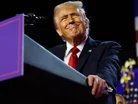
"America will be a manufacturing nation once again and we have something that no other manufacturing nation will ever have: the largest amount of oil and gas of any country on Earth,"
These words were uttered by President Donald Trump during his inauguration speech. Watching him closely from the front row of the audience, were some of the wealthiest business owners and CEO's in the world. Behind them, his cabinet.
This administration, beyond even Reagan's, will be defined by its approach to industry.
And what is this approach? It all comes back to Donald Trump's slogan of 'America First', as in America no.1.
He wants to restore America to a former position of manufacturing dominance and impose consequences on those deemed to be undercutting its strength.
This is evident with his tariff proposals against China, Mexico and Canada, where until recently he was under the impression these nations- rather than US consumers- would be footing the bill.
On the topic Trump wrote this on X ( formerly twitter): " I am a Tariff man. When people or countries come in to raid the great wealth of our nation, I want them to pay for the privilege of doing so."
Despite the desire to make the 'raiders' pay, the Trump Tariffs we've discussed in depth at Manufacturing Digital have not yet materialised.
This is despite the President unleashing a flurry of executive orders during his first day in office.
He's officially marked the first of February as the date where action on them will be taken.
Today he's made executive orders on energy manufacturing- specifically boosting US production of oil and gas.
Running parallel to this, his executive orders also seek to reverse existing sustainable manufacturing policy.
This marks a critical juncture for energy manufacturing and the sustainable future of the US.
Expanding American energy production
During his 2024 campaign, President Donald Trump repeatedly spoke of his intent to declare a national energy emergency on his first day in office.
He'd openly considered using emergency powers under the Federal Power Act during his first administration to carry out a pledge to supporters to rescue the declining US coal industry.
This act never materialised, but Donald Trump has already signed executive orders to declare the US is facing an energy emergency.
These orders seek to increase US power generation to meet rising demand, striking down sustainable manufacturing approaches and enhancing production of fossil fuels.
The US is the second largest energy producer in the world behind China.
The notion its facing an energy manufacturing crisis is a serious one.
But is this true? Well, lets examine the findings of the US Energy Information Administration (EIA).

Its research states that energy consumption has increased steadily since 1974, with total consumption growth equalling less than total production growth.
Between January and July 2024, US energy consumption was 32%, or 13.2 quads, more than the same period in 1974.
Thanks to energy efficiency improvements and the introduction of a new energy fuel mix with renewable energy, electricity consumption per person has decreased since the early 2000s.
And overall US energy consumption from fossil fuels has decreased by about 10% over the past two decades.
So in actuality if we look at consumer and industry energy usage, the US is in a good position with its energy independence.
One concern that does add weight to Trump's claim however of an energy crisis is the growth of data centers in the US.
According to Data Centre Solutions, the US has 5,388 data centers, ten times more than China and most European countries.
And in the first half of 2024, new data centre inventory grew by 10%.
Data centres of course use huge amounts of energy. The US Department of Energy (DoE) expects their power use will triple over the next three years, consuming as much as 12% of the country's power to fuel artificial intelligence and other technologies.
Trump has directly referenced the need to meet data centre demand when discussing the US energy crisis.
He seeks to ease environmental restrictions on power plants to meet that demand, speeding up construction of new plants and easing permissions for transmission and pipeline projects.
However the DoE also advocates for sustainable approaches- harnessing the power of solar energy, land-based wind energy, battery storage and energy efficiency measures- to meet this demand, arguing these are some of the most rapidly scalable and cost competitive approaches.
As data centres need clean firm power, the DoE also advocates for scaling energy technologies like next-generation geothermal and nuclear in alignment with this as opposed to oil or gas.
But Trump is firm in his directive that increasing oil and gas production is the solution and highlights executive orders as a critical means to make immediate progress.
"It allows you to do whatever you’ve got to do to get ahead of that problem," He told reporters while signing the order. "And we do have that kind of an emergency."
Increasing fossil fuels manufacturing
Corporate lobbying in the US is a paid-for and fully legal activity.
Think tanks and pressure groups funded by wealthy corporations like the Koch brothers directly influence and shape the political process.
This has been heightened even further by Citizens United, the 2010 supreme court decision that ruled that corporations and other outside groups can spend unlimited money on elections.
This ruling has helped create the current US political landscape.
Donald Trump received record donations from oil and gas companies during his 2024 campaign. A staggering US$14.1m, making these donations his fourth-biggest source of cash.
However this amount is smaller than the US$1bn he requested on the campaign trail, where his mantra of "drill, baby, drill" attracted headlines as he promised to scrap environmental regulations.
This amount was reportedly first requested at a dinner back in April at Trump's Mar-a-Lago club in Florida, at a dinner with 20 executives including leaders from Chevron, Exxon Mobil and Occidental.
Trump also infamously promised US$110bn in tax breaks for the fossil fuel sector.
Evidently he was regarded as the Presidential candidate who would best represent the interests of manufacturers in this sector.
With these executive orders he has started to fulfil these promises, scrapping restrictions on the exporting of liquefied natural gas and issuing an executive order on Alaska to boost the production of oil, gas and critical minerals.
He also reversed former President Biden's ban on offshore and Arctic oil and gas drilling, in addition to signing an order to change the name of the Gulf of Mexico to the 'Gulf of America'.
President Trump also seeks to refill the US's strategic oil reserves, after Biden sold a record amount after the invasion of Ukraine.
"We will bring prices down, fill our strategic reserves up again right to the top and export American energy all over the world," he said.
This record amount was more than 180 million barrels of crude oil taken from the US Strategic Petroleum Reserve.
These sales helped keep gasoline prices steady but depleted the reserve, which is designed to buffer the United States from a potential supply shock, to the lowest level in 40 years.
Trump's move to refill the reserves meanwhile, has the potential to lift oil prices by boosting demand for crude oil.
The environmental devastation caused by oil and gas manufacturing is well documented.
These processes disrupt marine life's migratory pathways, degrade important animal habitats and can result in poisonous oil spills.
Once these processes are complete, the burning of fossil fuels releases CO2 into the atmosphere, pushing the world closer to the edge of what the UN terms a climate abyss.
President Donald Trump has also in his executive orders scrapped a series of sustainable manufacturing initiatives and policies designed to pull the world back.
A reversal of sustainable manufacturing initiatives & policies
Trump has reversed a series of sustainable initiatives and policies in his first day in office, signalling a dramatic shift in the nation's manufacturing priorities from the Biden Presidency.
His orders include withdrawing the US from the 2015 Paris climate deal, the international pact to fight global warming- a decision he took during his first presidency that Biden reversed.
The President has also struck rules and targets to speed the transition to electric vehicles. Under the Biden administration EV adoption was encouraged through consumer subsidies and imposing strict tailpipe emissions standards on automakers.
The administration also sought to encourage the rise of clean energy technologies like solar and wind through tax credits, creating new manufacturing and project investments worth billions.
This served to help decarbonise the power and transportation sectors, which together make up around half of US carbon dioxide emissions.
President Donald Trump has scrapped this approach, suspending offshore wind lease sales and lifting a freeze on LNG export permitting.
These executive orders mark a sharp diversion in governmental policy, moving away from sustainable manufacturing to boost the production of non renewable oil and gas.
The benefits of an increased energy supply do not outweigh the worse environmental outcomes this will contribute to globally.
As Trump turns to trade in February, many people are saying another trade has already been made: the planet for profit.
Explore the latest edition of Manufacturing Digital and be part of the conversation at our global conference series, Manufacturing LIVE.
Sign up to our weekly newsletter here.
Discover all our upcoming events and secure your tickets today.