How AI-Powered Simulations can Boost Real Productivity Gains
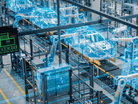
"AI-powered digital twins are revolutionising the manufacturing industry," wrote Kristalyn Warren Mumaw, Autonomous Supply Chain Marketing Lead, Supply Chain & Operations and Industry X, Accenture on LinkedIn.
"By creating precise virtual replicas of physical systems, manufacturers can predict issues, optimise processes and boost productivity.
"Collaborations like KION, Accenture and NVIDIA are leading the way, delivering real-time insights and operational excellence."
Delving deeper into these collaborations is Prasad Satyavolu, Lead, Manufacturing & Operations, Supply Chain & Industry X, Americas at Accenture.
In an insightful blog on their website he highlighted how AI-enabled digital twins can help address the challenges associated with capital projects in addition to their many other benefits.
He also shared Accenture and NVIDIA's work with KION as a key case study that demonstrates AI-enabled digital twins power as a means to build more efficient and autonomous factories.
Here's a closer look at what he had to say.
Using digital twins to optimise capital expenditure
Prasad explains that traditional methods of managing escalating costs in capital projects often involve discrete event simulation (DES) tools.
These tools - which aid in optimisation and support decisions regarding automation and workflow - are no longer meeting contemporary manufacturing challenges.
He argues more advanced solutions are needed, like dynamic simulations with bi-directional operational connectivity and scenario planning.
These simulations will be able to more effectively address issues in both greenfield developments and brownfield modernisation projects.
Prasad notes that these projects frequently encounter delays and budget overruns due to limited collaboration among internal departments - from design and engineering to production and testing - and external suppliers of equipment and parts.
A good example of this is integrating a robotic cell into an existing facility. It may disrupt current production schedules and execution delays could render the project obsolete.
Prasanth highlights that by infusing workflows with AI simulations, accuracy and collaboration can be enhanced.
Bi-directional connectivity on a unified platform has the potential to significantly reduce capital expenditure, ensuring equipment is delivered as specified and targeted production rates are achieved.
The evolution & impact of digital twins
Prasad explains that central to this technological shift is the concept of the digital twin, a dynamic virtual replica of a physical system or process.
Developed on platforms like NVIDIA Omniverse with workflows designed by Accenture, digital twins enable manufacturers to predict and resolve potential issues, improve processes and make informed decisions.
Their adoption leads to streamlined operations, enhanced product quality and increased competitiveness.
With AI integration enabling more holistic and dynamic insights from digital twins, Prasad states there is an urgent need to address responsible use of it within the community.
Use that is hampered by challenges ranging from the costs of implementation and maintenance to a shortage of skilled talent to concerns about cybersecurity and data privacy.
Accenture & Nvidia's approach

Prasad goes on to focus on Accenture's partnership with NVIDIA, joining forces with the NVIDIA Omniverse platform, designed to create digital twins of production lines and warehousing operations.
Their solution stands out with a tailored industry approach, combining Accenture’s manufacturing expertise with NVIDIA’s visualisation technology.
This partnership enhances operational efficiency, provides valuable analytics and streamlines automation adoption.
Focused on operational expenditure (opex), Prasanth explains how their approach allows for quicker, flexible improvements compared to capital expenditure (capex) projects.
Real-time data from IoT devices and sensors enables manufacturers to monitor, identify bottlenecks and optimise processes, improving efficiency and reducing downtime.
KION's digital transformation
Prasanth shares a specific case study of Accenture and NVIDIA's digital twins in action - one that we've covered here at Manufacturing Digital.
KION Group AG is reinventing its supply chain and warehouse operations using “Mega,” an NVIDIA Omniverse Blueprint, to enable the simulation and optimisation of operational scenarios such as layout planning, robot interactions and workforce management.
These digital twins serve as virtual testing environments where operations of autonomous warehouse robots can be simulated, validated and adjusted according to changes in demand and inventory, enhancing operational flexibility.
By testing various configurations in physically accurate simulations, KION identifies the most efficient strategies before implementing them in real-world facilities, improving performance metrics like throughput and task completion times.
The use of AI and digital twins leads to more autonomous and efficient warehouse operations, reducing the need for manual intervention and allowing for quicker adaptations to operational changes.
This approach has streamlined warehouse management, minimised disruptions and increased overall efficiency, demonstrating a practical application of operational excellence principles in a manufacturing environment.
Digital twins: an endless source of value
To conclude, Prasanth explains that a critical dimension of the appeal and value of digital twins lies in their potential to deliver significant opex savings.
By identifying inefficiencies, bottlenecks and areas of waste, digital twins enable manufacturers to optimise their operations and avoid unnecessary costs.
The result is increased productivity and efficiency, allowing manufacturers to implement enhancements that were previously unattainable.
With cost management and reduction a constant and critical concern for manufacturers, this is another way digital twins can be of profound benefit to the wider industry.
By embracing these technologies - including those made by Accenture and NVIDIA - manufacturers can overcome traditional challenges, optimise both capital and operational expenditures and position themselves competitively in an evolving market landscape.
Explore the latest edition of Manufacturing Digital and be part of the conversation at our global conference series, Manufacturing LIVE.
Sign up to our weekly newsletter here.
Discover all our upcoming events and secure your tickets today.
Manufacturing Digital is a BizClik brand.