Project Resilience Curbs UK Manufacturing Skills gap With VR
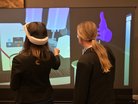
Resilience, an innovative government-funded medicines manufacturing skills project launched recently in the UK, has adopted a new method to train workers.
Following in the footsteps of many large-scale manufacturers, the project is using virtual reality (VR) to train prospective future workers for the medical manufacturing sector.
With VR's sustainability benefits, the large scale adoption of the technology could help contribute to the NHS achieving its bold net zero carbon emissions target.
The NHS Net Zero challenge
In 2020, the NHS became the world’s first health service to commit to reaching net zero emissions.
For the emissions it directly controls (the NHS Carbon Footprint), the organisations goal is to achieve net zero by 2040, with an interim target of an 80% reduction by 2028 to 2032.
This is an extremely ambitious objective, due in part to the scale of the NHS's supply chain operations.

A report by the British Medical Association (BMA) from June last year highlighted that “the health service contributes around 4-5% of total UK carbon emissions and the NHS in England alone is responsible for 40% of the public sector’s emissions.”
One of the biggest sources of NHS carbon emissions? It's wider supply chain, which includes the production and transportation of medicines and medical equipment.
A second significant contributor is travel. The NHS has to account for its vehicle fleet and the millions of commutes made by staff and patients every single day.
A report by the Faculty of Public Health has estimated that NHS-related travel accounts for over 9.5 billion road miles per year in England, representing approximately 3.5% of all road travel in the country.
A 'resilient' method to bridge the manufacturing skills gap
Resilience, launched in April last year, is a two-year, £4.3 million (US$5.3m) initiative managed by Innovate UK.
The programme seeks to address the skills gap in advanced medicines manufacturing by engaging students and professionals through STEM outreach programmes.
Operating across multiple UK universities, the project wants to ensure that young people are excited about careers in the sector and feel encouraged to explore them.
In order to drive this, Resilience has adopted VR technology for its training needs, providing immersive learning experiences without the risks and disruption of real life laboratories and manufacturing facilities.
VR-based learning is accessible from anywhere at any time, eliminating the need for travel and reducing resource consumption.
“VR technology is advancing rapidly, and the ability to recreate in detail real-world environments means we can deliver high-value training without the need to be in those environments," says Professor Ivan Wall of the University of Birmingham, co-director of Resilience.
“This cuts dramatically the need for travel, a major source of emissions, and additionally means we don’t consume expensive and potentially environmentally harmful materials, such as single-use plastics.”
Resilience's VR training replicates a range of advanced real-world manufacturing facilities, including the Cell & Gene Therapy Catapult’s manufacturing centre in Stevenage.
This state-of-the-art training simulation provides hands-on experience in a controlled, virtual space, preparing individuals for careers in advanced medicines manufacturing.
VR training & the sustainable future of the NHS
The NHS faces several environmental challenges, with key sources of emissions stemming from medicine production, anaesthetic gases, inhalers and travel.
VR training can play a significant role in reducing these emissions by minimising the need for in-person training and medical simulations.
For example, VR enables medical professionals to participate in training remotely, reducing travel-related emissions and the environmental impact associated with physical training sessions.
Additionally, the technology has the potential to facilitate virtual clinics, allowing for remote consultations and reducing unnecessary patient travel.
As the NHS continues its transition towards sustainability, incorporating VR into both training and healthcare delivery could contribute significantly to lowering its carbon footprint.
The Resilience project highlights how cutting-edge technology can support sustainability goals while enhancing workforce skills.
By integrating VR training into medicines manufacturing and healthcare education, the NHS can take a meaningful step towards achieving its net zero targets.
By adopting virtual technologies on a larger scale, the UK manufacturing sector as a whole could benefit.
“The use of VR technology is central to our project, helping young people safely learn skills that it would be impractical to gain in the real world due to logistics and capacity," Professor Ivan Wall concludes.
“We can deliver training in schools and colleges or at any of our partner universities, cutting down the need for travel and avoiding unnecessary waste. Even better, VR is exciting; from our experiences so far, young people find it highly engaging, which helps attract them into this vital sector for the UK economy.”
Explore the latest edition of Manufacturing Digital and be part of the conversation at our global conference series, Manufacturing LIVE.
Sign up to our weekly newsletter here.
Discover all our upcoming events and secure your tickets today.
Manufacturing Digital is a BizClik brand.