How Unilever is Scaling AI for Results in Tinsukia
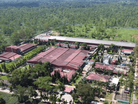
Artificial intelligence is reshaping Unilever’s operations, from consumer insights to product development.
In manufacturing, AI is delivering major gains by boosting efficiency, reducing waste and improving resilience.
The Tinsukia factory in India is a prime example of how AI-driven technologies are revolutionising production.
Recognised as part of the World Economic Forum’s Global Lighthouse Network, the site has implemented over 50 Fourth Industrial Revolution (4IR) initiatives, making it one of the most digitally advanced factories in the world.
“Tinsukia is the third site in India and in our Beauty & Wellbeing business to achieve WEF’s Lighthouse recognition," says Biswaranjan Sen, Beauty & Wellbeing Chief Product Supply Officer, Unilever.
"Its digital transformation is a powerful example of how we’re scaling AI across our supply chain to accelerate growth for our business now and into the future.
This is a remarkable testament to how humans and machines work together in manufacturing to accelerate a future-fit lean and agile supply chain."
Here are the impressive results Unilever has achieved across manufacturing and its broader supply chain by scaling AI at Tinsukia.
Accelerated production

As demand for e-commerce grows, manufacturers must rapidly adapt production to meet shifting consumer needs.
At Tinsukia, an AI-driven vision system has been introduced to streamline product changeovers.
By mapping product features and detecting anomalies in real time, the system enables seamless one-click changeovers when switching between products.
This has made the process 85% faster, significantly reducing downtime and improving responsiveness to market demand.
Enhanced quality
Tinsukia leverages generative AI to refine product quality based on real-time consumer feedback.
By using advanced language models, the factory achieves 97% accuracy in analysing customer sentiment, allowing it to implement improvements faster than ever before.
This approach has resulted in a 73% increase in customer satisfaction scores and a 21% reduction in manufacturing defects, ensuring that products consistently meet the highest quality standards.
Improving workforce productivity with smart AI tools
AI is not only optimising production but also enhancing workforce efficiency.
A new AI-powered allocation tool at Tinsukia dynamically assigns workers to high-priority production lines based on their skills and experience.
This system has boosted labour productivity by nearly 400%, while also identifying skills gaps and providing targeted training.
As a result, employees are better equipped to handle complex tasks, improving both efficiency and job satisfaction.
“We’re pleased that technology has not only had a positive impact on our business, it’s also benefited our employees and local community,” adds Kunwar-Apoorva Singh, Factory Leader at Tinsukia, Unilever.
“Our digital factory transformation has created jobs and opportunities around this remote location, including the launch of a digital braille lab to create an inclusive pool of skilled local professionals. In collaboration with our tech partners, we’ve extensively upskilled our employees.
"We’re supporting our shopfloor engineers to become digital innovators and training a new cohort of digital line leaders with 23% of our workforce already redeployed to lead digital transformation in the factory."
Reduced plastic waste
Unilever is committed to cutting virgin plastic use by 40% by 2028, and AI is playing a crucial role in achieving this goal.
The Tinsukia factory has adopted digital twin technology, creating virtual models of packaging to trial sustainable alternatives before real-world implementation.
This approach has led to a 21% reduction in virgin plastic use at the site and an 84% decrease in the time required for packaging trials.
Whereas the factory previously conducted just two trials per year, it now runs up to 30 annually, accelerating progress towards more sustainable packaging solutions.
Enhanced capabilities to meet real-time demand
Producing over 5.4 billion units annually for brands like Dove, Vaseline and Pond’s, Tinsukia has integrated AI-powered digital planning to align production with real-time demand.
By analysing over 10,000 product combinations and 300 key features, the system enables rapid adjustments to supply.
This has reduced the factory’s frozen period - the time needed to plan and reset production schedules - by 92%, cutting it from 14 days to just one.
Additionally, AI-driven forecasting has improved demand prediction by 35% and reduced finished goods inventory by 16%, allowing Unilever to replenish stocks more efficiently and serve consumers faster.
Across its operations, from the production line to the supply chain, its clear that AI has been a critical tool in enhancing the sustainability, digital advancement and results of Unilever's Tinsukia factory.
Explore the latest edition of Manufacturing Digital and be part of the conversation at our global conference series, Manufacturing LIVE.
Sign up to our weekly newsletter here.
Discover all our upcoming events and secure your tickets today.
Manufacturing Digital is a BizClik brand.