
Cutting Overcapacity: Behind Volkswagen's 2030 Reset
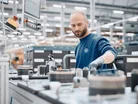
Volkswagen has unveiled company-wide transformation plans aimed at strengthening operational resilience and positioning the group as "the world's most attractive automaker by 2030".
CEO Oliver Blume presented the strategy and its eight-layer structure at the company's annual general meeting in May 2024, stating the plan was designed to address rising geopolitical tensions, intensifying competition and growing trade barriers.
According to Volkswagen, implementing these measures could create the capacity needed for future investment and growth generation whilst strengthening financial robustness across manufacturing operations.
Discussing the future strategy, Oliver says: "We are making the Volkswagen Group even more robust and competitive. To that end, we have mapped out a clear plan for the future.
“We are positioning ourselves to be even more financially resilient and further improving our future readiness in terms of costs, structure and technology – to counter external influences and growing risks in a world that has radically changed.”
Eight operational levers for transformation
Volkswagen's growth and transformation plan centers on eight strategic levers designed to sustainably enhance competitiveness:
- Reduce complexity – Simplify the navigation process of models and variants to focus on the expectations of customers in each region.
- Streamline the technology toolkit – Fewer platforms and electronic architectures to increase development efficiency and reduce spending.
- Align production to market realities – Reduce overcapacity to create a regional, intelligent and economic production network.
- Strengthen regional growth – Allow for more local responsibility to increase competitiveness in important markets.
- Streamline the investment portfolio – Create leaner structures for reduced complexity and sharpen the core business focus.
- Increase operational excellence – Bundle development, procurement, production, sales and quality assurance at CEO level and implement efficiency-focused programmes.
- Strengthen performance culture – Reduce hierarchies and implement a performance-based incentive system.
- Improve group steering – Impose leaner processes and clearer decision-making paths.
In addition to these levers, Volkswagen has already laid several essential cornerstones to reach its goal. The company has focused on delivering new car models to its customers under what it describes as its "largest model campaign in its history".
The manufacturer has highlighted several important milestones achieved across its technology, software, battery, design and quality systems.

Oliver continues: “All central strategic goals have been met. Some of them earlier than planned. And we achieved all of this at a time when the world is rapidly changing. Over the last three years we have given our group an entirely new structure and ensured its stability.
“That is why, in the midst of the greatest transformation our industry has ever seen, we are in a position to act and are resolutely driving the transformation of our company forward towards the next phase.”
Financial targets and market position
Volkswagen has set itself several ambitious financial goals for the future. The group is targeting an operating return on sales of 8 to 10% and a higher cash flow in the Automotive Division, accounting for more than 60% of the operating result by 2030.
At the same time, the group is leveraging manufacturing strengths such as recognisable brands, technological competence, synergies and global scaling effects. According to the group, the transformation is not a fixed-term project but rather a permanent process to continuously bolster resilience to external influences and operational risks.
One of its largest strengths currently resides in electric vehicle production. Recent global deliveries of its all-electric vehicles have grown significantly, with particularly strong performance in Europe where Volkswagen has established itself as the continent's market leader for all-electric vehicles.
Despite market uncertainties and geopolitical challenges, Volkswagen says it is well-positioned to harness the opportunities the transformation could bring.
Speaking optimistically about the plan, Oliver says: “The situation remains challenging. Nevertheless, it is up to us: with our strong brands and products, our clear strategy and a team that can deliver. Great opportunities lie ahead of us."
Company portals
Executives
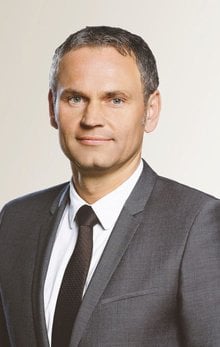
Oliver Blume
CEO