
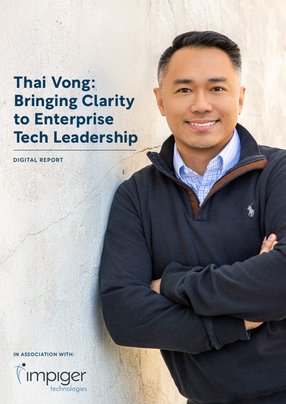
Thai Vong: Bringing Clarity to Enterprise Tech Leadership
Throughout his career, Thai Vong has been repeatedly trusted with enterprise technology mandates where execution, risk and business outcomes converge – often at moments when clarity and decisive leadership matter most.
Early in his career, Thai demonstrated a strong ability to bring order to complex environments. He could walk into chaotic situations, understand business problems and translate them into technical direction.
Over time, his focus expanded beyond technology, shaping how he influenced culture, execution and real business outcomes across organisations of every size.
From startups to multi-billion dollar enterprises, including his time leading global transformation at RS Group and now serving as CIO at ACR, Thai has built a career on accountability and delivery.
"At the core, my work's always been about bringing clarity and making sure the organisation is moving in the right direction,” he explains.
This commitment culminated in Thai being named 2025 Global CIO of the Year at the Philadelphia ORBIE Awards – proof of his ability to influence meaningful change in the enterprise. He was also recognised as a 2025 Titan 100 Honoree, placing him among the top C-level executives in the region.
Formative years
Thai’s career has spanned financial services, biotech and supply chain distribution – diverse operating environments that shaped his leadership approach early on.
His journey started hands-on, emerging from university as a technical consultant and working for different clients across numerous industries, which required rapid adaptation and the ability to diagnose business problems quickly – often without the benefit of structure or precedent.
"That forced me to learn quickly, adapt to new environments and solve problems without a long runway,” Thai reflects. “It taught me how to walk into a situation, understand the landscape first and then get to the root of what the business actually needs.”
Progressing into more complex, regulated, science-driven and global organisations, Thai gained firsthand insights into how different companies make decisions, manage risk and drive change at scale.
Crucially, he learned from leaders who helped him understand the business perspective behind those decisions – an experience that proved invaluable.
"Those experiences shaped how I lead today,” continues Thai. “I focus on understanding the environment I'm stepping into, meeting people where they are and building teams that can deliver in different operating conditions.”
A defining moment came early in Thai’s career, when he worked as an IT manager at a small biotech company. One morning, he woke to a flood of messages indicating the business had fallen victim to a cyber attack. With the firm’s e-commerce website taken offline and redirected to an unauthorised website, it was causing immediate revenue impact.
Leading an attack response for the first time, Thai and his team moved quickly, communicated constantly and restored the site the same day.
"What stayed with me was less about the technical fix and more about the leadership side,” reveals Thai. “People needed calmness, direction and confidence in the middle of uncertainty.”
Once operations were stabilised, the team addressed gaps across edge protection, DNS controls, monitoring and incident playbooks. Within hours, the business was not just back online, but operating with stronger safeguards than before.
That experience crystallised Thai’s philosophy: effective technology leadership is as much about guiding people through uncertainty as it is about solving technical problems.
Leading with clarity
Thai describes his leadership style as steady and deliberate. He focuses on understanding the environment and the practical challenges teams face day to day.
His role centres on setting direction, removing distractions and ensuring teams remain focused on the work that matters most to the business.
He stays close enough to technology to make informed decisions but leads through people: "I want teams to feel supported and confident so they can deliver at a high level.
“I try to meet people where they are, give them room to grow and hold them accountable for outcomes,” says Thai. “Transparency matters, especially during change because people handle difficult situations better when they understand why decisions are being made.”
At its core, Thai’s leadership approach is built on trust and alignment, enabling teams to operate with confidence and deliver at a high level.
When leading large transformation programmes, Thai believes bringing clarity to complexity starts with alignment: everyone must understand the real problem being solved.
"Large transformation programmes can generate lots of competing priorities, shifting requirements and different levels of technical understanding,” he notes. “The first step is simplifying the narrative and making sure people are seeing the same picture.”
A significant element of transformation management involves translation – in other words, helping business leaders understand technical trade-offs and implications, while helping technical teams grasp business risk, timing and constraints. This shared understanding is crucial to maintaining programme momentum.
Delivering under pressure
Thai says one transformation initiative in particular stands out as a defining moment in his career.
Working for a company in the midst of a sale process, he was tasked with bringing the core enterprise platform into compliance to support due diligence. This required coordinating upgrades across multiple warehouses and sites without disrupting operations.
Simultaneously, Thai led the platform and middleware migration into the cloud. These systems supported more than 200 global locations and at least US$800m in managed spend.
"The technical work was significant,” he recalls. “But what really mattered was keeping people informed, making sure they understood what was changing and putting contingencies in place so the work didn’t stop.”
The team delivered on time, strengthened resilience and gave the organisation a much stronger foundation – reinforcing a key lesson for Thai: “Successful transformation comes down to solid architecture, clear communication and guiding people through change.”
From cloud transitions and M&A integrations to cybersecurity uplifts and legacy modernisation, Thai has learned consistent lessons about enterprise change.
The biggest? Meaningful transformation often comes down to making the best decisions possible with imperfect information.
Another crucial lesson involves showing the necessary discipline to put a stop to work that does not move the business forward.
"That's often harder than starting something new, but it's where real progress happens," asserts Thai.
These lessons shape how he leads today: focusing on what matters most and making decisions that keep organisations moving in the right direction.
Driving cultural change
In his current role as Chief Information Officer at ACR, several accomplishments illustrate Thai’s approach to accelerating transformation and improving enterprise velocity.
His team built a repeatable integration model that shortened onboarding timelines and strengthened day-one readiness – critical at a company that has grown through acquisition.
Moreover, resilience has been enhanced through the creation of ACR’s first 24/7 support centre.
"At the same time,” Thai goes on, “we've raised the maturity of our organisation – through better processes, stronger architecture and greater consistency in delivery – which gave the business a more stable foundation to move faster with confidence.”
Elsewhere, within a relatively short period of time, Thai’s team has progressed its AI strategy from early pilots into practical, business-aligned use cases around automation and forecasting, demonstrating strong business collaboration.
One cultural shift Thai is particularly proud of is making his division more accountable and more closely connected to the business.
When he first stepped into the role, the team wanted more clarity and ownership, promoting Thai to evolve the leadership model to give them real decision-making authority.
"Leaders now manage their own budgets, drive their own priorities and shape outcomes instead of waiting for direction," Thai explains.
Building future-ready organisations
The clearest example of how Thai builds future-ready technology organisations can be seen in the way he prepares teams for what is ahead.
A significant focus involves creating conditions that support adaptability, ensuring team members are able to make informed decisions quickly and handle constant change.
"We also strengthen how teams operate across functions, especially in places where the business needs consistency and speed,” says Thai. “That's how we've built a repeatable, structured approach to integration and stood up a support model that gives the organisation reliable coverage around the clock.”
When it comes to AI strategy, Thai and ACR are laying the groundwork for their next operational phase – building the skills and guardrails that will be required in the future.
"For me, being future ready is about building a team and environment that can adapt, learn and move with confidence," he adds.
Strategic partner ecosystems
When evaluating partners, Thai looks for organisations that are on board for the full duration of the journey ahead.
"I don't want firms that show up just for a single project and disappear,” he says. “I look for partners who can operate at our pace and bring the technical depth to solve problems end to end and have shared accountability for outcomes.”
The relationship matters equally. Real partners must understand how the organisation works, what it is trying to achieve and the direction of travel at an enterprise level. This level of connection, Thai believes, is what fundamentally separates partners from vendors.
"The strongest partners help you anticipate what's coming, bring forward options you may not have considered and then lean in before you need to ask," he continues.
“They understand the pace of the business and help you sustain momentum instead of slowing it down with unnecessary processes.
“For me, the real test of strategic partnership is whether they care about the outcome as much as you do – and act accordingly.”
The evolving CIO role
Looking ahead, Thai expects the CIO role to continue expanding as technology evolves with AI, automation and new digital capabilities.
CIOs will be expected to lead and govern those efforts, not just implement them, becoming even more connected to how businesses operate, manage risk and prepare for what is next.
"But what makes a CIO effective isn't really changing,” Thai admits. “It's about understanding the business, focusing on what really matters and ensuring technology supports that direction with discipline and intent.
“At the end of the day, the role is about judgment – making the right decisions at the moments that matter, bringing clarity and helping organisations move forward with confidence.”
Executives
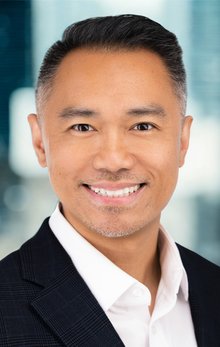
Thai Vong
Chief Information Officer