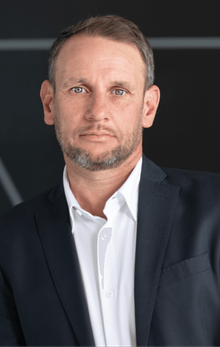
Jabil's Graham Scott: The Human Side of a $26bn Supply Chain

Jabil's Graham Scott: The Human Side of a $26bn Supply Chain
While many see procurement as a back-office function, at a giant like Jabil it is central to production. Millions of parts are needed when building products for more than 400 leading brands and companies. In electronic manufacturing services (EMS), the bill of materials often accounts for 80% of the total product cost.
Graham Scott is responsible for more than US$26bn in annual spend and a supplier network of around 38,000 partners as the company’s Chief Procurement Officer. He leads a team of more than a thousand procurement professionals around the world and is accountable for aligning procurement strategy with Jabil’s growth.
“My focus is on re-positioning the function as a growth driver rather than a cost centre,” he explains. “That means combining deep category expertise with strong supplier relationships and advanced technologies to enable faster, more informed decision-making and stronger alignment with both customer and enterprise priorities.”
See the full story in the May 2026 edition of Manufacturing Digital.

Jabil was founded in Michigan in 1966 and now has more than 140,000 employees in 25 countries. In FY25 it had US$29.8bn in revenue and more than 35 million square feet of manufacturing space.
In 1979 it secured a US$15m high-volume PCB manufacturing contract with General Motors and the company has continued to grow. In 1982 Jabil relocated its headquarters to support IBM’s personal computer business.
The company went public in 1993 and has been part of the Fortune 500 for 25 consecutive years.
Graham’s career so far
“On a personal level, I never imagined my career would take me from being a buyer to CPO of a Fortune 500 company like Jabil,” Graham says. “It is humbling to have that level of responsibility and it is not something I take for granted. Every day, it reminds me how far teamwork, discipline and a focus on relationships can take you, and it reinforces the importance of leading with integrity at every level.”
It was not a grand plan or ingrained passion that brought Graham to procurement. He began his career in engineering, following after his father. Curiosity, eagerness to learn and hunger for responsibility, he explains, led him to apply for a buyer role at a small contract manufacturer.
Graham says: “I learned on the job, and before long, I caught the ‘procurement bug’. The mix of problem-solving, negotiation and relationship building clicked in a way I hadn’t anticipated, and that experience set the stage for everything that came after.” He joined Jabil in 2004 and has been growing with the company since.
“I am not a salesperson, but I do love the art of negotiation and the human side of procurement,” he explains. “People are central to every decision we make. That’s why my strategy focuses on treating people like people: building real relationships, fostering transparency and enabling collaboration.”
For Graham, procurement is about creating value through people and partnerships that enable business, rather than just cost. He is inspired by the character of the many entrepreneurs he has met throughout his career: “people who have not only the vision, but the stamina and grit to take an idea and turn it into a thriving organisation”. This spirit, he says, inspires a desire to foster similar qualities in himself and his organisation.
This extends to the scope of focus, looking at the business itself rather than just money. “These are the qualities of a successful, respectful and trustworthy procurement function,” he says.
Strengths and challenges
The procurement team’s role is to anticipate what could happen and build a resilient supply chain that can handle shocks. Graham explains: “That requires predictive, proactive management: the right checks, the right processes, the right people and the right technology, all working together to minimise impact and de-risk the supply chain.”
Graham says: “Procurement sits at the intersection between component manufacturers and OEMs, and being effective requires more than technical skill; it requires being a steady, reliable presence.”
Emerging technologies, like AI, offer new and potentially powerful solutions – but also introduce new risks. He says: “To be effective, these tools must augment human judgement, rather than replace it. We need to be careful not to become overly reliant on AI tools, ensuring that the data and outputs we receive are accurate, actionable and truly support decision-making.”
He feels that the strengths that have taken him to the top procurement position are centred on people and relationships, both in managing and developing his team and working with suppliers and customers. “I strive to be balanced, not overly reactive, not overly emotional. When difficult decisions need to be made, our suppliers and our customers know they can rely on me and my function as a safe pair of hands.”
In practice, he feels that focusing on the long term matters “as much as, if not more than, any immediate business outcome”. Graham explains: “At the end of the day, it’s about ensuring that, whether we’re building a product for a customer or receiving materials from a supplier, we operate responsibly, consistently and with integrity.”
Challenges and opportunities
The environment for manufacturing is anything but simple. “Supply chain volatility, shifting global trade dynamics and the ongoing pressure to innovate while controlling costs are all top of mind,” Graham says. “Companies must navigate material shortages, geopolitical uncertainty and rapid technological change, all while meeting rising customer expectations for speed, quality and sustainability.”
These challenges, he feels, create “tremendous opportunities”.
“Digital transformation, advanced analytics and emerging technologies like AI give manufacturers the ability to optimise and expand operations, anticipate disruptions and deliver more value to customers,” Graham explains.
“The companies that thrive will be those that combine operational excellence with resilient, adaptable supply chains, invest in their people and embrace innovation, not just to keep pace, but to shape the future of the industry.”
Over the next 18 months, he expects manufacturing to continue to shift from globalisation toward localisation. “This doesn’t mean globalisation will disappear entirely, but supply chains are becoming more regional and fragmented.”
For the past two decades, manufacturers have pursued global scale with operations in China, Latin America and Southeast Asia. While these changes helped to optimise costs, they are now creating supply chain challenges.
“Companies must balance the need to be close to end markets with the operational efficiencies and scale that global sourcing offers,” says Graham. “Those that can produce competitively near their customers while maintaining quality, agility and innovation will be best positioned to navigate this evolving landscape and seize opportunities in a more localised world.”
See the full story in the May 2026 edition of Manufacturing Digital.
Company portals

Executives
Graham Scott
Chief Procurement Officer