
Air Liquide and Quobly: Quantum Processor Manufacturing
French multinational corporation Air Liquide has announced an investment in Quobly, a start-up that develops quantum processors using semiconductor manufacturing processes.
Air Liquide says the strategic partnership, part of Quobly’s EU€115m (US$134m) Series A financing round, supports the shift from fundamental research to industrial-scale manufacturing.
Air Liquide will support Quobly in transitioning its technology to scale, aiming to launch the first commercial product by the end of 2026.
McKinsey estimates quantum computing could create up to US$2.7tn of economic value worldwide by 2035.

Air Liquide’s investment in Quobly
Air Liquide invested through its venture capital arm ALIAD, which supports start-ups whose technologies are aligned with Air Liquide’s core businesses and long-term development priorities.
The capital injection will support the start-up’s continued research and development, advance its industrialisation efforts and drive its international commercial expansion.
Armelle Levieux, member of Air Liquide’s Executive Committee, says: “Quantum computing represents the next major technological frontier.
"Quobly is pioneering the path toward scalable quantum processors, and this is exactly the kind of game-changing innovation Air Liquide looks for when supporting tech start-ups with a strong potential.
“We are proud to participate in this journey and to continue shaping the future.”
The quantum computing value chain
In a press release, Air Liquide says the investment underlines Air Liquide's role as a key partner in the quantum computing value chain.
ALIAD also acts as an industrial partner to its portfolio companies, unlocking new business opportunities and providing direct access to Air Liquide’s resources and expertise.
For Quobly, this includes expertise in advanced materials and specialty gases that are critical to the manufacturing of silicon quantum processors.
What does Quobly do?
Founded in Grenoble, France, Quobly is focused on making quantum computing scalable, manufacturable and deployable to grow the quantum computing market.
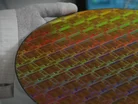
Quobly says it is building quantum computers on proven semiconductor infrastructure: scalable silicon qubits on 300 mm wafers, engineered for fault-tolerant systems.
IBM describes a qubit, or quantum bit, as the basic unit of information used to encode data in quantum computing. The US headquartered technology company adds that powered by qubits, quantum computers might soon prove pivotal in addressing many of humanity’s greatest challenges.
By combining silicon qubits with proven semiconductor manufacturing, Quobly says it enables million-qubit chip-based quantum computers. The company also works on rack-scale quantum computers designed for deployment in existing data centres.
Its quantum chips are co-designed with STMicroelectronics and manufactured on its semiconductor platform.
Beyond Air Liquide, Quobly's EU€115m (US$134m) Series A financing round was led by Bpifrance, SEALSQ and STMicroelectronics with participation from the European Innovation Council, Blast and existing investor Innovacom.
Writing on LinkedIn, Maud Vinet, Quobly's CEO said: "The road ahead is ambitious, Quobly aims at delivering quantum computing at an accessible cost in today's existing computing infrastructure (data centres and high performance computing centres).
"Series A is an important step in turning that roadmap into reality."
Why Air Liquide is investing in quantum processors
Air Liquide, a world leader in gases that is present in 59 countries, collaborates closely with hardware innovators to support quantum chip manufacturing and also secures the supply chain for high purity gases.
The company plays a pivotal function in the broad quantum computing ecosystem, providing the extreme cooling technology and ultra-pure materials necessary to keep quantum processors stable.
According to McKinsey, over 300 organisations including Airbus, Boehringer Ingelheim, E.ON, JPMorgan Chase and Liberty Mutual are actively collaborating with quantum technology companies to solve business challenges.
Quantum computing could create up to US$2.7tn of economic value worldwide by 2035 as it enhances current industry use cases and unlocks new ones, according to analysis from McKinsey.
Company portals




Executives

Armelle Levieux
Member of the Executive Committee

Maud Vinet
CEO