Tesla Shifts Focus From EVs to Solar and Autonomy
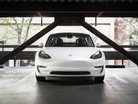
In Q2 of 2025, Tesla reported a decline in its EV delivery numbers, marking its largest on-record quarterly fall.
The company delivered 384,112 vehicles, missing projections by nearly 3,000 units.
This occurs against a backdrop of various pressures, including an ongoing public dispute between CEO Elon Musk and US President Donald Trump.
Despite this, Tesla's stock showed resilience with an increase in its value.
Tesla is heavily reliant on EV sales for its revenue, yet its strategic vision extends to a diverse product range covering robotaxis, humanoid robots, solar panels and battery storage systems.
These emerging technologies, particularly relevant to the manufacturing and industrial sectors, highlight Tesla's ambition to integrate clean energy solutions into manufacturing processes.
EV market influence
Tesla's grip on the US EV market has witnessed a reduction from an earlier dominance of about 75% in Q1 2022 to 43.5% in Q1 2025.
Competitors like General Motors are rapidly gaining ground in the sector, with multiple offerings across brands such as Cadillac and Chevy.
Cassandra Garber, Chief Sustainability Officer at General Motors, said: “We’re now the #2 EV company in the US, thanks to the dozen EV models we offer across the Chevrolet, Cadillac, GMC Hummer, and Buick brands. I love our vehicles! You need to experience GM’s incredible advancements in design and technology.”
Moreover, on a global scale, BYD, a Chinese manufacturer, captured 22.2% of the EV market in 2024, surpassing Tesla, which held 10.3%. Emerging brands like Wuling, BMW, and Li Auto are also challenging Tesla's market share, a trend that reflects a dynamic shift within the EV sector and which could potentially impact manufacturing operations.

Expansion into solar and energy storage
Beyond automobiles, Tesla is also making moves into the solar energy and battery storage domains.
Since acquiring SolarCity in 2016 for $2.6bn, Tesla has developed, manufactured and installed photovoltaic solar systems alongside its EV production.
The company's objective has been to foster a sustainable energy ecosystem, directly influencing innovations in manufacturing energy solutions.
A notable contract in 2024 saw Intersect Power securing a 15.3 GWh storage agreement with Tesla.
Mike Snyder, VP, Energy and Charging at Tesla, said: "Intersect continues to be an exceptional partner and their development expertise combined with the plug-and-play nature of Tesla’s vertically integrated technology enables the speed and scale needed to enhance grid resilience and support greater renewables integration."
Tesla's autonomous vehicles
Tesla's approach to autonomous vehicle technology, in the form of robotaxis, distinguishes itself in the market by its reliance on cameras over technologies like radar and LiDAR, which are used by competitors such as Waymo and Zoox.
While this could bring cost advantages, it has also invited regulatory and consumer scrutiny.
The NHTSA pointed out recently that it 'does not pre-approve new technologies or vehicle systems' but mandates manufacturers to ensure compliance with safety standards pending investigations into potential safety flaws.
The launch of Tesla's autonomous fleet in Austin, Texas, in June 2025, drew attention due to claims of traffic violations seen in social media footage.
The NHTSA confirmed ongoing communications with Tesla about these concerns, underscoring the need for compliance amid technological advances in manufacturing and transport systems.
Development of humanoid robotics
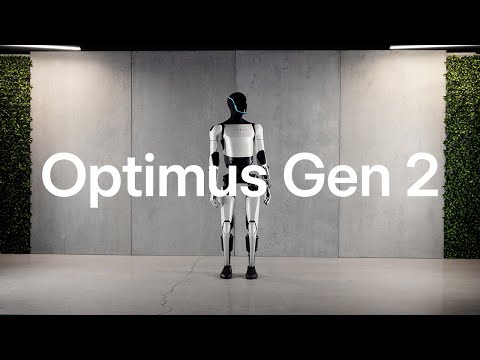
On the robotics front, Tesla is developing 'Optimus,' also known as the Tesla Bot.
Introduced in 2021, this humanoid robot is touted to align with the artificial intelligence systems found in Tesla's vehicles.
Elon Musk has previously suggested that Optimus could one day surpass the significance of Tesla's automotive innovations and market.
This initiative represents a potential paradigm shift in manufacturing operations, introducing robots specifically designed to handle "unsafe, repetitive, or boring tasks", as advertised on Tesla’s website, making advanced AI systems an integral part of the industrial workforce.