Two Charged With Exporting NVIDIA AI Chips to China

Two Chinese nationals have reportedly been arrested and charged for leading a complex operation to unlawfully export millions of dollars’ worth of NVIDIA's cutting-edge AI chips to China, skirting around US President Donald Trump’s trade restrictions.
The US Department of Justice has alleged that Chuan Geng and Shiwei Yang used ALX Solutions, based in California, as a front for exporting restricted technology to China over a period of three years without obtaining the necessary licenses.
The alleged illegal exports involved NVIDIA's H100 GPUs and GeForce RTX 4090 GPUs, facilitated through intermediary countries like Singapore and Malaysia.
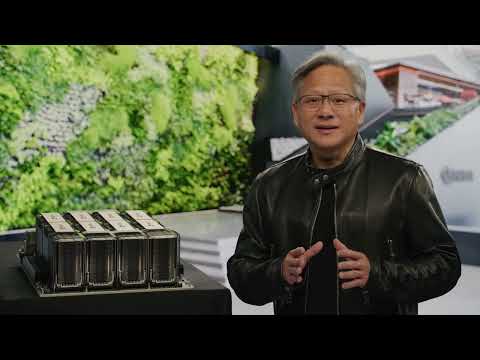
Inside the exporting operation
Court filings indicate that “neither ALX Solutions nor Geng or Yang applied for or obtained a license from the Commerce Department”, making their activities illegal under US law.
Evidence against the duo hinges on financial transactions in which ALX Solutions shipped products to Singapore and Malaysia, receiving payments from Hong Kong and China-based entities.
Among these, a single transaction amounted to US$1m from a Chinese firm in January 2024, according to prosecutors.
The operation reportedly involved misinformation to suppliers such as Super Micro Computer through falsified end-user data. For instance, a 2023 invoice valued over US$28.4m reportedly declared that the chips were intended for a Singapore-based client.
However, US export control officers found that the supposed Singapore company did not exist at the location provided, suggesting the chips were redirected to other end users.
"It appears that ALX Solutions shipped the NVIDIA products to different end users," the court documents confirm.
Industry reaction and countermeasures
NVIDIA has strongly rebuked the allegations, asserting its adherence to a stringent compliance framework.
A spokesperson for the company remarked that smuggling chips is a non-starter.
NVIDIA sells its products to renowned partners, ensuring that all transactions adhere to US export regulations.
The company also cautioned that "any diverted products would have no service, support or updates," underscoring the potential drawbacks for unlawful end users.
Super Micro Computer, named as an unwitting participant, reiterated its commitment to complying with US export laws and asserted its readiness to cooperate with authorities in the ongoing investigations.
A reflection of geopolitical dynamics
The case underscores a broader narrative around the ongoing technological rivalry between the US and China, with Washington imposing stricter controls on advanced semiconductor exports.
These measures aim to hinder China's access to advanced AI technology with potential military and strategic applications.
Though NVIDIA's CEO Jensen Huang managed to broker a deal with President Trump and Chinese authorities to resume exports of H20 chips to China in July, the sales of the company’s premier technologies remain restricted.
Jensen Huang acknowledged the significance of the Chinese market: “The Chinese market is massive, dynamic and highly innovative, and it’s also home to many AI researchers. Therefore, it is indeed crucial for American companies to establish roots in the Chinese market.”
Shiwei was apprehended on Saturday and Chuan surrendered soon after.
Both appeared in a federal court in Los Angeles on Monday, facing potential prison sentences of up to 20 years if found guilty.
This case reinforces the lengths to which some actors will go to bypass export controls, highlighting the determination of US authorities to enforce these regulations stringently.
For technology companies navigating this fraught geopolitical landscape, it serves as a potent reminder of the consequences tied to export control violations.