
Coca-Cola & DS Smith: Beverage Packaging Pioneers
The packaging of drinks has long played a role in plastic pollution and carbon emissions.
Beverage manufacturers now take steps to minimise their environmental impact, shifting away from plastic-heavy formats to recyclable, fibre-based solutions.
Among the latest efforts, DS Smith, Coca-Cola HBC and packaging machine maker Krones have partnered to deliver a fully-recyclable alternative to shrink wrap used in multipacks of soft drinks.
A fibre-based solution
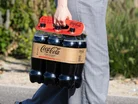
DS Smith has created Lift Up, a handle made from corrugated cardboard that replaces plastic shrink wrap in 1.5-litre bottle multipacks. The design is fibre-based and fully recyclable.
By removing single use plastics, the packaging uses only what is necessary, cutting waste and supporting a more circular system for drinks manufacturing.
Lift Up also addresses branding. A paper label wraps around the bottles, creating a 360-degree platform for marketing that boosts shelf presence. The ergonomic handle improves comfort for consumers, adding practical benefits without increasing the environmental burden.
DS Smith has developed the Lift Up handle in collaboration with Krones, a manufacturer of packaging machinery. Together they focus on how to mechanise the packaging for large-scale use while limiting energy use. Krones says its manufacturing method can lower overall energy consumption by 58% during packaging production.
This form of packaging forms part of DS Smith's broader push for sustainable design, focusing on materials that reduce carbon impact while maintaining function and performance.

Coca-Cola HBC trial cuts plastic and carbon
Coca-Cola HBC has already run a trial of Lift Up packaging in Austria, delivering the recyclable bottle handles to supermarkets across the country. The switch is part of Coca-Cola HBC’s aim to cut its reliance on plastic while keeping packaging functional, efficient and fully recyclable.
The cardboard handle is expected to help Coca-Cola HBC eliminate around 200 tonnes of plastic each year. This shift aligns with both Coca-Cola HBC and DS Smith's shared goals to create packaging that is 100% recyclable while using minimal material.
Both companies report that the switch to fibre-based handles helps cut emissions across the supply chain, including during manufacture, packing and transport. This impact feeds into Coca-Cola HBC’s broader environmental strategy, with packaging playing a central role in its move to net zero.
Stefano Rossi, CEO of DS Smith’s Packaging Solutions Division, says: “We are proud to partner on this innovative packaging solution, driving out unnecessary waste and single use plastic.
“Collaboration with our partners Coca-Cola HBC and Krones is key to reducing single use plastics and delivering innovative changes at scale.
“We hold sustainable design at the heart of what we do as a company, and this is a shining example of the opportunity for innovation in packaging to lead the way to a more sustainable future for manufacturers, retailers and consumers.”
Krones plays a central role in turning Lift Up from a design concept into a viable commercial product by integrating it into automated packaging lines. Its work ensures the new material works seamlessly with existing high-speed processes while keeping energy demand down.
Aligning with 2040 sustainability targets
Coca-Cola HBC bottles and distributes Coca-Cola products in 28 markets across Europe and Africa. Its sustainability framework, Mission 2025, sets targets across water use, packaging, emissions and waste.
The company aims to reach net-zero emissions by 2040 and have a net positive impact on biodiversity across key points in its supply chain.
Already, Coca-Cola HBC has confirmed that it meets nine of its 18 Mission 2025 targets. These include cutting direct carbon emissions by 58% since its 2017 baseline and ensuring 100% of its primary packaging is recyclable. The Lift Up handle directly supports these aims, replacing shrink wrap with material that can be recycled into new packaging products.
Marcel Martin, Chief Corporate Affairs and Sustainability Officer at Coca-Cola HBC, adds: “This is the first ever packaging solution of its kind for 1.5 litre multipacks of Coca-Cola, Fanta and Sprite. It’s the result of our entrepreneurial mindset, an absolute belief in collaborating with trusted partners and our focus on reaching net-zero emissions by 2040.
“We’ll continue to innovate, collaborate and invest so we can continue to deliver our drinks in sustainable ways.”
Lift Up also strengthens Coca-Cola HBC’s position on circularity, aimed at keeping materials in use through recycling and reprocessing. By using only recyclable fibre-based materials, the packaging can return into circulation rather than end up in landfill or incineration.
Together, DS Smith, Coca-Cola HBC and Krones are demonstrating how mechanical innovation, design for recyclability and supply chain cooperation can replace single use plastic with scalable, lower-carbon solutions.
Company portals


Executives

Marcel Martin
Chief Corporate Affairs and Sustainability Officer

Stefano Rossi
CEO of Packaging Solutions Division