
Could Gulf States Pivot to Silicon Manufacturing for AI?
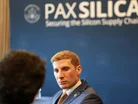
Qatar and the United Arab Emirates (UAE) have entered the US-led Pax Silica supply chain agreement.
The partnership could represent a fundamental transformation from economies built on oil and gas extraction to ones centred on advanced manufacturing and technology production.
Pax Silica, commonly referred to as the "Silicon Declaration," is a strategic framework spearheaded by US President Donald Trump's administration.
The initiative aims to strengthen global supply chains for semiconductors and AI manufacturing capabilities.
Qatar formally joined the agreement on 12 January 2026 and the UAE is set to sign on 15 January.
These Gulf nations join a "coalition of capabilities" that includes the United Kingdom, the United States, Australia, Israel, Japan, Singapore and South Korea.
Jacob Helberg, US Under-Secretary of State for Economic Affairs, explains: "If the 20th century ran on oil and steel, the 21st century is going to run on compute and minerals."
Infrastructure requirements
Pax Silica centres on resolving three essential vulnerabilities in the technology manufacturing supply chain.
The initiative addresses critical minerals processing, with China controlling approximately 90% of global rare earth processing capacity.
The pact seeks to establish an alternative, Western-aligned supply chain for materials required for advanced chip manufacturing facilities.
This agreement focuses on manufacturing infrastructure and power supply requirements.
AI data centres and semiconductor fabrication plants require substantial energy resources, with consumption projected to triple by 2030.
Both the UAE and Qatar possess significant electricity generation capacity, which could support the large-scale manufacturing facilities and "compute farms" needed to develop next-generation AI models and process the chips that power them.
The agreement involves considerable capital deployment into manufacturing projects.
The Qatar Investment Authority oversees assets worth approximately US$524bn, while UAE sovereign funds manage more than US$1tn.
These financial vehicles are already being channelled into ventures such as "Stargate," the US$500bn data centre project involving OpenAI and SoftBank, alongside a US$100bn collaboration between Abu Dhabi's MGX, BlackRock and Microsoft focused on AI infrastructure manufacturing.
Competitive manufacturing advantages
Pax Silica could provide an economic framework for deeper manufacturing collaboration between Israel and its Gulf counterparts.
By concentrating on shared production objectives, such as the "Fort Foundry One" industrial park in Israel or the 5 GW AI facility in Abu Dhabi, the alliance potentially creates a foundation for integrated manufacturing capabilities across the region.
The broader objective appears to be establishing manufacturing and technological advantage over competitors, particularly China.
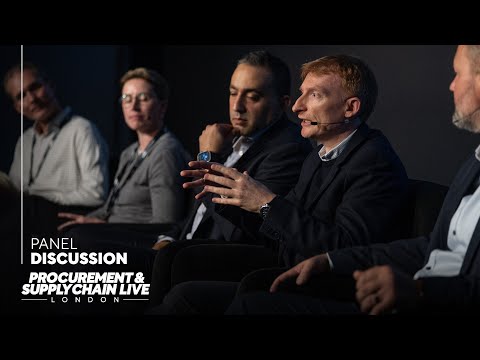
Mr Helberg says: "Our strategy is to create a competitive edge so steep, so insurmountable that no adversary or competitor can scale it."
Membership does not require complete disengagement from Beijing, though it involves certain conditions regarding manufacturing partnerships.
This has been observed in the UAE, where G42 was obliged to divest its Chinese interests to finalise a partnership with Microsoft.
While Pax Silica functions as a statement of "first principles" without formal enforcement structures, the scale of capital being allocated towards manufacturing infrastructure suggests a meaningful realignment could be underway.



Executives
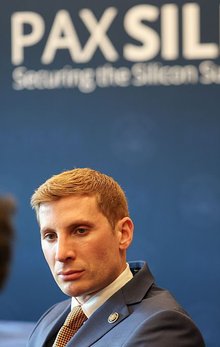
Jacob Helberg
US Under-Secretary of State for Economic Affairs