Critical Minerals: Why Microsoft Takes Data Centres Apart
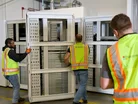
Microsoft surpassed its 2025 circular economy target a year ahead of schedule, achieving a 90.9% reuse and recycling rate for data centre servers and components in 2024.
Driven by a network of purpose-built Circular Centers and AI-governed logistics, the initiative successfully diverted more than 3.2 million components back into active inventory or external markets in 2024 alone.
Rani Borkar, Corporate Vice President of Azure Hardware Systems and Infrastructure at Microsoft, explains: "By redesigning systems to reduce waste, then reusing and recovering materials wherever possible, we're saving costs, gaining efficiency and discovering new opportunities for hardware and infrastructure components."
AI-powered asset management
The backbone of this efficiency the Intelligent Disposition and Routing System (IDARS).
This end-to-end planning platform integrates with Microsoft Dynamics 365 Supply Chain Management to create what the company describes as a zero-waste pathway for every piece of hardware.
IDARS uses AI and machine learning to process and sort end-of-life assets automatically, optimise routing for logistics efficiency and provide operators with precise disposal instructions whilst maintaining data security protocols.
The system's machine learning capabilities enable it to identify the most valuable recovery pathways for each component, whether that involves refurbishment for internal reuse, recycling for raw materials or redistribution to secondary markets.
This intelligent routing has proven crucial to achieving the company's ambitious recovery rates.
Extracting rare earths at scale
Beyond component reuse, Microsoft is addressing critical raw materials supply chain challenges.
The company has launched a pilot programme to extract rare earth minerals from hard disk drives at commercial scale.
Working alongside Western Digital, Critical Materials Recycling and PedalPoint Recycling, Microsoft has processed approximately 22,680 kg of decommissioned hard drives.
The process recovers key manufacturing inputs including neodymium, praseodymium, dysprosium, gold and copper.
According to Microsoft, this method could reduce emissions by 95% compared to conventional mining, while domestic processing potentially minimises transportation-related emissions.

Scaling circular infrastructure globally
The strategy has yielded metrics across the company's global operations.
In 2024, more than 3.2 million components were directed towards internal reuse, marking a 30% increase in value recovery.
A co-created recyclable packaging solution for server racks has diverted more than 2,500 metric tonnes of waste from landfills, with 30,000 racks processed.
This packaging innovation demonstrates how circular principles can extend beyond the hardware itself to encompass the entire supply chain infrastructure.
Since launching the first Circular Center in Amsterdam in 2020, operations have expanded to the US, Ireland and Singapore, with new facilities planned for Cardiff, New South Wales and Texas.
Each facility is designed to handle regional hardware flows whilst maintaining standardised processing protocols.
The initiative is also creating downstream opportunities.
Decommissioned servers are being repurposed for educational training resources, providing hands-on learning tools for technical education programmes.
Meanwhile, partnerships with Asian manufacturers are making use of used memory cards in consumer electronics, such as gaming systems.
"This milestone reflects our dedication and is just one piece of reaching our goal of zero waste by 2030," says Melanie Nakagawa, Microsoft's Chief Sustainability Officer.
"What stands out most to me about this achievement is the creativity and innovation that made this possible.
“Through material recovery – extracting valuable components from discarded products and putting them to work in new ways, like memory chips and motherboards – we're not just reducing waste, we're conserving resources and lowering emissions. It's proof that circularity is both possible and impactful and can benefit the triple bottom line of people, planet, profit."
Company portals

Executives
Melanie Nakagawa
Chief Sustainability Officer
Rani Borkar
President, Azure Hardware Systems and Infrastructure