
Data & Spend: How to Stop Guessing Scope 3 Emissions
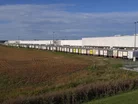
Manufacturers' supply chain emissions make up, on average, nearly 92% of their total greenhouse gas emissions, according to CDP.
When looking to reduce waste and cut emissions, this makes the supply chain perhaps the most obvious place to turn.
However, most organisations rely on broad financial spend data to estimate their carbon footprint, which leads to major inaccuracies.
Mark Kardos, Associate Partner at IBM, explains that without hybridised supplier-specific data, "it's impossible to differentiate between hamburgers and filet mignon when it comes to food spend, and that carries through everywhere else".
To learn how to tackle supply chain emissions, watch Supply Chain Digital's webinar on Scope 3 Strategies, in association with Amazon Business, on demand now.
Sustainability and profitability
While the task of cutting Scope 3 emissions is not a small one, its costs don't have to be big.
"Cost management and emissions reduction don't necessarily have to compete with each other," explains Clark Campos, Director of Mexico Logistics and Operations at MegaCorp Logistics.
"It's more or less operational efficiencies and improvements. Obviously, that helps reduce emissions, but also helps lower transportation costs."
A report by the World Economic Forum and BCG found that 40% of emissions across major supply chains can be eliminated with measures that increase process efficiency.
It also found that fully decarbonising these supply chains would only increase end consumer costs by 1% to 4% in the medium-term.
Meet the experts
Mark Kardos is an Associate Partner at IBM, leading its offerings for sustainable supply chains and circularity globally.
Based in Canada, he has been creating sustainability solutions for businesses since 2011.
Clark Campos is Director of Mexico Logistics and Operations at MegaCorp Logistics, a role he took on in 2025.
He has more than a decade of experience in logistics, with previous experience across a variety of businesses.
Amazon Business
Amazon Business is a global procurement and business buying platform designed to help organisations of all sizes streamline purchasing, control spending and improve supply chain efficiency.
The platform offers a tailored B2B experience that aims to simplify complex procurement workflows and provide tools to turn everyday buying into a decarbonisation lever.
Administrators can use its Guided Buying features to set centralised purchasing rules, highlight organisation-preferred items or restrict purchases that do not meet internal ESG standards.

This helps to ensure that even decentralised tail-spend aligns with corporate Scope 3 goals.
Amazon Business also integrates supplier intelligence at the point of purchase, displaying EcoVadis sustainability ratings directly on supplier listings.
By generating exportable credential reports, teams can monitor their spend on sustainable products over time and accurately measure progress.
To learn how to tackle supply chain emissions, watch Supply Chain Digital's webinar on Scope 3 Strategies, in association with Amazon Business, on demand now.
Company portals


Executives

Clark Campos
Director of Mexico Logistics and Operations

Mark Kardos
Global Offering Leader for Sustainable Supply Chains & Circularity