Emissions & Energy: Inside SKF's Decarbonised Factories
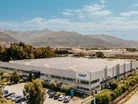
SKF has verified six additional factories as decarbonised sites, complementing its three existing sustainable facilities.
These join facilities in Steyr, Austria, Tudela, Spain and Gothenburg, Sweden.
Individual decarbonisation roadmaps have been developed for each of SKF's factories, outlining the emissions reduction trajectory for every site.
The company-wide strategy incorporates specific actions, investments and anticipated improvements, supporting each location with energy efficiency measures and fossil fuel phase-out initiatives.

To achieve decarbonised site status, locations must satisfy specific criteria:
- Demonstrate a minimum 95% reduction in Scope 1 and 2 emissions against a 2019 baseline
- Continuous improvement in energy performance must be documented
- Establish clear and actionable plans to address and mitigate remaining greenhouse gas emissions.
These requirements apply to SKF sites with annual energy consumption exceeding 2 GWh.
Sofie Runius Cederberg, Head of Sustainability at SKF, says: “We are proud to see six additional decarbonised SKF factories, representing an important step in our overall net zero journey.
“By reducing the carbon footprint of our products, we are also enabling our customers to develop sustainable solutions as well as supporting society in the transition to a more sustainable future.”
Six factories creating global impact
The newly acknowledged factories enable SKF to generate positive environmental impact on a global scale, with sites positioned across Malaysia, Mexico, India, Italy and the US.
At these locations, the company has implemented investments in energy efficient technologies, including heat pumps and advanced chillers, delivering energy savings alongside increased production output.
The nine decarbonised facilities collectively represent nearly 20% of SKF's baseline manufacturing emissions, contributing to overall carbon footprint reduction.
Susanne Larsson, Chief Financial Officer, Chief Sustainability Officer and SVP Finance at SKF, says: “Climate change is a global challenge and this achievement reflects our commitment to climate action and operational excellence.
“By investing in renewable energy, energy efficiency and innovative solutions, we are also increasing our own resilience by lowering our energy demand.”
How do the factories fit into SKF’s strategy?
The decarbonised sites support SKF's progression towards its operational decarbonisation goal by 2030.
The company has established a science-based target for achieving net zero emissions across its entire supply chain by 2050.
SKF was amongst the first industrial companies to receive goal validation from the Science Based Target initiative (SBTi), with sustainability targets aligned to the Paris Agreement's 1.5C objective.
According to the company, its 2030 decarbonisation goal will be reached through energy and material efficiency improvements combined with transitioning to renewable energy sources for operations.
Supply chain optimisation also features in the strategy, particularly through supporting customers in reaching their sustainability objectives.
This approach involves developing products that are lighter, more efficient, longer lasting and repairable, helping to reduce both product footprints and material consumption.
Rob Jenkinson, Net Zero Manager at SKF, says: “Achieving our net zero goal by 2050 is ambitious, but also needed to speed up both innovation and change in society.
“To do this we need to continue working with all stakeholders involved, to not just be a part of creating the change in our own operations but going further by calling for change along the entire supply chain.”
Company portals

Executives
Rob Jenkinson
Net Zero Program Manager

Sofie Runius Cederberg
Head of Sustainability

Susanne Larsson
CFO, CSO & EVP