Ford Learns Tough EV Lessons from Tesla and China

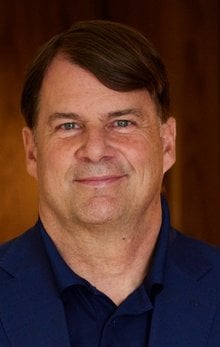
Ford’s CEO Jim Farley has revealed that a deep dive into the engineering of competitor vehicles was a “shocking” experience that spurred a strategic rethink of the company’s approach to electric vehicle (EV) manufacturing.
By physically disassembling models from Tesla and Chinese automakers, Ford uncovered major disparities in production efficiency and design philosophy that it is now working to address.
Speaking on the Office Hours: Business Edition podcast, Jim explained his realisation of how far ahead some EV manufacturers are.
In 2022, this understanding contributed to the creation of a new division, Model E, specifically to foster EV innovation. Despite this division reporting a loss of over US$5bn in 2024, Jim knew the path to EV competitiveness would be “brutal business-wise”.
He added: “My ethos is to take on the hardest problems as fast as you can and do it in public because you’ll solve them quicker that way.”

Vehicle architecture and production costs
During the interview with Monica Langley, Jim provided a specific example of the manufacturing insights gained from the teardown process.
“I was very humbled when we took apart the first Model 3 Tesla and started to take apart the Chinese vehicles," he said. "When we took them apart, it was shocking what we found."
A direct comparison between the Tesla Model 3 and Ford’s own Mustang Mach-E revealed a critical difference in their physical construction.
Jim explained: “Our wiring loom, just the wiring in the vehicle, was 1.6km longer than the Tesla wiring loom."
This seemingly minor detail has major cost implications. The extra weight of the wiring required a larger battery, costing an additional US$200 per vehicle. This highlights how component design directly impacts overall production costs in an EV.
He adds that “when an EV has a really expensive battery, the weight of the vehicle is monetised through the size of the battery”.
This points to a need for greater investment in lightweight components – even if they cost more initially – as a strategy to reduce the expense of the battery, which is the single most costly part of an EV.
The global manufacturing race
The pace of EV adoption and manufacturing innovation outside the US is a major concern for Ford.
Jim noted that "EVs are exploding in China," partly due to strong government support for the sector. Chinese automakers have advanced their production capabilities, offering a variety of high-tech models that are now entering European markets and challenging established brands.
According to Business Insider, approximately 50% of new car sales in China are electric compared to about 10% in the US. This market dominance has allowed companies like BYD to scale production rapidly.
In the UK, BYD’s sales increased by 880% year-on-year in 2025, making the country its largest market outside China. The success is partly attributed to offering competitively priced vehicles like the BYD Dolphin, which provides an alternative to more expensive models.
Jim stressed the importance of competing on a global scale: "We can’t walk away from EVs, not just for the US, but if we want to be a global company, I’m not going to just cede that to the Chinese."
Automation and democratising technology
Jim also shared his perspective on the role of automation in manufacturing, drawing a parallel to his grandfather’s experience with the first automated elevators: "I asked my grandfather, 'what would be the worst job you could think of?'. He said 'an elevator operator. You have no one to talk to and automation is a scary thing'."
This historical view on automation informs Ford’s modern operational ethos, which Jim described as being based on "democratising technology”.
He emphasised that Ford's objective is not simply to be the first to market with exclusive high-end innovations. Instead, the goal is to make technological advancements accessible to the broadest possible customer base.
This approach suggests a focus on scalable manufacturing processes that can produce affordable technology for the mass market rather than catering only to premium buyers looking for a “US$70-80,000 electric vehicle".
Company portals



Executives
Elon Musk
Tesla CEO
Jim Farley
Chief Executive Officer