
From Texas to Tahara: Toyota's Manufacturing Footprint
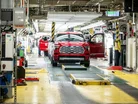
Toyota Motor Corporation has filed plans for a US$2bn factory expansion in Texas, US.
The site would be located in Bexar County and will create 2,000 new jobs, according to a filing submitted to the Texas Comptroller of Public Accounts.
Across the US, Toyota has 14 manufacturing plants. It operates more than 100 production and assembly plants around the world that build Toyota and Lexus vehicles, as well as engines and parts, across more than 26 different countries.
Kenta Kon, the company's President and CEO, says: "The strength of manufacturing lies in having both products and genba, or sites where the action takes place. By looking at a production line’s speed, we can tell whether products are selling.
"One challenge after another arises, and no two days are ever the same. Unless we solve the problems right in front of us, we cannot deliver cars to our customers."
The scale of Toyota manufacturing
Toyota operates 72 manufacturing companies across Japan, North America, Europe and emerging markets.
This vast network is designed to mitigate supply chain risks and respond rapidly to regional consumer demands.
Its key products include internal combustion engine (ICE) vehicles, industry-leading hybrids, battery electric vehicles (BEVs), like the bZ4X, and core components like advanced rear-axle assemblies and drivetrains.
Beyond the US$2bn Texas project, Toyota has pledged more than US$10bn to North American projects to boost hybrid component production across five US states, ensuring its supply chain is localised and tariff-resistant.
Toyota's manufacturing philosophy
The Toyota Production System (TPS) is at the heart of each of these factories.
Built on the principles of Jidoka, automation with a human touch, and just-in-time manufacturing, the philosophy ensures that vehicles are only built to meet specific demand.
This helps to eliminate waste and maximise operational efficiency.
The system is underpinned by a commitment to kaizen, or continuous improvement, empowering every worker on the factory floor to actively identify bottlenecks and drive operational enhancements.

Operations and strategy
To sustain a footprint of this magnitude, Toyota relies on highly integrated corporate strategies.
The company is restructuring its supply chain to be more resilient, holding higher inventories of critical components like semiconductors while maintaining its lean manufacturing ethos for bulk parts.
It actively partners with local suppliers near its hubs, like the San Antonio campus, to reduce logistics costs and emissions.
Toyota is aggressively pursuing carbon neutrality across its entire manufacturing lifecycle by 2035. This includes massive investments in renewable energy for its plants and scaling its hydrogen fuel cell and BEV technologies.
The automaker is extending vehicle lifecycles and focusing heavily on software-defined vehicles (SDVs), leveraging its Woven by Toyota division to integrate advanced AI and automated driving capabilities directly into the manufacturing pipeline.
Toyota's global C-Suite
Navigating the complexities of global manufacturing, localised supply chains and an electrified future requires a unified executive front.
Following a major leadership reshuffle in early 2026, there are four key figures steering the brand.
President and Chief Executive Officer Kenta Kon took the helm in April 2026, bringing a sharp, financially-driven focus to internal management and corporate profitability.
Chief Financial Officer Yoichi Miyazaki oversees the financial strategy and capital allocation required to fund multi-billion dollar expansions like the one in Texas.
Takanori Azuma is Chief Human Resources Officer, driving the human capital strategy and ensuring the philosophies are maintained across Toyota's global workforce.
Chief Branding Officer Simon Humphries leads global brand identity and design, crucial for positioning Toyota as both a reliable legacy automaker and a forward-thinking mobility brand.
Company portals

Executives
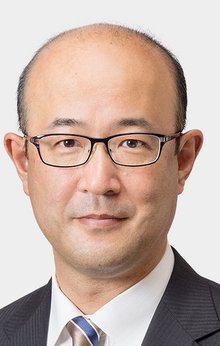
Kenta Kon
Chief Financial Officer and Operating Officer at Woven by Toyota
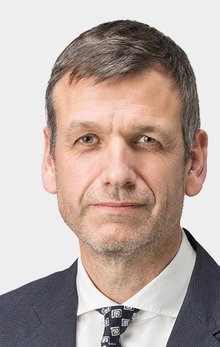
Simon Humphries
Operating Officer
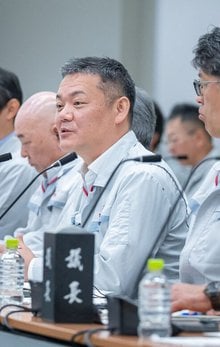
Takanori Azuma
Group Chief Officer