The US$104bn Challenge Behind BMW's EV Manufacturing

A customer who has just purchased a new BMW off the forecourt is unlikely to be thinking about the vast and intricate network of purchasing and logistics that made their vehicle possible. BMW's century-long history underpins a reputation for quality, but maintaining this across a global operation requires a formidable procurement strategy.
The sheer scale of this task is managed by the purchasing and supplier network division. Nicolai Martin, Member of the Board of Management of BMW AG, Purchasing and Supplier Network, oversees an annual purchasing volume of around US$104bn.
He explains the complexity involved: "Every day, we master immense complexity: merging 36 million components from thousands of suppliers worldwide, to produce one of the most complex and yet emotional products on earth"
He adds that these figures demonstrate not just the scale of value creation but also "the enormous responsibility that comes with it."
Sustainability as a strategic lever
For the BMW Group, sustainability is not an afterthought but a central component of its business model. Nicolai frames it as a strategic necessity for ensuring BMW's future viability and maintaining its operational licence.

"For the BMW Group, sustainability is a strategic lever for a future-proof business model. Current global challenges are accelerating the move towards circularity and more sustainable, innovative technological solutions," he explains. This focus is driven by both regulatory pressure and evolving consumer expectations.
"For us, fulfilling sustainability requirements and our commitment to the Paris Climate Agreement are our licence to operate and to lead," Nicolai says.
He adds: "Many of our customers demand more sustainability in our products." Beyond meeting demand, Nicolai argues that sustainable supply chains offer a distinct competitive edge.
"More efficient, innovative and circular supply chains make us more resilient as a company," he continues.
- 3.1 million cast components
- 520,000 plastic components
- 1.5 million drive shafts
- 275,000 cockpits
- 25,000 special engines
- 560,000 logistics containers
Navigating electric mobility emissions
The industry-wide move to electric mobility introduces new challenges, particularly concerning the carbon footprint of the supply chain. Nicolai highlights that without intervention, emissions associated with producing an electric vehicle could rise.
"The ramp-up of electric mobility is increasingly moving the focus of CO2 emissions towards the supply chain," he says.
This requires a "360-degree" approach, looking at the entire life cycle of the vehicle, not just its on-road emissions.
The BMW iX3 serves as a case study for this strategy. The model achieved a 42% reduction in supply chain CO2e emissions compared to its predecessor. Analysis revealed 90% of the supply chain's carbon footprint was in four material groups: battery cells, aluminium, steel and thermoplastics.
To address this, BMW has implemented a strategy combining renewable energy mandates for suppliers with circular economy principles.
"Our battery cell suppliers are obliged to use 100% renewable energies in cell production," Nicolai states.
For the iX3, 55% of its direct suppliers are using renewable energy to produce components; for the overall vehicle, around 33% of materials are from secondary raw materials.
Supplier collaboration and circular production
The use of secondary, or recycled, materials is a key part of strengthening supply chain resilience. It helps conserve natural resources and reduces dependence on primary raw materials, which is a significant strategic advantage.
"As long as Europe lacks a functioning raw materials industry of its own, this approach is essential to strengthening our resilience," Nicolai says.
In the iX3’s high-voltage battery cells, nickel, cobalt and lithium each comprise around 50% secondary material.
Achieving these goals has required a change in how BMW works with its partners.
"To bring innovations into BMW, a collaborative partnership with our suppliers is essential," Nicolai explains.
This extends beyond component development to finding new solutions for CO₂-reduced materials and circular designs.
This transformation is supported by facilities like BMW's Landshut plant. According to Thomas Thym, Head of BMW Group Plant Landshut, the site acts as a centre for sustainable production benchmarks.
The plant puts BMW's circular economy principles into practice, with two-thirds of the aluminium used in its foundry being secondary. Furthermore, the plant's Zero Defect Supply Chain Campus trains suppliers in best practices, multiplying the effect of its quality and sustainability standards across the network.
Company portals

Executives
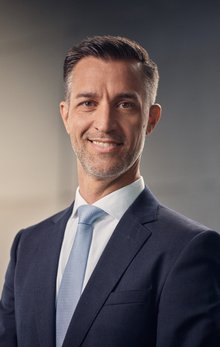
Nicolai Martin
Board Member Responsible for Purchasing and Supplier Network
Thomas Thym
Vice President Purchasing, Quality, Production Light Metal Casting, Head of Component Plant Landshut