Why Manufacturers Should Embrace Carbon Accounting
As the imperative for global climate action intensifies and regulatory standards become more stringent, the manufacturing sector is under pressure to move beyond mere reporting of emissions to actively managing them.
An innovative system is evolving within the industrial landscape, transforming how manufacturers deal with carbon by assimilating it into the same frameworks currently used for financial transactions.
In an insightful article by Dominik Asam, Jürgen Ernstberger, and Gunther Friedl titled 'How Carbon Accounting Supports Corporate Decarbonisation', the concept of corporate emission reporting is extrapolated further, introducing the green ledger method.
This methodology allows carbon to be appraised with comparable auditability and strategic focus as monetary assets.

The foundation of manufacturing decarbonisation
Manufacturing enterprises have long relied on robust financial management systems embedded within Enterprise Resource Planning (ERP) platforms like SAP S/4HANA, known for their precision in monetary data management.
Dominik Asam, Chief Financial Officer of SAP and co-author of the article, emphasises this strategy: "We propose leveraging traditional financial management systems not only to track emissions across Scopes 1, 2 and 3 but to allocate them precisely to products and services via product carbon footprints (PCFs)."
This allocation is pivotal for manufacturers, enabling visibility of emissions beyond organisational confines and into individual transactions, product lines and cost centres.
This granular approach supports both adherence to sustainability regulations and informed decision-making throughout the entire value chain, critical for manufacturers aiming to maintain compliance and competitiveness in a sustainably driven market.
What is a green ledger?
Much like a financial ledger, a green ledger captures carbon emissions, serving as an alternative accounting measure. Integrated within ERP systems, it facilitates:
- Granular data collection encompasses energy consumption, supply chains, logistics and workforce commuting.
- Carbon tracking by Scope (Scope 1: direct emissions, Scope 2: purchased electricity, Scope 3: value chains upstream/downstream).
- Product-level carbon accounting through PCFs.
- Internal alignment between environmental and financial key performance indicators (KPIs).
- Regulatory compliance with standards such as the EU CSRD and the US SEC’s climate disclosure rules.
The key to genuine progress in manufacturing decarbonisation lies in a familiar place: the company’s financial systems," observes Gunther Friedl, Managing Director at Dieter Schwarz Stiftung, Professor, Former Dean at TUM School of Management and co-author of the article.

Global emission reporting
SAP S/4HANA provides manufacturing businesses the ability to establish carbon accounts parallel to financial accounts.
"By integrating PCFs into ERP systems like SAP S/4HANA, companies can assess and manage emissions at the transaction and product level, linking environmental data with financial metrics," writes Dominik Asam.
This strategy embarks on the creation of a green ledger where carbon receives equivalent scrutiny as monetary resources in decision-making.
For instance, the emissions from direct manufacturing activities, energy usage and supply chain inputs can be meticulously documented and reported, aligning environmental accountability with operational excellence.
In light of evolving regulatory demands, manufacturing entities are becoming indispensable in adhering to new mandates surrounding greenhouse gas emissions, all converging with the Greenhouse Gas Protocol.
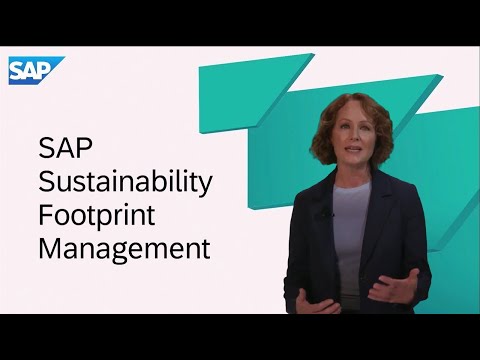
Globally, regulatory bodies such as the US SEC and the European Union's CSRD have initiated new rules and reporting requirements that will integrate sustainability metrics into standard business procedures.
By facilitating real-time emissions tracking, technologies like smart meters and integrated supplier databases empower manufacturers to adapt swiftly to regulatory landscapes while maintaining transparency.
As we venture further into a future driven by a decarbonised economy, manufacturing leaders who integrate carbon tracking into their ERP systems will not only fortify compliance but champion proactive sustainability as a core component of corporate strategy.
Explore the latest edition of Manufacturing Digital and be part of the conversation at our global conference series, Manufacturing LIVE.
Discover all our upcoming events and secure your tickets today.
Manufacturing Digital is a BizClik brand.