GFT & Google Cloud: AI-Powered Visual Inspection Robots
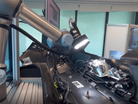
GFT Technologies has launched AI-powered robotics arms designed for use in automotive manufacturing.
GFT, which describes itself as an AI-centric digital transformation company, says it will station three different robots along assembly lines to ensure components, such as car bumpers and doors, are manufactured accurately.
The automotive industry is a top adopter of industrial robots in the US, making up around a third of installations according to data from the International Federation of Robotics.
This work builds on GFT’s partnership with Google Cloud since 2019, working to implement digital infrastructure for manufacturers and on AI-powered visual inspection.

How do the robots work?
GFT’s technology uses three robots designed to work in collaboration with each other on car production lines. It says the robots ensure components such as car bumpers, doors, pipes and pieces are manufactured accurately.
Brandon Speweik, Head of Industry Sales & Strategy at GFT Group, says: "Auto manufacturers have been asking the same question for years: how do we get AI off the screen and onto the floor?
"With this launch, that question has an answer.
“Bringing AI into the physical realm for auto manufacturers requires a partner who understands the intricacies of both the technology and the factory floor. That's been GFT's role for 35 years and this is the natural extension of it."
The first robot uses a camera to verify details on each piece, such as positioning, visual defects and confirming that labels and serial numbers are accurate. Every photo the camera takes is automatically sent to the cloud.
This camera is attached directly to the robot’s “hand” so it can be moved around to capture different angles and ensure every part of the component is checked.
After inspection, the second robotic arm on the line marks the parts that its previous counterpart identified as defective.
The third robotic arm then physically interacts with the line and defective pieces. This includes repositioning parts and removing parts from the line.
When the arm detects a misaligned component, it can correct its position before advancing to the next production stage. The arm can also pull the parts and flag for human review when a defect is marked as detected or suspected.
AI agents
GFT has incorporated an AI agent into the root cause analysis process, drawing on the images provided by the robots as well as other datasets.
The system can detect a defect but also automatically pinpoint its source, ensuring intervention occurs before additional defective parts are produced.
GFT says that together, the robotic arms, agentic AI and cloud technology keep production running quickly without sacrificing quality or the ability to improve over time.
One large US based auto manufacturer has already begun to put this technology to work across its operations, GFT announced.
AI on the factory floor
The deployment of robotics is set to rapidly change the manufacturing industry.
According to Deloitte’s March 2026 report titled Physical AI: The Moment of Acceleration, 41% of firms expect physical AI to transform their organisations.
The same report shows that more than 500,000 industrial robots were deployed in 2024, with annual installations forecast to reach 700,000 by 2028.
The automotive industry is a top adopter of industrial robots in the US, making up 33% of installations in 2023 according to data from the International Federation of Robotics.
Company portals



Executives
Brandon Speweik
Head of Industry Sales & Strategy, US