How Global Manufacturers are Using AI in Supply Chains
Manufacturers across the globe are turning to artificial intelligence (AI) to build more resilient supply chains and better mitigate operational risks in an increasingly complex business environment.
The manufacturing sector has witnessed considerable shifts in supply chain dynamics over recent years, with companies needing to respond to geopolitical uncertainty and growing worldwide demand.
From rising requirements for electric vehicles to pressure for sustainable energy solutions and more efficient operations across the entire production-to-consumer process, the industry has faced widespread disruption.
Against this backdrop, five manufacturers have emerged as leaders through their deployment of innovative AI-powered supply chain strategies.
Schneider Electric: The "self-healing" supply chain
CSCO: Mourad Tamoud
Employees: 80,000+
Operations: Across 160 factories and 75 distribution centres
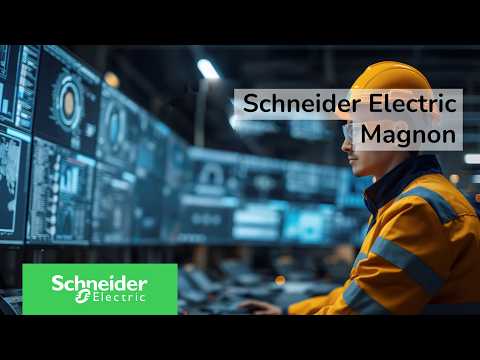
Schneider Electric has developed what it calls a 'self-healing' supply chain platform, which depends on adaptive machine learning, IoT and data to enable real-time workflow optimisation. The system continuously learns and readjusts parameters including minimum order quantities, lead times and safety stock levels.
Through IoT integration, the AI system has capabilities to improve financial and operational performance while offering predictive insights into business operations. This supports scenario planning, strategy adjustments and enhanced visibility across the supply chain.
The data and machine learning enables businesses to adapt to delays, shutdowns or event risks, which could mean a system can automatically identify alternatives to initiate replacements or modify production schedules. This could help reduce monetary losses and mitigate risk more effectively.
Schneider Electric's Chief Supply Chain Officer Mourad Tamoud oversees operations across more than 80,000 staff members, 160 factories and 75 distribution centres. The company has seen a 10% overall inventory decrease through its six-day reduction in day-in inventory. Products have been delivered at greater speed – with a reduction of six days – and more than €100m (US$118m) has been generated in value.
Unilever: AI-native "virtual factories"
CSCO: Willem Uijen
Operations: 280+ factories and 200+ warehouses
Unilever, uses digital twins to create what it calls 'virtual factories'. The company uses replications of production lines in a cloud-based environment to grow its operations. It is investing in its staff and operations in an attempt to become 'AI native', through the embedding of machine learning across its global supply chain.
Chief Supply Chain Officer Willem Uijen is leading the digital transformation effort, with more than 23,000 staff trained in AI during 2024 as the company upskills its workforce.
The company partnered with Microsoft to deploy its digital twins, utilising IoT and intelligent services within the Azure platform. Through this, the models utilise real-time data on temperature, cycle times and more to predict and optimise the manufacturing process.
Unilever's Valinhos facility in Brazil saw immediate ROI from implementing digital twin technology, with energy cost savings of US$2.8m and a 1% to 3% increase in productivity. The technology could be creating more efficient and productive supply chain operations, with cost savings demonstrating the potential impact these virtual factories are having.
"Our WEF Lighthouse sites reflect how our world-class operations are combining digital innovation with the passion and expertise of our people, enabling us to respond faster to demand," explains Willem Uijen, Chief Supply Chain and Operations Officer at Unilever.
Rolls-Royce: AI-powered "signature analyser"
Chief Procurement and Supply Chain Officer: Martin Thomsen
Suppliers: More than 18,000 active suppliers
Annual spend: £7bn+ (US$9.5bn)
Rolls-Royce is transforming its operations with its 'signature analyser' method, utilising AI and machine learning to quickly identify defects. Chief Procurement and Supply Chain Officer Martin Thomsen oversees more than 18,000 active suppliers with an annual spend of more than £7bn (US$9.5bn). To improve productivity and cost savings, Rolls-Royce turned to Microsoft Cloud for Manufacturing for its digital transformation.
The analyser forms part of its Smart Discovery and Intelligent Engine suits, detecting anomalies in engines. It utilises vibrations, thermal patterns and acoustic frequencies to predict component failures before they take place.
The technology can filter out background noise to accurately spot disturbances. This has automated data science heavy lifting, with a significantly shortened investigation period. Rather than previous systems which noticed issues when they occurred, the analyser can utilise trends, such as a change in sound or thermal pattern, before it becomes a wider problem.
"We are investing heavily in modernising our systems and improving our design engineering. By embracing Microsoft AI and digital technologies, we will develop efficient and fully utilised smart factories, whilst enhancing our customer and employee experience," explains Kaveh Pourteymour, Group Chief Digital Information Officer at Rolls-Royce.
BMW Group: The "aIconic" purchasing system
Senior VP of Strategy: Hendrik Lang
Suppliers: ~12,000 suppliers
Annual purchasing volume: ~€90bn (US$104bn)
BMW Group uses generative AI and its new intelligent multi-agent system, BMW Group AIconic Agent, to make stronger and more efficient decisions. Senior Vice President of Strategy Hendrik Lang oversees the implementation across 12,000 suppliers with an annual purchasing volume of €90bn (US$104bn). It is a multi-agent AI ecosystem working to automate global sourcing, which could mean human staff members can focus on critical decision-making.
The system scans through historical information to gain consistency across BMW's supplier base so it can create high quality request documents. Following the receipt of bids, the agents can perform deep dives to identify legal discrepancies, evaluate coverage and flag potential risks across the supply chain.
It examines global market trends, price fluctuations and geopolitical risks to enable leaders to make better purchasing decisions. AIconic is in place to eliminate manual labour so that BMW's workforce can be more supported throughout its operations.
"At the BMW Group, we consider AI to be more than just a technological innovation. We see it as a key element of the digital transformation," emphasises Hendrik Lang, Senior Vice President Strategy, Digitalisation and Sustainability, Purchasing and Supplier Network at BMW Group. "Empowering our people to use AI technologies is our top priority."

PepsiCo: The "omniverse" distribution centre
SVP and CSCO: Karen Jordan
Employees: 10,000+
Manufacturing Plants: 61
In order to meet consumer demand and operate strategically amid ongoing turbulence, PepsiCo is partnering with NVIDIA and Siemens to transform plant and supply chain operations. Senior Vice President and Chief Supply Chain Officer Karen Jordan leads operations across more than 10,000 employees and 61 manufacturing plants. The company is applying advanced digital twin technology and AI to meet consumer demand and operate strategically amid ongoing turbulence.
It is reshaping how facilities are simulated and tested to optimise its physical footprint. It is leveraging the NVIDIA Omniverse libraries to simulate upgrades to its facilities within the US before scaling globally.
The technology allows it to co-design, validate and optimise facility layout before any physical builds take place, making it a less costly but realistic alternative. This could mean PepsiCo can trial what works for its expansion before spending large sums of money on something which may not make a significant difference.
"The scale and complexity of PepsiCo's business, from farm to shelf, is massive and we are embedding AI throughout our operations to better meet the increasing demands of our consumers and customers," says Ramon Laguarta, Chairman and CEO of PepsiCo. "Our work with Siemens and NVIDIA will help accelerate our continued journey of becoming a future-fit company, operating with agility and foresight."
Company portals







Executives
Karen Jordan
SVP, Chief Supply Chain Officer NA- Beverages

Kaveh Pourteymour
VP and CIO

Mourad TAMOUD
Chief Supply Chain Officer
Ramon Laguarta
Chairman of the Board of Directors

Willem Uijen
Chief Supply Chain and Operations Officer