Inside LG's Net Zero Targets in Global Manufacturing
As climate pressures grow and customer expectations evolve, LG Electronics is sharpening its focus on sustainable manufacturing and responsible growth.
The company’s 2024–2025 Sustainability Report places strong emphasis on decarbonisation, resource reuse and inclusive development — all central to its long-term operational strategy.
While LG’s international footprint continues to expand, its sustainability framework aims to redefine how a global technology manufacturer can influence both business and society.
The report sets a detailed path toward achieving lower environmental impact through both product development and production strategy.
Pushing for net zero in production
A primary aim of LG’s sustainability strategy is to reach net zero emissions from operations by 2030. This target includes Scope 1 (direct) and Scope 2 (indirect) greenhouse gas emissions, with LG reporting a 40% cut since 2019, using 2017 as its baseline.
A central part of this goal is LG’s RE100 commitment, which pledges to transition all production sites to 100% renewable electricity.
That includes factory-level changes across global facilities, where the company installs solar power infrastructure, uses smart grid systems and applies AI to improve energy use efficiency.
William (Joowan) Cho, Chief Executive Officer of LG Electronics, states: “To achieve carbon neutrality in the production stage by 2030, LG Electronics is expanding the use of high-efficiency equipment to improve energy efficiency and accelerate the transition to renewable energy across our production sites.”
By the end of 2023, LG reports an 11% year-on-year increase in renewable energy usage, supported by a combination of on-site generation, Power Purchase Agreements and certified green energy procurement.
The adoption of AI-powered optimisation and integration of renewables are expected to cut emissions further over the next five years.
Building a circular supply chain
LG’s sustainability plans extend well beyond energy. Its “3Cs” framework — Carbon Neutrality, Circularity and Clean Technology — and “3Ds” — Decent Workplace, Diversity & Inclusion and Design for All — together define the company’s mid to long-term environmental and social tasks.
The report highlights LG’s global take-back schemes and design-for-repair practices as critical to its circular economy efforts.
In 2023, the company recovered 527,000 tonnes of electronic waste across 52 countries. Product designs now also prioritise recyclability and durability, especially across the Styler, WashTower and LG OLED product lines.

Plastic reuse forms another major focus. Last year, LG used over 32,000 tonnes of recycled plastics in product manufacturing and plans to exceed 600,000 tonnes cumulatively by 2030.
To enforce sustainability across the supply chain, LG uses its Green Program Plus system to assess more than 2,900 suppliers annually. The evaluation centres on environmental performance and circular practices, ensuring standards are upheld across all tiers of production.
William adds: “We have identified three key areas for the planet: Carbon Neutrality, Circularity and Clean Technology (the 3Cs) and three for people: Decent Workplace, Diversity & Inclusion and Design for All (the 3Ds) as our mid- to longterm strategic tasks.”
Inclusion, ethics and customer choice
LG also expands its sustainability work into diversity, equity and inclusion (DEI), human rights and corporate ethics.
Internally, the company reports an increase in the number of women holding managerial and executive roles, alongside the launch of leadership programmes aimed at underrepresented groups.
Human rights risk assessments are now mandatory at overseas sites, and corrective actions are tracked at executive level.
The Sustainability Management Council, led by the CEO, manages environmental, social and governance (ESG) oversight across the business. ESG-specific key performance indicators are also used for board-level reporting and influence executive pay structures.
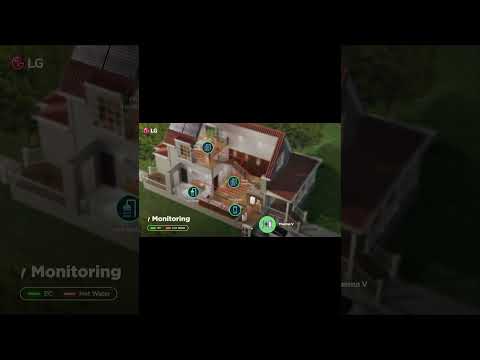
Meanwhile, LG supports customers in adopting lower-impact lifestyles through technology. Its Smart Home Energy Platform, presented at CES 2024, enables real-time energy monitoring and appliance control, encouraging energy-aware decisions at household level.
The company’s "Better Life for All" initiative extends access to education and digital technology in underserved communities and aligns with LG’s broader aim to support digital inclusion.
Looking ahead, Lyu Jae-Cheol, President of LG Electronics Home Appliance & Air Solution Company, says: “We will continue to leverage our industry-leading core technologies to create solutions that benefit people and the planet.”