How Michelin is Advancing Sustainable Manufacturing
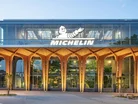
From vehicle production lines to the open road, tyres play a central role in global transport and manufacturing.
Whether on cars, bicycles, trucks or buses, these critical rubber components affect not only how vehicles perform but also how they impact the environment.
Tyre maker Michelin is one of the world's largest, producing over 200 million tyres each year.
In its 2024 Sustainability Report, the company set out how it is working to mitigate the impact from this large-scale manufacturing and production, including detailing its approach to cutting carbon emissions and increasing the use of recycled and renewable materials.
Pushing ahead with emissions cuts and recycling goals
Michelin reports a 37% cut in CO₂ emissions for Scopes 1 and 2 compared to 2019.
Scope 1 covers direct emissions from owned or controlled sources, while Scope 2 includes indirect emissions from the generation of purchased electricity, steam, heating and cooling.
At the same time, the company has increased the share of recycled or renewable materials in its tyres to 31%. These materials help lower the environmental impact of the final product and reduce reliance on fossil-based raw materials.
Pierre-Martin Huet, Michelin's Vice President for Sustainable Development and Impact, says: “We’re making a real difference by leveraging our unrivalled expertise in composite materials to supply the market with products that significantly improve our customers’ energy efficiency and reduce their carbon footprint.
“We’re also continuing to innovate to meet our 2030 target of delivering a further 10% improvement in energy efficiency.
“The trucking industry accounts for a quarter of all global emissions, this means that Michelin is making a major contribution to the planet.”
Tyre performance plays into fuel and energy use
The way tyres perform affects how much fuel or energy a vehicle uses.
According to Michelin, tyres can be responsible for 15% to 30% of fuel use in internal combustion engine vehicles.
This is due to rolling resistance, which is the energy lost when the tyre rolls on a surface. Lower rolling resistance means improved fuel economy.

Michelin sees this as a chance to help reduce global transport emissions. Its e.Primacy tyre range, for example, is designed to cut emissions by five grams of CO₂ per kilometre on average.
This change might seem small, but over thousands of vehicles and journeys, the savings grow.
For electric vehicles (EVs), which bring different challenges due to their weight, torque and battery range demands, Michelin says it is developing products that meet these needs while still reducing environmental impact.
The company highlights its Pilot Sport EV tyres as being designed specifically for EVs, offering a 10% increase in range.
Michelin also notes that all of its tyre lines can be fitted on EVs. The company is aiming to improve energy efficiency and tyre durability together, which supports the growth of the EV market.
Reporting for comparison and accountability
Michelin has aligned its reporting with the Corporate Sustainability Reporting Directive (CSRD).
This EU directive requires large companies to report in detail on their sustainability practices. Michelin sees this as a way to make comparisons between companies clearer and more consistent.
Antoine Sautenet, Michelin’s Chief Sustainability Officer, writes on LinkedIn that the 2024 report marks “an important milestone in terms of transparency but also a key driver that showcases that companies play a key role in the society and the environment to provide collective responses to today’s challenges.”
But not all feedback on the CSRD is positive. Yves Chapot, Michelin’s General Manager and Chief Financial Officer, comments in the report: “Like other European directives, the CSRD is well intentioned, but its implementation is still complex.
“It’s essential to find a balance between sustainability and keeping companies competitive, so that the global playing field remains fair and level.
“We therefore hope that this initial statement will support an objective comparison of our sustainability performance with our industry peers, thereby demonstrating our contribution to the emergence of a more sustainable world.
“On the other hand, we regret that because the CSRD currently applies only to certain European listed companies, Michelin bears significant additional costs that its non-European competitors are not subject to.”
Explore the latest edition of Manufacturing Digital and be part of the conversation at our global conference series, Manufacturing LIVE.
Discover all our upcoming events and secure your tickets today.
Manufacturing Digital is a BizClik brand.