
How Omron & NVIDIA are Creating AI 'Skillless' Inspection
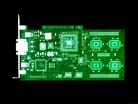
Omron has announced it is combining its board inspection systems with NVIDIA Omniverse and Metropolis libraries.
The collaboration links Omron's Automated Optical Inspection and 3D-CT X-ray Inspection systems with NVIDIA's simulation and AI platforms.
It aims to allow manufacturers to visualise substrate warpage caused by heat and introduce what Omron calls "skillless" inspection.
As electronic devices demand ultra-high-speed and high-capacity processing, printed circuit board mounting has grown more complex, requiring stricter quality assurance.
At the same time, manufacturers worldwide face a severe shortage of skilled technicians.
"Leveraging Omron’s know-how in automation rooted in a real on-site perspective, together with high-speed, high-precision control technology, we will realise highly accurate digital twins as part of the solution," explains Motohiro Yamanishi, President of Omron's Industrial Automation business.
"By combining our inspection data with NVIDIA’s physical AI, customers will be able to visualise the factors affecting production, rapidly upskill novice operators and maximise the ROI of production lines."
Digital twins and hidden defects
Board warpage, caused by heat during manufacturing, is difficult to detect with the naked eye but can lead to solder joint defects and broader quality problems.
Through the NVIDIA Omniverse integration, Omron can now reproduce this warpage with high precision in digital space.
Physics-based simulation models board deformation and the forces that resist it in real time.
This lets manufacturing sites adjust thermal profiles during heating and cooling before problems occur.
A second initiative overlays surface data from optical inspection with internal structural data from X-ray inspection.
Engineers can then trace surface phenomena, such as component misalignment, back to hidden internal causes like tiny bubbles.

AI agents addressing the skills shortage
Omron is also introducing visual inspection agents powered by the NVIDIA Metropolis Blueprint for Video Search and Summarization, alongside NVIDIA Cosmos.
These agents combine a vision language model with a large language model to analyse images and historical data together.
When an operator asks why a board is warped, the agent searches historical records for boards with similar characteristics and returns a summarised explanation.
Shintaro Iwamura, Ph.D., Distinguished Technologist, Industrial Automation at Omron Corporation, told Manufacturing Digital: "We believe AI can help bridge this gap by making expert knowledge more accessible and actionable."
Operators and engineers can interact with manufacturing data using natural language and realistic environments rather than relying on just manuals.
Shintaro says this approach "shortens learning cycles and helps transfer knowledge more effectively across organisations".
"We see AI as a tool for democratising manufacturing know-how and enabling a broader range of people to perform tasks that previously required years of specialised experience," he explains.
Accuracy in manufacturing AI
Manufacturing environments leave little room for error, and AI-generated advice carries real consequences if it is wrong.
"We do not view AI as an autonomous decision-maker, but as a support tool that assists human operators and engineers," Shintaro says.
He explains that the agents are grounded in verified operational and inspection data rather than unsupported outputs.
Combining AI with digital twins allows users to check AI-generated insights against actual equipment behaviour.
Shintaro says human oversight is still essential, particularly for quality-critical and safety-related operations.

Executives

Motohiro Yamanishi
President of Industrial Automation business

Shintaro Iwamura
Distinguished Specialist of Technology, Ph.D., Industrial Automation Company