The Role of Digital Tools as The Ocean Cleanup Plastic Waste
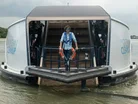
The Ocean Cleanup (TOC), an international non-profit, has embarked on a significant endeavour aimed at enhancing plastic pollution control in river systems across the globe.
The organisation has introduced an initiative where it plans to strategically implement its solutions in 30 major cities worldwide.
During a conference at the UN Ocean Conference, TOC unveiled its comprehensive 30 Cities Programme.
This plan targets crucial cities in Asia and the Americas, positioning TOC’s Interceptor technology to intercept river-borne plastic waste.
Implementing citywide strategies
TOC has already demonstrated its capacity to tackle plastic waste, having cleared 29 million kilograms of waste from selected rivers known for high levels of pollution.
The insights gained from operations in locations like Kingston, Jamaica, highlight the efficiency of addressing larger areas rather than isolated river systems.
Boyan Slat, the Founder and CEO of TOC, says: “When we take on an entire city, instead of individual rivers, we can scale faster, reduce costs and maximise impact.”
Through this approach, TOC can target and reduce as much as one-third of global river plastic pollution.
Boyan adds: “Strategically deploying Interceptors across just 30 carefully chosen cities can stop up to a third of river plastic pollution worldwide. This is the next big leap toward our ultimate goal of a 90% reduction in global ocean plastic pollution.”

Programme deployment progress
Panama City, Panama, marks the initial rollout location with operations expected to commence in 2025.
Additionally, in cities like Mumbai, India, rigorous mapping of water networks has been completed, ushering in preparations for deployment.
The programme is set to expand in the near-term to include cities such as Manila, Montego Bay, Jakarta, Kuala Lumpur, Bangkok and Los Angeles. Continuous expansion is anticipated as partnerships and funding finalise.
In supporting this expanded operation, TOC is advancing its engineering and operational capabilities to meet the increased demands of this extensive initiative.
Leveraging data and technology
The methodology of each city project incorporates a detailed analysis phase supported by technology.
This phase uses aerial drones, AI-powered image recognition and GPS-equipped dummy plastics to map and understand waste flow in water systems.
Such data aids strategic placement of Interceptors and allows progress to be monitored with measurable outcomes.
Beyond intercepting plastic flowing into oceans from rivers, the initiatives encompass removing waste accumulated along coastlines, mangrove areas and coral reefs.

The dual approach administrated by TOC addresses both incoming and existing pollution by engaging with local partners to enhance waste management capacities and elevate community awareness.
Amidst rolling out the 30 Cities Programme, TOC is in the process of completing its first 20 river projects, striving for a comprehensive approach to plastic pollution control.
This significant push aims to address pollution at the source, exemplified in plans targeting the Gulf of Honduras.
Efforts also continue offshore, with attention on the Great Pacific Garbage Patch, where refinement of mapping technologies continues to identify pollution hotspots efficiently for prospective waste removal efforts.