
How Hyroad Energy is Reshaping Long-Haul Trucking
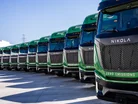
Hyroad Energy has acquired assets from Nikola Corporation following a bankruptcy auction, including 113 hydrogen fuel cell trucks, spare parts, software platforms, and intellectual property.
The move gives Hyroad ownership of the largest Nikola fleet and a base to accelerate the deployment of zero-emission hydrogen-fuelled trucks in North America.
A key part of the plan involves bringing Nikola trucks back online. From December 2025, Hyroad Energy will launch a subscription service to restore full truck-to-cloud connectivity for all Nikola Tre BEV and FCEV trucks.
This follows the shutdown of all cellular lines to production trucks in July 2025, which left fleets without live data or digital vehicle management capabilities.
Acquiring hydrogen truck technology and IP
The deal provides Hyroad with a foundation to deploy zero-emission trucks. It covers 103 brand-new Nikola Tre hydrogen fuel cell electric trucks alongside the supporting software systems and operational infrastructure IP.
Hyroad also aims to establish maintenance and parts facilities to support the fleet, which will primarily operate in California, where Hyroad Energy continues to develop its hydrogen refuelling infrastructure.
"This acquisition advances Hyroad's mission to provide turnkey hydrogen trucking solutions that reduce the complexity and risk typically associated with adopting zero-emission technologies," says Dmitry Serov, CEO and Founder of Hyroad Energy.
Dmitry adds: "These trucks and the corresponding equipment and systems represent immediate capacity to put proven hydrogen fuel cell technology on the road to meet demand for zero-emission trucks."
A service-based model for zero-emission fleets
This development marks a new chapter for the hydrogen trucking industry. As the new owner, Hyroad's subscription service will give users access to the Nikola Fleet web app, the Drive mobile app, and continuous cellular data service.
This service-based approach is central to Hyroad Energy’s model, which combines technology infrastructure and service into a single ecosystem.
Through its hydrogen trucks-as-a-service model, Hyroad Energy offers fleets an all-inclusive solution. This package covers the trucks, maintenance, hydrogen supply, and refuelling stations under a simple pay-per-mile structure.
The approach could eliminate the complexity and high upfront cost often associated with adopting clean transport. By integrating vehicle provision, hydrogen production, and refuelling under one umbrella, Hyroad aims to ensure high asset utilisation and competitive operating costs.
“I am thrilled to help put the remaining trucks to work and support all the ones already out in the wild providing zero-emission moves to shippers,” says Robert Kelly, Vice President of Business Development at Hyroad Energy, on LinkedIn.
Integrating sustainable manufacturing processes
Nikola has long been involved in zero-emission vehicle innovation. Nikola's 2023 Sustainability Impact Report noted milestones, including the commercial launch of its Tre FCEV, which was the first hydrogen Class 8 truck assembled in the US, alongside the introduction of its HYLA hydrogen energy brand.
Nikola’s sustainability strategy extended beyond its vehicles and into its production methods. Its Arizona manufacturing facility is powered in part by solar energy, and according to its report, it achieved a 45% waste diversion rate.
Through initiatives such as battery recycling and remanufacturing, Nikola reclaimed 95% of lithium-ion battery materials. This focus on the manufacturing lifecycle is a key component of creating a sustainable transport ecosystem.
By scaling hydrogen production, reducing its carbon intensity, and aiming for cost parity with diesel, Hyroad aims to fast-track the decarbonisation of heavy transport. The integration of Nikola's manufacturing and operational IP will be a key part of this strategy moving forward.
Company portals


Executives

Dmitry Serov
CEO and Founder

Robert Kelly
Vice President of Business Development