IEA: What the Rise of EVs Means for Automakers
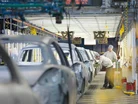
With electric vehicle (EV) sales expected to rise continuously over the coming decade, the geography of global car manufacturing is moving.
The International Energy Agency's (IEA) report, titled What Next for the Global Car Industry?, shows the sector is undergoing profound changes as the transition towards EVs accelerates.
In 2024, global car sales neared 80 million units, with growth driven by hybrid and electric cars increasing by around 30%.
According to the IEA, global sales of pure ICE cars have fallen by 30% since reaching an all-time high in 2017.
This decline suggests the structural makeup of the automotive sector is being permanently altered as manufacturers pivot their long-term capital investments.
China and other emerging economies now account for more than half of global car sales.

Between 2010 and 2024, China more than doubled its car production and now accounts for 40% of global manufacturing.
In 2024, it overtook the European Union to become the world’s largest car exporter.
“The global car industry is a cornerstone of many national economies, directly employing more than 10 million people worldwide and supporting millions of additional jobs,” says Fatih Birol, Executive Director of the IEA.
“The market for cars is one of the largest for a single product and cars are the single largest source of global oil demand today.”
Shifting value in automotive supply chains
The IEA estimates that roughly 70% of EVs sold are produced in China.
Automotive manufacturing continues to operate in regional clusters that reflect divergent technology choices.
For example, Shanghai’s 26 battery plants represent more than 5% of global capacity, while legacy ICE components remain dominated by Europe, Japan, Korea and North America.
Chinese firms control around 80% of battery-related manufacturing capacity.
Producing cars in China is cheaper than in advanced economies, largely due to large-scale manufacturing and vertical integration.
Lower component costs account for nearly 40% of the manufacturing cost gap for EVs.
This is driven by battery economics, with average battery cell prices more than 30% lower than in Europe and 20% lower than in the US.
“The global car industry is currently undergoing major changes that have significant implications for economies around the world and for the energy sector,” says Fatih.
“Three structural shifts are under way, in terms of the geography of production, in terms of the regions that are driving sales growth and in terms of the technologies that car buyers are choosing.
“Against this backdrop, this new IEA report provides a strong basis to inform discussions and decision-making by governments and industry, noting that there is no one-size-fits-all model.”
Strategic priorities for manufacturing resilience
Batteries are a key differentiator in regional manufacturing costs.
IEA data shows the European Union imports a far higher share of battery components than engines, while China and Japan retain integrated supply chains across both technologies.
Vertical integration is a critical factor for future competitiveness.
As governments navigate these shifts, policy decisions must balance short-term competitiveness with longer-term resilience, the IEA says.
While vehicle assembly retains local value, battery manufacturing carries strategic importance beyond the car industry.
Accelerating the transition to EVs requires policies that align industrial growth with environmental value.
Many manufacturers are currently working to balance portfolios by leveraging strengths in ICE and hybrid production while improving their competitiveness in the EV market.
Creating mass-market demand through EV sales targets can help countries with large ICE manufacturing bases achieve economies of scale.
These targets encourage investment as production shifts. Scaling domestic battery manufacturing through partnerships can also strengthen resilience during the start-up phase.
Market demand and infrastructure stability
Sustainability outcomes can be improved by prioritising cost-competitive battery chemistries near vehicle assembly centres.
According to the IEA, securing diversified supply chains for critical minerals is essential to avoid shortages and reduce long-term risk.
This is supported by international co-operation, increased recycling and regulatory frameworks that encourage local supply.
Minimising energy costs in intensive stages, such as battery component manufacturing, can be achieved through effective electricity market design.
These measures could lower emissions while improving cost stability for manufacturers globally.
Company portals

Executives
Fatih Birol
Executive Director